The Blank Page

  • Zine-Making in Isolating Times

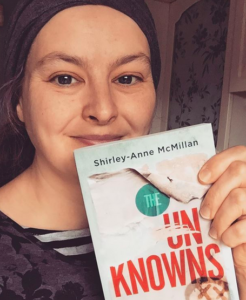
    Today on The Blank Page we’ve got special guest, Shirley-Anne McMillan to tell your young writers how to make their own Zines! She’s even made a video!
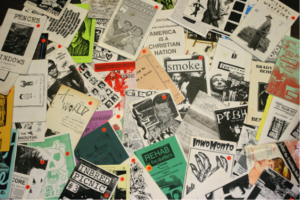
    Zines are basically mini books you can make yourself, on any topic at all. I’ve never made one but it looks like so much fun I might give it a go.

    Shirley is a YA writer from Co. Down and I’ve LOVED every one of her books. She likes to tackle big issues like LGBTQ+ rights, social injustice, teen pregnancy, living in care, and she’s as much of an activist in real life as she is in her books so she’s the perfect person to give us some tips on how to use Zines as a way to respond to injustice and maybe even change the world.

    You could even make a Coronavirus/Social Distancing Zine! Someone said to me recently that we’re basically living through a future GCSE History question. People will look back at this time as being historically significant and they’ll want to know how we felt about it. So why not make a record. I’m keeping a diary myself, but if diaries aren’t your thing you could make a Zine! I’ll let Shirley tell you how…
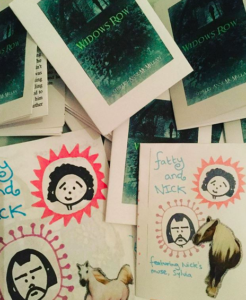
     

    Zine-Making in Isolating Times – Shirley-Anne McMillan

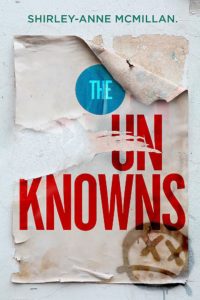
    My name is Shirley-Anne McMillan and I write YA fiction. My second book, The Unknowns, is the one that I think of most often in these weird, virus-cautious days. It was originally pitched as a dystopia to my agent- a story about NI in the near future, when all the arts had been shut down- I mean really shut down- the funding was gone and the government wanted to focus on industry above all else, so nobody was allowed to make art- it simply wasn’t seen as important any more. In the cultural wasteland a gang of young people would meet secretly to produce and share underground art.

    My agent said no. No dystopia right now (at the time everyone was bringing out dystopian novels and my book would have been out about two years after the interest had died down). She was right, of course, but I still wanted to write it. In the end I decided to keep my gang and focus on the dystopia of NI as it was at the time.

    I am a GREAT complainer. I always have something that’s making me really angry. I am always trying to keep a positive, cool, head because left to its own devices my head would be constantly raging. It comes naturally to me. I watch Henry Rollins videos to calm myself down. Anyway, I decided there was plenty of dystopia to be found in the present day: our society is so divided, so elitist. We have problems with racism. We blame all our ills on the young. We still have a massive problem with homophobia and transphobia. We still treat women poorly. So I wrote The Unknowns and kept the story pretty much the same, simply setting it in present times: a gang of young people get together in secret to do something about the problems they and their friends face in modern day Belfast.

    When people ask me about The Unknowns sometimes they want to know if I made it all up. Were there elements of reality to the story? I tell them that almost every single action that the gang performs is something that I know happened in real life. Painting new graffiti over old in the dead of night. A biker gang community who make customised bikes. Ninja gigs. People trying to disrupt violence using music. The disruption of racist gatherings. Anarchy, organisation, activism, put to their best uses. I wanted the story to reflect things that ordinary people actually do. They might not be famous, they don’t get called heroes, but they live these lives of thoughtful activism- asking themselves ‘What is the situation before me? What can I do to stand in the way of this injustice? What questions must I ask of this?’ and sometimes it is a very small thing. So I want to share with you today a very small thing that you can do. It’s easy and fun and creative. It can bring joy, and life, and maybe it can change things politically for people too.

    Here is my How-To video about making a mini zine:


    Zines are the ultimate in radical self-publishing. They are the most accessible and cheapest way to create a hard-copy publication. They are easy to reproduce. They can be written quickly, or you can take your time over them. Some people sell their zines. Others distribute them freely. I have found zines that people have deliberately left around in art galleries, cafes, writing centres, libraries. I have been given zines in the street and in a queue for a gig- handed around by the band who were playing that night. Sometimes they are on a particular topic. Sometimes they take the form of a little comic book. Sometimes it’s a collaboration between a group of friends. A drag queen friend of mine produced his manifesto as a zine which he could distribute at his gigs. Another person made one just for himself- a collection of personal items, like a kind of magazine scrap book. You can find fan-zines online about people’s favourite bands including art work, fan fiction they’ve written, fantasy interviews etc. Some are just art. Some are just words. Some are info-zines explaining a particular political ideology. Some are mega-rants about the things that make the author most angry. Some are love letters. Some are tiny books of poetry.

    Have a look on YouTube for various zine ideas and information about different kinds and sizes of zines. Use old magazine or papers for collage, use felt tips, do a whole zine in black and white. There are no rules. I love the mini zine so much because it’s just on one side of the paper and if you have access to a photo copier you can easily have your own printing press. If you and your friends are keen you can get together and have a zine gang, swap them, make them together, have a new theme each month. Do a series of Social Distancing Zines that you can publish when this is all over and then hold a zine party when you get together and bring copies to swap. Please invite me to this party.

    I hope that this post has inspired some to get making in these days of isolation. We’re not really alone you know- we’re just physically further apart. Imagine everyone writing, everyone drawing or cutting and sticking. We’re going to produce art for ourselves and each other. If we can’t send them now, we will post pictures online and send them physically later. The main thing is to get your hands involved directly with the paper- make your mark- and then share it.

    Good luck and happy zineing! I have no idea how to spell that. Answers on a zine…


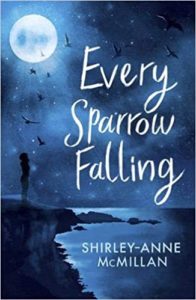
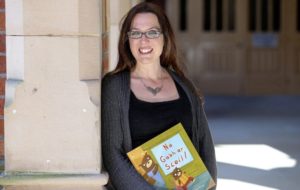
    Shirley-Anne McMillan is an author of contemporary Young Adult fiction. She lives in Co Down with her family where she writes, tutors, and works in the local Integrated school as an Alternative Chaplain. Shirley-Anne’s third novel, Every Sparrow Falling, was  published by Atom in 2019.


  • Writing Without Words

    Next up in my series of special guests on The Blank Page is the multi-talented Myra Zepf! Myra writes for children and teenagers, in English and Irish. Her latest picture book has been adapted into a beautiful dance performed at the Ulster Folk Museum and her verse novel for teenagers is up for the Children’s Books Ireland Book of the Year Award.

    She was the first Children’s Writing Fellow for Northern Ireland and with 5 (!) teenagers at home, she’s the perfect person to share her advice for young (or young at heart) writers in these strange days we find ourselves in. I think (after I deliver my parents’ shopping) I’ll be taking her advice today myself!

    Thanks for being here (in a virtual, socially-distant way) Myra!


    Writing without words – Myra Zepf

    We’re stuck at home in Coronavirus-quarantine. Five teenagers and two wildly juggling working parents trying to keep this show on the road.

    I’m trying to write something and I have a deadline. But in this new communal sardine tin of home-schooling, home-working and home-socialising, there simply isn’t peace or quiet to string my thoughts together. It’s nobody’s fault – it’s just the crazy times we’re living through.

    ‘Mum, my school log-in isn’t working!’

    ‘Mum, there’s no milk!’

    ‘Mum, I’ve accidentally pulled down the curtain rail!’

    ‘Mum, will you ask me my French oral questions?’

    ‘Mum, when’s dinner?’

    ‘Muuuuuummmmmmmmmmm!!!’

    You get the idea. So, I hide in the garden.

    The youngest sniffs me out with his telepathic sixth sense.  I shoo him away like a cat.

    ‘Can’t you see I’m writing?’

    ‘Eh, no?’ he says, utterly confused.

    I’m writing. I’m definitely writing. But there is no pen, no paper. No computer or hand-held device. I’m not at the making-squiggles-appear-on-the-page part of ‘it’ yet, that’s all. There aren’t even proper in-my-head words yet. It’s more like mixing together idea ingredients or knitting with thoughts. Sounds mad when I try to describe it, to be honest.

    This is the part of the process that sometimes kills me – the torturous what-will-I-write void. Or the tangled web of my-idea-isn’t-working. On a good day, though, it’s all fizzy popping whooshes of fun – my favourite part of being a writer.

    It’s something I had to train myself to do, this writing without words. It’s like dumping a grown-up in a kids’ room and telling them to play, as if they have a clue how to do it. Playing is complex if you’re out of practice. It involves loosening something that we always hold tight. Shaking your brain and seeing what falls out. Or staying still for long enough for something wild to land on you. These are things that school/work/life train out of us.

    What place has all this got on Kelly’s wonderful blog? And what’s so important that I’m neglecting my children’s French homework to tell you?

    It’s this. The times we are living through. The school closures, the social distancing, the looming health and economic crises are going to be tough. There are dark times ahead. But I’m a seeker of the bright side.


    I can see a glittering creative opportunity here.

    We have time. We have freedom. Exams are cancelled. School is cancelled. Social lives are cancelled. Whereas we normally squeeze creativity into the cracks between all the things we stuffed our lives full of, now those things have all evaporated overnight.

    This is the time to experiment with new styles and subjects and genres. To write without giving a second thought to what teachers or parents or peers think is good.

    Start a notebook.

    Fill it, not with finished pieces of polished writing, but with questions and observations and scrappy embryonic bits of ideas that don’t yet make sense. They will grow, I promise.

    But even before that (in order to NEED a notebook to record the creative chaos), do this.

    Find a comfy spot. A sunny one near a window. Or a comfy one curled up with a blanket. And let your mind freewheel.

    You have time.


    Use a writing prompt if you like. Or just let go. Stop for long enough to see what idea lands on you. Let it grow. Let it fly away again. Another will come.

    Don’t worry about the outcome. Enjoy the moment. This is not something to measure in productivity or success. This is not a test. It’s writing.

    Maybe an idea for a character or a place or a poem will appear like a little spark of magic. Or maybe the headspace itself will be your prize. Imaginative muscles need exercising, but they also need relaxing.

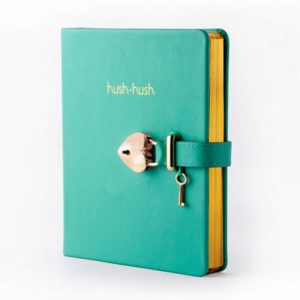
    And one last word of advice – this notebook should stay private.

    Keep it somewhere where you know no one will read it. It is yours and for your eyes only. That will free you to write what you really want rather than twisting it through the lens of what other people think. I think this is important.

    I often wonder whether calling us ‘writers’ isn’t a bit misleading. Shouldn’t we call ourselves wonderers? Or maybe questioners? Observers, thinkers, brain-doodlers, imaginers? Because it’s only after we’ve done those things over and over, that we then have something to write down.

    Good luck and enjoy the ride!

    Myra

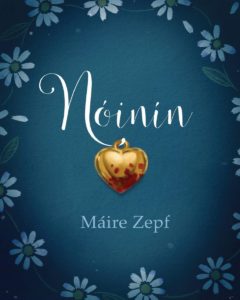
    Myra Zepf has written 11 books for children, from picture books to a YA verse novel. Winner of two Children’s Book Awards from the Literacy Association of Ireland (2017 & 2019), an IBBY Honour Award (2018) and two Oireachtas Awards for Fiction (2016 & 2018), her books appear in 7 languages worldwide. Her verse novel ‘Nóinín’ is currently shortlisted for the KPMG Children’s Book of the Year.


  • Self-Isolating or Reclusive Genius?

    I’m sure that in the worry and uncertainty of the last couple of weeks, afterschool clubs are the last thing on anyone’s mind! But since the schools are closing and students are looking at weeks of working at home, I’ve made a list of some online resources that might entertain, help them feel less isolated, and allow creativity to continue to flourish. And being creative might even help those who are feeling anxious about what’s going on to express and deal with those feelings.

    And it’s all a matter of perspective. We can believe we’re prisoners in our own homes or we can pretend we’re JD Salinger, shunning the press and writing our next classic novel!

    Hopefully there’s something there for everyone, and if you’re looking for more, there are many writers and artists on Twitter offering free stuff for young people so you should take a look.

    Incidentally, I think this is incredibly generous and public spirited of these writers and artists, especially since freelance workers like them are going to be among the hardest hit economically by all this, but it just shows how dedicated and passionate they are about sharing art and creativity with young people and how important they feel this is.

    If you want to support a freelance artist/writer now would be the time to buy their book/art/music and ask them to come to your school next year. And if you want to keep independent bookshops going, please go to them instead of Amazon. Many are posting books out even if they’re closed.

    I saw this online and thought it would be great if everyone’s home-schooling experience included Creative Time! (Not sure why Creative Time should be separate from Academic Time but that’s a discussion for another day)

    So do point your young writers towards these resources before the schools close. Maybe they’ll come back with a novel or a poetry collection instead of square eyes from watching Netflix!

    And take a look at them yourself, they could be useful even just to stock up on ideas for when we’re all back to normal.

    I’ll continue to post on The Blank Page in the meantime. I know writing groups won’t be able to run if the schools close (unless you’re running online) but I’m aiming to put as much as possible on this blog so that it’s not just useful this year but will be a helpful resource for any school to use in the years ahead.

    And if you’re trying to inspire your writers to do some creative work at home during the Covid-19 school closures and would like to send me their work or their questions I’ll be happy to respond with feedback/answers.

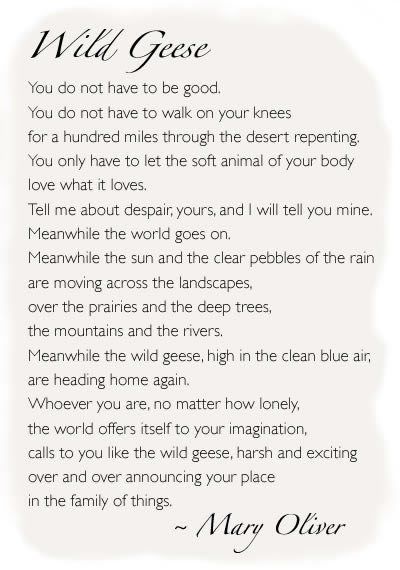
    Stay safe, look after each other and continue being your amazing, inspiring selves. In the meantime, here’s a poem by Mary Oliver.


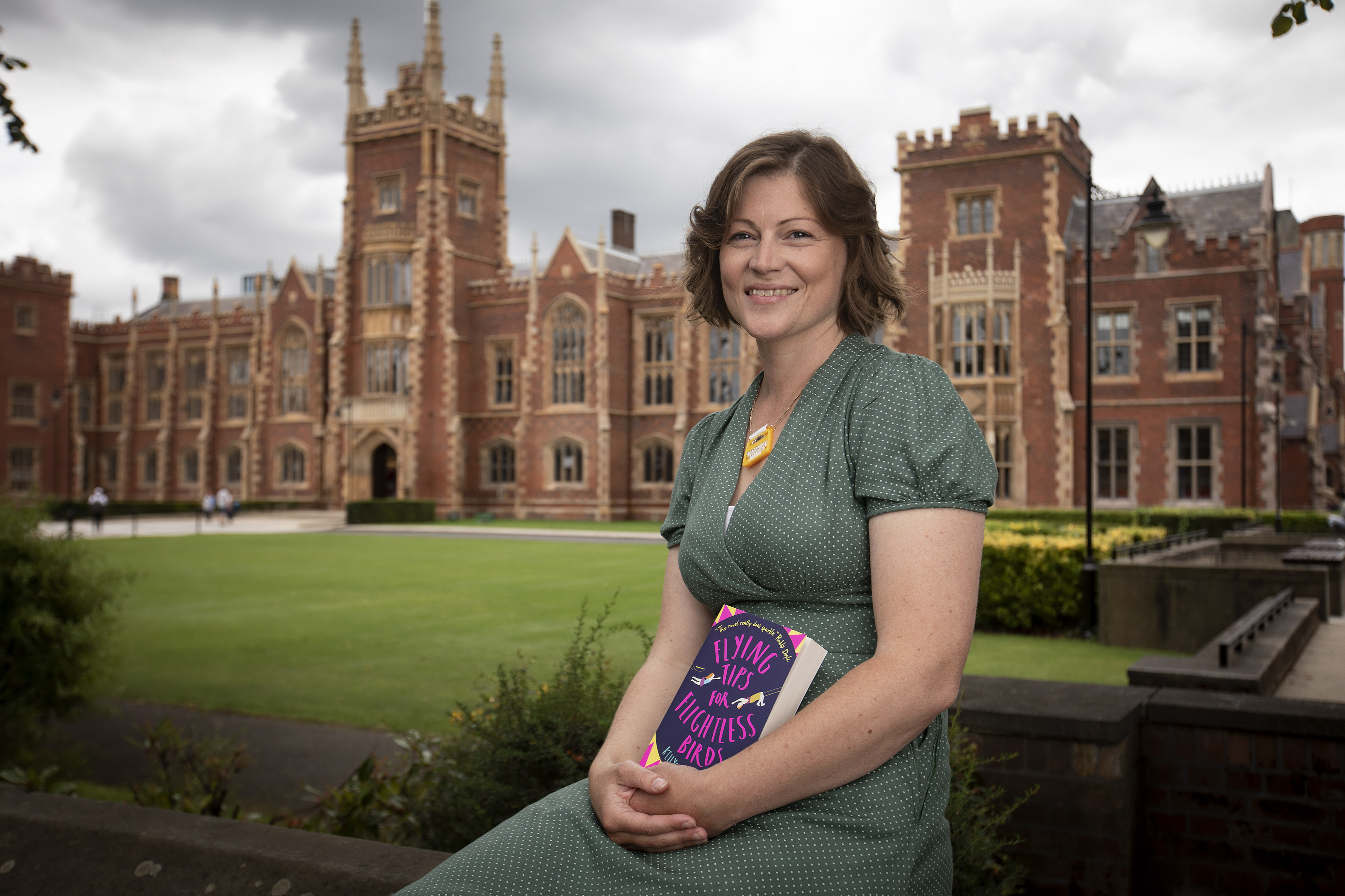
The Blank Page was created by Kelly McCaughrain, Children’s Writing Fellow for NI (2019-2021), as a support and resource for Librarians and Teachers running Creative Writing Groups in post-primary schools.

To read all the posts from the beginning, click here.

Recent Posts