The Blank Page

  • So you wanna write a sci-fi book….?

    Today I’m thrilled to welcome local writer Jo Zebedee to The Blank Page! Jo is a Sci-Fi and Fantasy author and knows much more about these genres than I do, so if you have any young writers who are into Sci-Fi/Fantasy, you could pass on these tips to them and introduce them to a local writer at the same time. Thanks Jo for sharing your expertise!

    Enjoy!
    So you wanna write a sci-fi book….? – by Jo Zebedee

    DO….

    Spend time thinking about your world. Daydream, draw pictures of cities, maps or space charts. The basis of speculative fiction (that’s sci-fi, fantasy, horror and all things related) is Worldbuilding. You’re creating something new (even if you set it in the real world, there will be something cool and unreal in it, right?) that you want people to believe in. To do that you need to know so much about your world that it feels real – even if you won’t use all that information in your story.

    Try this: Think of story you could set in your school. Next, think about everything you know about your school. You know way more than you need for the story, right?

    It’s the same with your imaginary world – the more you know, the more real it will become, and the less likely you are to make a mistake when you’re describing it or setting scenes in it. But you don’t need to feel like you have to get everything about your world into the story; only what’s needed.

    Ask ‘what if….?’ That question is at the the centre of most sci fi stories. What if a dude with two hearts became a time traveller who saved Earth? What if a superhero came from another planet and lived on Earth? What if you got left behind on Mars?

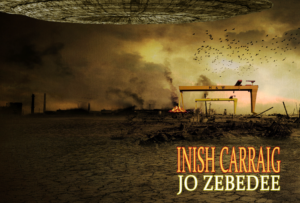
    I was standing on the beach one day, looking towards Belfast and the two cranes, and wondered what if the aliens invaded Northern Ireland. I kept wondering about that, and then I wrote a book about it (Inish Carraig), which grew bigger but, always, the first ‘what-if’ was central: what if they invaded? How would our world change?

    Research. You don’t have to be the greatest scientist in the world to write science fiction. I didn’t do any science A-levels (although I did geography and sometimes have fun with ecology in my stories). Science fiction can be as real or as farfetched as you like. But if you are going to play with science, you will need to do enough research to make things believable. If your character goes to a planet with heavy gravity, for instance, they’ll find it tiring to walk around.

    But it’s not just the science you might need to research. It’s the other elements of your story. What if someone gets attacked in your story – do you know where they can be injured and still live? Or, if a character wears perfume in your story, do you know what a certain brand smells like before you mention it? Getting little details wrong can make a reader stop to think about things and that makes it harder to get them to start reading again. It’s best to get it right, if you can, instead.  

    Enjoy science fiction! Most writers read quite a bit. Through reading they learn how to tell a story and telling a science fiction story, where you are blending lots of different elements, can be tricky. By reading science fiction, you can look at how other writers get their world information into the story, for instance. Most science fiction writers I know are very, very into the genre. They like different parts – some love graphic novels, some are Marvel-addicts, some love Star Wars or Star Trek (not always both), some love comics and some are gamers. It doesn’t matter what you like (no one cares which part of the genre you love and want to geek out about) but knowing the genre will give you confidence when you write your own stuff.

    Write! It can be so much fun building the world that it’s easy to keep doing that and forget about the writing. Sometimes, when you have a big world it’s hard to know where to start the story, or how to get the information in. There is an old saying that you need to write a million words to become really confident as a writer – but you have to write them, not think about writing them. They can be very bad words (no one needs to see your early drafts), or very good words. But the most important thing is that you have words.


    DON’T!

    Get hung up on creating a book Sci-fi uses a lot of different writing platforms and it doesn’t get hung up on being-just-this-type of writer. Some writers, like Margaret Atwood or Jeff Vandermeer, are known for their prose, where someone like Stan Lee is revered for their graphic work. It’s also a big visual medium that does well on television and in films, so there are writing opportunities there, too – and don’t let anyone tell you they’re easier than writing a novel! Graphic novels are popular – and they’re tricky to write. As well as the art skills, you need to learn how to tell a story through dialogue and action, and that’s difficult. Designing an RPG (role playing game) requires writing – the introduction to the world, the little snippets of stories that make a player feel part of it. A lot of this kind of writing is done in partnership, with one person creating the story and another the art to go with it.

    Worry about mixing genres. Want to start a heated debate? Ask fans if Star Wars is fantasy or sci fi. Sure, it has a space setting but it’s a save-the-princess fantasy-quest story. The force is a kind of magic but lightsabers use laser beams and need science to do that.

    There’s a thin line between science fiction and other genres. Take Alien. It’s horror but it’s also sci fi. That’s absolutely fine. Mashed up genres are fun and they have a wide audience.

    Take things too seriously.  Sci fi can be a lot of fun. Between designing worlds and creatures, to making the coolest space ship you can imagine, there’s a lot of room to enjoy yourself. The more you enjoy your writing, the more confident you will be and the better the project will become. Enjoy it, if you can – the day I don’t is the day I stop writing.  


    Jo Zebedee is the author of five science fiction and fantasy books to date with her next book, The Wildest Hunt, due for release by Inspired Quill in 2021. She’s also written a lot of short stories both online and in anthologies. As the chair of Titancon, Belfast’s science fiction and fantasy convention, and founder of Otherworlds NI, who promote sci fi and fantasy writers in Northern Ireland, she is passionate about making the genre accessible to all.

     

  • Whose Role is it Anyway?

    For older writers (or group leaders) who’d like to do some serious study into story theory, I highly recommend KM Weiland’s site Helping Writers Become Authors. It’s absolutely chokka with useful information about how novels are structured and how character arcs work.

    It’s quite in-depth and might be too complex for younger or less serious writers but something that I thought would be useful to any young writer was her list of the different types of characters in a story.

    Every character in a story is there for a reason, and that reason relates to the Protagonist’s journey. Obi-Wan doesn’t just wander into Luke’s Skywalker’s path coincidentally, he’s there to lead Luke to his quest.

    So if you’re a bit stuck with a story, it can help to consider exactly which role each of your characters is playing, because that can help you figure out what they should do next or how they should react to things.

    I’ve put together a list based on KM Weiland’s article on the different character archetypes so you can download it for your young writers to use as a checklist. (Her article also has a nice diagram of the 5 most important character roles that you can print out though, so check it out.)

    Download the checklist here: The different types of character in a story. And get your young writers to ask themselves:

    • Which of my characters is performing each role?
    • Am I missing any of the character roles?
    • Is there anyone who isn’t playing one of these roles?

    (And as a fun extra question – Since fiction mirrors real life, who is playing all these roles in my ACTUAL REAL LIFE!!!)


  • How to create a book or creative writing club for young people with Dyslexia

    I’m very excited because today on The Blank Page I have a special guest post by a special guest author!

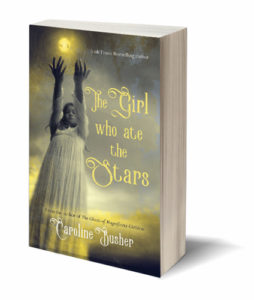
    Caroline Busher is the Irish Times best-selling author of “The Ghosts of Magnificent Children” and “The Girl Who Ate The Stars” (Poolbeg Press). She’s also done a lot of work with young readers and writers with dyslexia.

    Welcome, Caroline! I do my best to make my writing club a welcoming and inclusive space but I admit I don’t know a lot about things like dyslexia that might make participation more difficult for some kids, and I imagine many writing group leaders might be in the same boat. So I thought I’d ask Caroline to give us some of her expert advice and she kindly sent me the following guest post (thanks Caroline!)

    Enjoy!

    How to create a book or creative writing club for young people with Dyslexia – by Caroline Busher

    As a children’s author and the Reader in Residence at Wexford Public Library Services. I work alongside dedicated and hardworking librarians and teachers to engage with schools in a way that has a positive impact on young people’s literacy levels.

    As soon as I was awarded the position of Reader in Residence I knew that this was my chance to make a real impact on literacy levels in County Wexford and I was determined to do just that.

    I realised that in order for young people’s literacy levels to improve, books need to be central to their lives. I had no doubt that books changed my life. I wouldn’t be an author today if it wasn’t for the adults such as librarians and teachers who introduced me to books at a young age. I wanted to encourage children and young people to read and write just as others had encouraged me. I hit the ground running establishing creative writing groups and book clubs across County Wexford. 

    However, there was one area that I knew I needed to focus on. I was receiving letters and requests from parents and teachers on a weekly basis they were all asking me the same question. 

    “My child/student has been diagnosed with Dyslexia how can I encourage them to read and write?”

    One mother told me that her daughter found reading and writing a real struggle and it had really knocked her confidence. This was heart breaking to hear and I made the decision that I would do everything in my power to change this so that every young person felt that they had a place in a library or at a creative writing workshop. 

    That’s when I approached the County Librarian Eileen Morrissey and I asked her if I could set up book clubs and writing programmes specifically for children and young people with Dyslexia. 

    Eileen agreed that this was an excellent idea so I set about researching book clubs and creative writing clubs for young people with Dyslexia, however, much to my dismay I was unable to find anything. That’s when I realised that we would have to create our own model.

    So together with librarian Patricia Bloomerde, I met with the Dyslexia Association of Ireland and a group of parents of children with Dyslexia. It was important to me that if we were going to do this, we would have to do it properly and find out exactly what parents wanted.

    The Dyslexia Association gave us lots of advice and the parents said they were delighted to hear that their children would have a book club that they could go to where they would not feel under any pressure to read books.  

    It was important from the start that this would be about building confidence in a library setting rather than counting the number of books that were being read. We also thought that it would be beneficial to have the audiobook version of the physical book available so that young people could listen to their favourite book if reading it became too difficult. 

    The Dyslexia Association also mentioned that young people with Dyslexia often find it easier to type than to write by hand, so Wexford Libraries invested in a computer programme that teaches typing to children with Dyslexia. 

    The first Dyslexia book club has been running in New Ross Library for over a year now and it is a huge success, growing in numbers all the time. I am delighted to say that this model has been replicated in all the libraries across the County.  

    Establishing book clubs and creative writing groups for young people with Dyslexia has been one of the most worthwhile initiatives that I have worked on during my time as Reader in Residence in Wexford Public Library Services. 

    I believe that reading and writing should be accessible to everyone. The feedback we are receiving from parents has been phenomenal.

    One e-mail, in particular, moved me to tears. It came from a woman whose grandson has severe dyslexia and had never voluntarily read a book before. However, he is now a member of his local library. His family has described it as a “major miracle.” 

    To hear a personal story of how the programme impacted directly on a child’s life, and specifically a child with a learning difficulty, who struggles with the written word on a daily basis, is phenomenal. It makes it all worthwhile. 

    Occupational therapists are recommending the book clubs in the libraries to parents of young people with Dyslexia. 

    If you are a librarian and would like to establish a book/writing club for young people, I would encourage it. Here are some tips to help you get started.

    • If possible make audiobooks available for young people who struggle with reading.
    • Check out Barrington Stoke. They are a publisher who specialize in books for children and young people with Dyslexia.
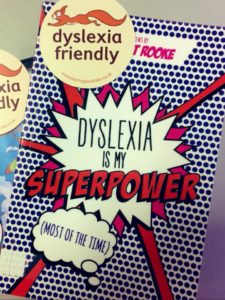
    • There is a brilliant book called – Dyslexia is my Super Power (Most of the time.) by Margaret Anne Rooke (Jessica Kingsley Publishers.) It contains more than one hundred interviews with children and young adults who reveal their tips for honing the creative benefits of Dyslexia, to enable them to thrive in school and beyond.

    • Make it clear that you are not concerned about spellings, that it is their ideas that count and their imaginations and every child and young person has an excellent imagination.
    • If you have access to computers or laptops allow the young people to type their stories. There is often a spell check feature that they can use and it takes away any pressure associated with handwriting.
    • Most of all – Make it fun! Introduce a social element to the book/creative writing club. A few snacks are often very welcome!


    Caroline Busher is the Irish Times best-selling author of “The Ghosts of Magnificent Children” and “The Girl Who Ate The Stars”(Poolbeg Press). Caroline graduated with a First Class Honours MA in Creative Writing from UCD. She was the Reader in Residence with Wexford Public Library Services and a Heritage Expert with the Heritage Council of Ireland. Caroline worked as a curator and Chair of Wexford Literary Festival and the Festival Manager of “Towers and Tales” International storytelling festival in Lismore Castle. Caroline is on the Poetry Ireland Writers in Schools Scheme and is represented by Trace Literary Agency (USA). She facilitates Creative Writing workshops in schools, libraries, and festivals and can be contacted via her website:-

    www.carolinebusher.wordpress.com

    https://twitter.com/CarolineBusher

    https://www.instagram.com/carolinebusher/ 


The Blank Page was created by Kelly McCaughrain, Children’s Writing Fellow for NI (2019-2021), as a support and resource for Librarians and Teachers running Creative Writing Groups in post-primary schools.

To read all the posts from the beginning, click here.

Recent Posts