The Blank Page

  • Poems who like Prose who like Poems who like Prose…

    I wrote last week about how some people (particularly girls, it seems) are paralysed creatively by a need to be perfect. I’ve come across this in several young writers. They have terrible trouble getting started because they’re reluctant to deface a blank page with anything that isn’t flawless.

    I had one writer who suffered badly from this, and the problem was compounded by the fact that everything they wrote turned out badly (according to them anyway). Every week they’d fight through the anxiety to produce a little paragraph that didn’t really go anywhere but was nevertheless full of beautiful phrases and interesting language.

    I would, of course, praise the language and originality and tell the writer how great they were, and every week, they’d go, ‘Hmm. But it’s not really a story, is it?’ (It wasn’t. It didn’t have a beginning, middle and end). ‘And it’s not a poem.’ (It wasn’t. It had no structure.) ‘It’s not anything, it’s a failure, it’s rubbish.’ Cue head hitting desk dramatically.

    This was very distressing for me because I just couldn’t get this writer to believe in their writing and I was very afraid they’d quit altogether.

    And then one day I came across an article online about prose poems and it suddenly hit me.

    I’d been trying to help by giving advice on narrative so they could develop the failed paragraph into a successful story, or advice on structure so they could turn the failed paragraph into a successful poem.

    But it wasn’t a failed anything. This young writer was already writing beautiful, successful prose poetry. But they’d never heard of prose poetry so they assumed it was ‘not anything. A failure.’

    Prose poetry is a sort of hybrid form. It doesn’t have line breaks or stanzas like poetry, but it contains lots of poetic features such as metaphor, symbols, repetition, rhyme, poetic language.

    It’s not a story, it doesn’t have to have a narrative with a beginning, middle and end (in the same way that poems don’t have to tell stories), it can be fragmentary, but it can also have characters and events or it can be pure description.

    Prose poems can be very short, like poems, but they’re written in prose and I think they can be brilliant for allowing a writer to explore language and ideas without committing to a length or form they worry they’ll ‘fail’ at.

    They are about creativity and beautiful writing without rules or restrictions. They can be a single, beautifully expressed thought/concept/description/question/moment that doesn’t have to go any further than that, which makes them great for short bursts of creativity.

    They’re also great for introducing the idea that writing doesn’t have to fit the formats we’re familiar with. That you can even invent your own form of writing.

    I found some examples of prose poems online (Google it, there are loads) and gave them to my young writer. I’m not sure it cured it the perfectionism but at least when they produced a paragraph we could treat it as ‘a thing’, rather than ‘a bit of a thing’. We put them on postcards in our postcard box as finished objects, which felt like success and now we have a little collection of them!

    I hope Prose Poetry will inspire some of your young writers!


    Some examples I found online:


    The Legs of the Sky by René Magritte

    The floor, moonlit, the moon behind you, is not enclosed by walls; a patch of sky is hidden by distant trees. But a patch of floor is itself hidden by the sky’s legs, standing on it, and this cannot be the opportunity for useless thoughts.


    The Canoeing by Russell Edson

    We went upstairs in a canoe. I kept catching my paddle in the banisters.

    We met several salmon passing us, flipping step by step; no doubt to find the remembered bedroom. And they were like the slippered feet of someone falling down the stairs, played backward as in a movie.

    And then we were passing over the downstairs closet under the stairs, and could feel the weight of dark overcoats and galoshes in a cave of umbrellas and fedoras; water dripping there, deep in the earth, like an endless meditation . . .
    . . . Finally the quiet waters of the upstairs hall. We dip our paddles with gentle care not to injure the quiet dark, and seem to glide for days by family bedrooms under a stillness of trees . . .


    The Fall by Russell Edson

    There was a man who found two leaves and came indoors holding them out saying to his parents that he was a tree.

    To which they said then go into the yard and do not grow in the living-room as your roots may ruin the carpet.

    He said I was fooling I am not a tree and he dropped his leaves.
         

    But his parents said look it is fall.


    Bath by Amy Lowell

    The day is fresh-washed and fair, and there is a smell of tulips and narcissus in the air.
    The sunshine pours in at the bath-room window and bores through the water in the bath-tub in lathes and planes of greenish-white. It cleaves the water into flaws like a jewel, and cracks it to bright light.
    Little spots of sunshine lie on the surface of the water and dance, dance, and their reflections wobble deliciously over the ceiling; a stir of my finger sets them whirring, reeling. I move a foot and the planes of light in the water jar. I lie back and laugh, and let the green-white water, the sun-flawed beryl water, flow over me. The day is almost too bright to bear, the green water covers me from the too bright day. I will lie here awhile and play with the water and the sun spots. The sky is blue and high. A crow flaps by the window, and there is a whiff of tulips and narcissus in the air.


    And When My Sorrow was Born by Kahlil Gibran

    And when my Joy was born, I held it in my arms and stood on the
    house-top shouting, “Come ye, my neighbours, come and see, for Joy
    this day is born unto me. Come and behold this gladsome thing that
    laugheth in the sun.”
     
    But none of my neighbours came to look upon my Joy, and great was
    my astonishment.
     
    And every day for seven moons I proclaimed my Joy from the
    house-top—and yet no one heeded me. And my Joy and I were alone,
    unsought and unvisited.
     
    Then my Joy grew pale and weary because no other heart but mine
    held its loveliness and no other lips kissed its lips.
     
    Then my Joy died of isolation.
     
    And now I only remember my dead Joy in remembering my dead Sorrow.
    But memory is an autumn leaf that murmurs a while in the wind and
    then is heard no more.


    Ways of Rebelling by Nathalie Handal

    Who needs to be at peace in the world? It helps to be between wars, to die

    a few times each day to understand your father’s sky, as you take it apart

    piece by piece and can’t feel anything, can’t feel the tree growing under

    your feet, the eyes poking night only to find another night to compare it to.

    Whoever heard of turning pain into hummingbirds or red birds—

    haven’t we grown? What does it mean to be older? Maybe a house with-

    out doors can still survive a storm. Maybe I can’t find the proper way to

    rebel or damn it, I can’t leave. I want to, but you grow inside of me. And

    as I watch you, before I know it, I’m too heavy, too full of you to move.

    Maybe that’s what they meant when they said you shouldn’t love a country

    too much.


  • Bold Girls

    Following on from the post on how to give feedback, I’ve been thinking about having the confidence to read aloud, and the role gender plays in this. There’s a fascinating Ted Talk by Reshma Saujani on this subject.

    Saujani suggests that girls are socialised to avoid risk and failure, to play it safe, get top marks, while boys are taught to aim high, jump in, play rough, give it a go.

    “We’re raising our girls to be perfect and we’re raising our boys to be brave.”

    She cites a study done with bright 5th graders who were presented with an assignment that was too difficult for them. At this level, girls routinely outperform boys in every subject. But even so, the study found that the higher their IQ, the more likely the girls were to quit, while the boys were more likely to try harder and therefore did better overall.

    Saujani runs computer coding classes for kids and she says the teachers continually encounter the same thing – when girls call for help, the teachers find them staring at a blank screen. If they hit ‘undo’, they find the girls have deleted their work, preferring to present nothing than present something flawed.

    It’s “perfection or bust”.

    This effect is exacerbated as they get older. She says that girls are uncomfortable with imperfection, and as a result they’re underrepresented in certain careers, gravitating towards careers that are safer options, while men are habituated to take more risks and are rewarded for it. Men are more likely to ask for pay raises, for example, and studies show that women won’t even apply for jobs unless they meet 100% of the criteria, while men will happily blag their way into interviews with only 60%. 

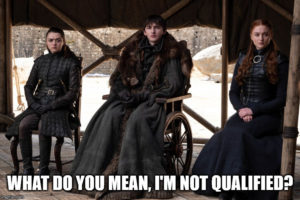
    Sisters defeat several armies and kill the Night King. Bran gets offered the job.

    Obviously a major overhaul of the system is required here, but in the meantime you can help insecure kids by creating an atmosphere where bravery, rather than perfection is praised, and where notions of right/wrong, good/bad are distanced from creative work.

    In fact, it’s really important that creativity is distanced from ideas about right/wrong. Perfection is the enemy of creativity. Innovation requires imperfection, perseverance, bravery, rule breaking. If your goal is perfection then it makes sense not to take any risks, not to try anything new, and as a result you never create anything original. Add that to lack of confidence and low self-esteem and you may have a kid whose ideas just never make it to the page at all.  

    This resonates with me because, though I’ve always written, the first time I told any of my family or friends about it, was when I was able to say, ‘My writing has been chosen for a major competition and is going to be mentioned in The Times.’ At that point, I’d already succeeded, but there was no way I’d ever have admitted I was trying to do something I might fail at.

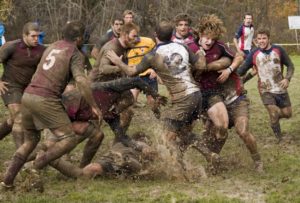
    There was no writing group at my school, which helped me to keep my writing very secret (this was in the 90s, I believe there is one there now, yay!). In my undistinguished school career, the one and only prize day I ever had to attend was when I won a GCSE prize for English. In my diary after the event I noted that in the headmaster’s speech he talked about rugby for 27 minutes. Sports were big at my school, especially rugby, which was only for boys (I think they now have a girls team too, yay!). Even now, more boys participate in sports than girls. And sports, when you think about it, are brilliant lessons in being brave, imperfect, losing in front of huge crowds, shrugging it off and moving on to the next match.

    What did I do after school? I was in the choir, (mostly girls), where we produced one-off, note-perfect performances of operas and Christmas carols. I sang with them for seven years and to this day I won’t sing alone in public in case I embarrass myself.

    Sports
    Choir 

    If you look, you’ll see this everywhere. Even in Kids Lit. I am all for the reinvention of female characters from timid sidekicks who make the sandwiches for picnics and require constant rescuing, to the feisty, kick-ass protagonists of today. But…

    Do they all have to be feisty, kick-ass protagonists? Like it’s not OK to be a mess? To fail?

    Yeah, we can all relate to this

    (I’m digressing, but if you’re interested, I wrote another blog post on this here)  

    It may be worth thinking about our afterschool clubs and whether girls are gravitating more towards perfection-oriented activities while boys go for risk-taking activities. At our writing group we’ve always had more girls than boys, and I think you tend to find the same in most creative activities. Which means we have a fantastic opportunity to teach girls to revel in imperfection.

    What does this mean in practice? I think it just means allowing your young writers to enjoy process rather than product. To see the messy first draft as the achievement. Not the competition win or the published pamphlet or school newspaper publication. I guess we just have to think about what we’re praising and rewarding, what we’re pushing them towards and presenting as a ‘goal’.

    Of course there is value in learning to finish things, but if that’s all girls are focusing on then they’re missing out because there is value in the half-finished, failed, messed up, abandoned story too. It means you tried something and learned something and your next attempt will be even better.

    Let’s treat that as an achievement.


  • Fear and Feedback

    There’s a reason writers are neurotic heaps. Creative work involves putting little pieces of yourself on public display and inviting people to stomp on them. For teenagers that may be even worse because what people think of you is all-consuming and social media has made you accessible to everyone.

    Any writing group will include kids who are busting to read their stories and kids who would literally rather die. I don’t think anyone should be pressured into sharing their work, but there will be kids who would like to but just lack the confidence, and there are ways you can help them.

    First, be aware that there’s a difference between lack of confidence and introversion. Some kids want to be drawn out; for others maybe the writing club is the only quiet or private time they get and they don’t want to share their work.

    But if they are shy, there are things you can try.

    1. Give them time to settle in before you push them to share. Everyone’s shy among strangers
    2. Make it a general rule that if someone wants feedback on their work this can be done one-to-one with you so no one else has to read it
    3. Make it a general rule that if someone would like their work read aloud but doesn’t like reading aloud themselves, you can read it aloud for them
    4. Play ‘Read the last sentence you wrote’. In the middle of the session, stop at a random point and ask everyone to read aloud their last full sentence. This is always funny because, out of context, the sentences can sound completely mad, and it’s less scary because everyone’s sounds weird. I’ve found that even the shy kids usually participate in this. Which could be a way to give them confidence for reading aloud in future
    5. If they don’t want to read, you can ask if they’d like to tell the group about their piece. Just ask simple questions like ‘Is it a story or a poem?’, ‘What’s it about?’, ‘Is it new or continued from last week?’, ‘Is it going well?’, ‘Do you know what’s going to happen next?’ But if they’d rather not share, don’t push them. And I wouldn’t put a spotlight on them like this until everyone in the group knows each other well

    If they do read their work aloud, you and the group can give them feedback on it. Feedback can be tricky because you don’t want to give the impression that their work is being judged or assessed, but you do want to let them know their work is being heard and appreciated. Some kids will actively ask, ‘How can I improve this?’ and some just want to write it, read it, and then move on to the next thing. Both approaches are fine and you can adjust your feedback accordingly.

    Feedback is not about assessment but it does contribute to learning. And it plays an important role in a writing club because:

    • Everyone needs encouragement to keep going
    • It improves our writing craft
    • Even those who don’t read their work aloud will learn from giving feedback to others
    • Being privy to each other’s work helps the group to bond

    I’d suggest that you have some basic group rules for giving feedback, such as:

    • Be respectful – listen when someone is reading
    • Be positive – tell the writer what you loved about their piece
    • Be helpful – give the writer ideas for how they can strengthen their piece

    You’ll probably give most of the feedback yourself and the kids may say little more than ‘Wow, I loved that!’ (which is lovely for the writer!) But do encourage the group to give feedback too and they will learn how to do it from watching you.

    You don’t need to be a writer to give helpful feedback, you just need to be a reader. You can comment on their:

    • Authentic dialogue
    • Believable characters
    • Vivid descriptions
    • Intriguing plots
    • Dramatic openings
    • Satisfying endings
    • Original/beautiful/fresh language

    You can make suggestions that might strengthen the effect they’re trying to create. Eg little achievable tips like ‘You could try shortening your sentences to make it sound even more dramatic’ or ‘I don’t think you need this sentence because you’ve said that in an earlier sentence’ or ‘I think fascinating would be a stronger word here than very interesting’ etc. This isn’t the same as being critical, it just shows that you regard their work as so good it’s worth polishing.

    If they’re not bothered about polishing, you can just ask about where the story is going next and tell them you can’t wait to hear the rest. In our group we’ve had ongoing epics that the group waited for the next chapter of like it was a Dickens Christmas TV Series. Which must make a change for them actually, considering that everything these days is binge-watched.

    I think the main thing is just to be really positive and praise their work so they’ll want to keep going. They’ll get better just through practice if they’re encouraged to keep at it.

    And remember, when giving feedback on a young person’s writing, that there’s more to creativity than quality:

    • There is quantity – just getting that first draft down on the page is something that not everyone manages
    • There is bravery – conjuring up something new out of your head is an incredibly brave act
    • There is risk – putting it out there is even braver
    • There is persistence – just not giving up is one of the most valuable qualities you can have
    • There is effort – these kids are busy and tired and they don’t need to be here, but here they are
    • There is mimicry – kids learn everything through mimicry and it’s perfectly OK for them to copy the style of their favourite writer or borrow the TV characters they love
    • There is originality – it may be bonkers, it may make no sense whatsoever, it may be downright silly, but could you have come up with it?

    Also, special shout out and good luck to the brand new Write Club beginning tonight at Hub Games on the Lisburn Road, Belfast. Open to all teenagers, absolutely free, write what you like! And the mentors are lovely. Enjoy!


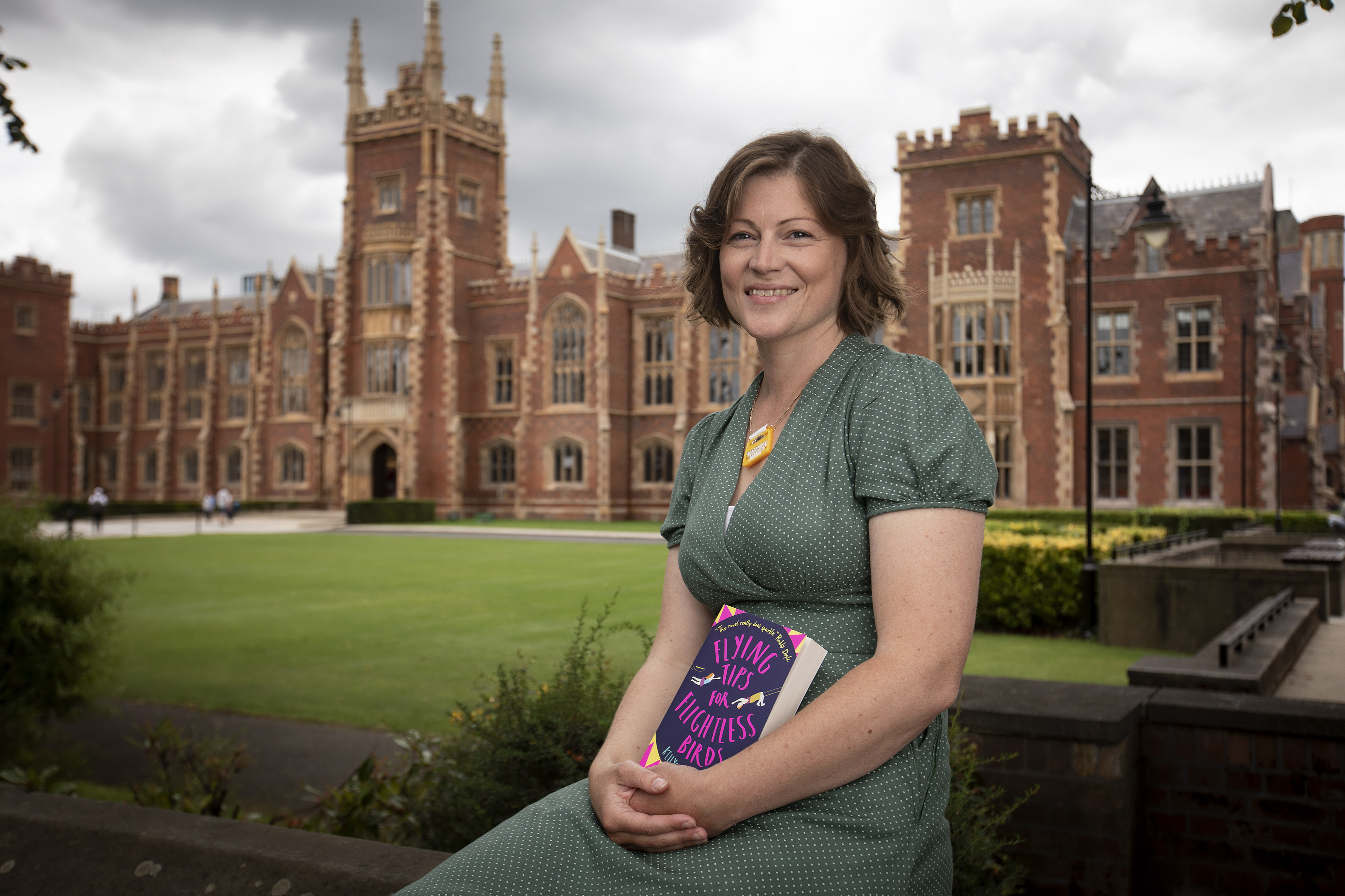
The Blank Page was created by Kelly McCaughrain, Children’s Writing Fellow for NI (2019-2021), as a support and resource for Librarians and Teachers running Creative Writing Groups in post-primary schools.

To read all the posts from the beginning, click here.

Recent Posts