The Blank Page

  • The Snowflake Method (since it’s snowing)

    As you may have heard, there are two kinds of writer in this world: planners and pantsers.

    Planners like to plan out their story in advance, down to outlining every scene before they put pen to paper.

    JK’s plan for Order of the Phoenix

    Pantsers like to hit the page running, with maybe only the vaguest idea of where this story is going and write ‘by the seat of their pants’.

    Actually I think most writers combine both of these strategies to some extent. I’ve always been mostly a pantser but lately I’m coming round to the benefits of doing some planning (it really does save time in the long run). So I thought I’d share one of my favourite planning tools in case any of your young writers are natural planners or would like to try planning their stories in advance.

    There are loads of very complicated (and fascinating) theories about story structure, but I like The Snowflake Method because it’s so very simple. It’s just ten steps that take you from a one sentence description of your story, to a description that’s several pages and includes character synopses and even lists of scenes if you want to go that far. I usually get to about step 6 and find that’s enough to start writing but if you’re someone who thrives on planning and organisation you can go the whole hog and do spreadsheets and everything.
    You can find The Snowflake Method on various sites but I took mine from here. This is aimed at published writers so I’ve further simplified it and made this document for young writers that you can download for your writing groups. Even doing the first 5 or 6 steps of the ten is a really good way to brainstorm your story and get started. Download here: The Snowflake Method For Designing A Novel

    In other news:

    MoLI is offering a five-day, immersive, blended learning programme to 15 lucky students aged 15-17 around Ireland. The Edna O’Brien Young Writers Bursary will take place both online and onsite in MoLI from 19 to 23 July 2021.

    You will be mentored through a creative writing project by one of Ireland’s leading writers, and you’ll meet with publishers, authors, literature academics and fellow writing enthusiasts. 

    They aren’t looking for polished, finished pieces of writing, or writers with large amounts of experience. They are simply interested in hearing about you, your passion and your creativity.

    Travel costs and meals will be provided for all week-long bursary attendees. Entry is easy and doesn’t cost anything. The closing date for applications is 10pm on 29 March 2021.

    Find out more here.


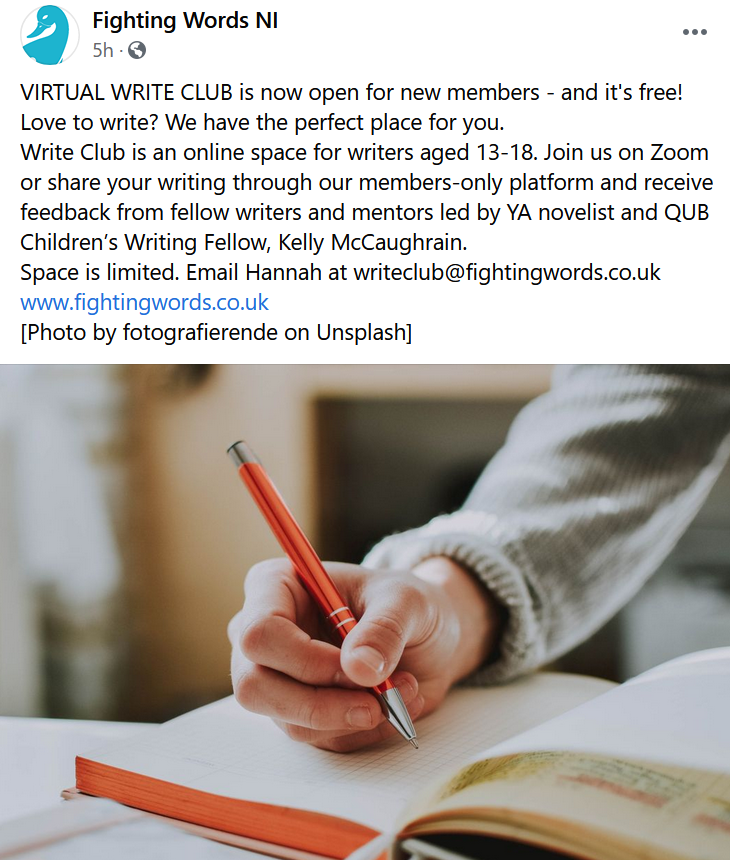
  • You are cordially invited to Write Club!

    Great news for these dark winter days! No, not the vaccine (TBF, that’s pretty cool too), but our new online Write Club!

    I was disappointed not to get to go out and visit as many writing groups as I would have liked last year (stoopid covid!) but I’ve been lucky enough to be working with Fighting Words NI instead so I have got to hang out with some teen writers, which has been brilliant. And now we’ve moved our fantastic teen writing group, Write Club, online!


    Write Club is a free, write-what-you-like, writing group for all teens (13-18). We chat about writing and reading, we write anything we feel like writing, we read our work aloud (only if you want to, there’s no pressure), and we give each other feedback.

    We also have writing mentors (including me) who run the group and give enthusiastic and amazingly useful feedback on your writing and help with any writing questions you might have. We can provide writing prompts and exercises for anyone who’s stuck but we’re happy to let you write whatever you feel like writing. Stories, poems, plays, fanfic, non-fiction, graphic novels, anything goes!

    We’re going to be online via Zoom every other Wednesday 4.30-5.30 and you can sign up here to join.

    We also have a website where members can post their writing or illustrations and get feedback from the writing mentors. The website is members-only so it’s private and only members will get to see your work.

    I absolutely love Write Club, it’s such a friendly, welcoming group, we have so much fun, and it honestly feels like a real privilege to get to hear our young writers’ stories and see them grow in confidence and creativity each week. I really believe our creative muscles are like any other muscles – if you don’t use them, you lose them. So a regular space and time to write is so important for teenagers, who probably get less time to be creative in school than younger kids. And writing is a great way to blow off steam when everyone’s so stressed out!

    Before Write Club
    After Write Club

    Having the club online is a wonderful opportunity to reach out across NI to keen young writers who live too far out for our regular IRL meetings. So please do spread the word and let your young writers know about Write Club, we’d love to see them there!


  • Have your own Mini-NaNo!

    You may know that November is National Novel Writing Month (or #NaNoWriMo). NaNoWriMo began back in 1999 as a challenge to write a novel (or 50K words) in a month. Today thousands of people around the world sign up for the challenge each year.  It’s free, and there are forums, support groups, apps to record your wordcount, places to discuss your progress and keep you accountable, hashtags and a big website full of advice with a section specially for young writers.

    This might sound like a huge task but the idea is not to produce War and Peace in a month, it’s just to bash out a messy first draft, or most of one, that you will edit later, and it’s a way to do it along with a bunch of other writers who you can moan and celebrate with and who will motivate you to keep going. The time pressure can actually be a great way to silence that inner critic, since you won’t have time to listen to them, you just have to get words on the page.

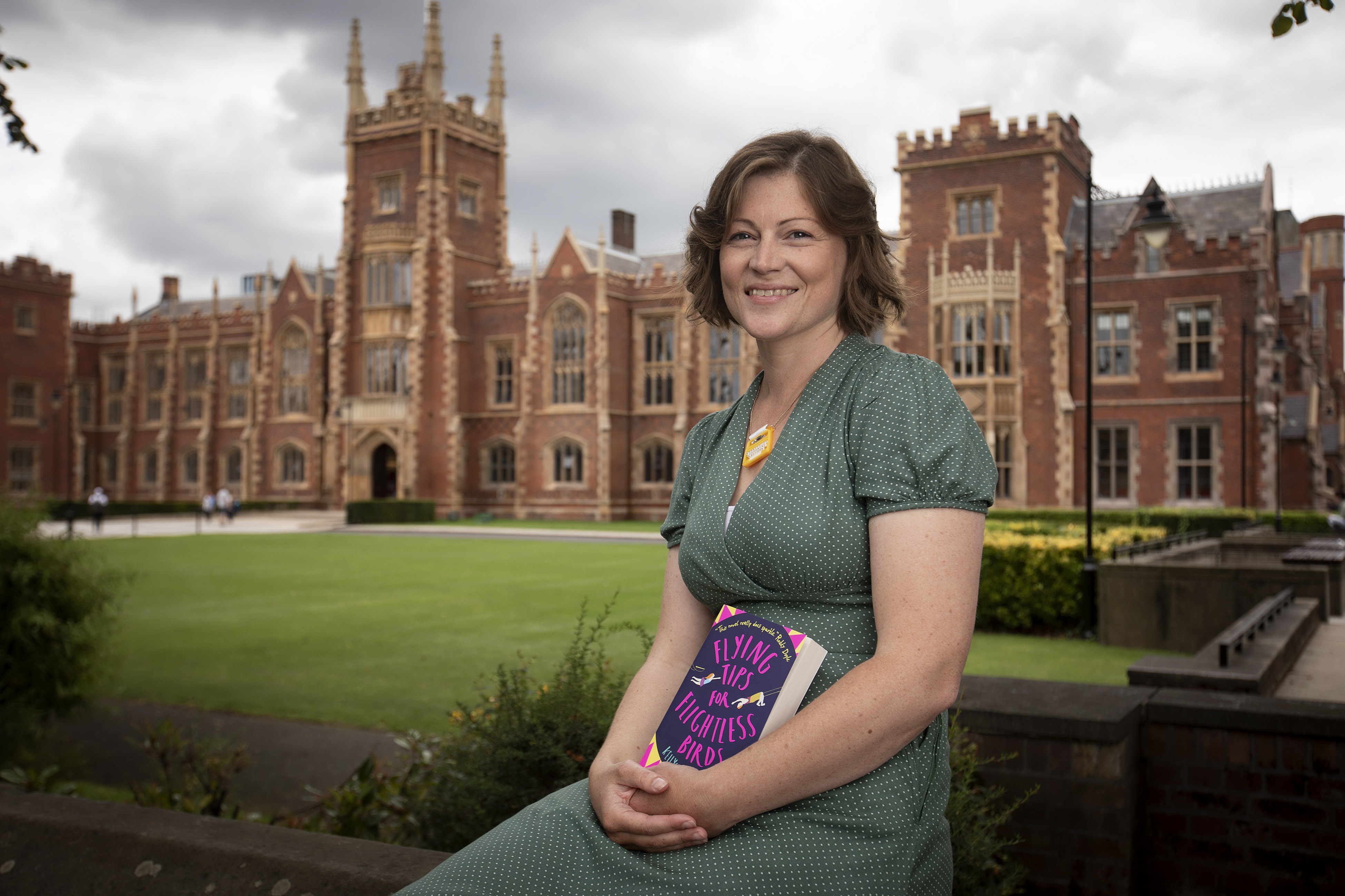
The Blank Page was created by Kelly McCaughrain, Children’s Writing Fellow for NI (2019-2021), as a support and resource for Librarians and Teachers running Creative Writing Groups in post-primary schools.

To read all the posts from the beginning, click here.

Recent Posts