Just to let you know there are more Tiny Masterclasses up on the Seamus Heaney Centre site (including one by me!)
Thanks to some wonderful Creative Writing students at QUB, we’ve got 5 minute videos on Point of View, Food Writing, using Memory to start a story, using Sound Maps for inspiration, and Writing Flash Fiction. I’d never even heard of a Sound Map but it’s a fascinating way to look at the world (or listen to the world)!
So if you’d like some bite-sized writing prompts for your young writers, look no further, check them out here!
This is an exercise for writers who feel completely paralysed by the prospect of a blank page. Blank pages can be scary for any writer. They’re so pristine, so empty! And you’re thinking What if I spoil this lovely clean page with my silly rubbish? What if I can’t think of anything to write at all?
You might also have lots of great ideas but the idea of putting them into words is scary. What if I spell everything wrong? What if I can’t think of the right words?
But you can make your brain feel safer by breaking the task down into very small chunks and this is one way to do that. It’s a bit like the Snowflake Method but it has emojis and is therefore way more fun:
1. Without writing anything down at all, think of a story in your head. (Or tell it aloud to the group or a partner.) It can be extremely rough and vague, it’s just the bare bones of a story. A character, a beginning, middle and end is plenty. E.g. the whole of Harry Potter might be summarized as: ‘An orphan is told he’s a wizard and gets sent to wizard school, where he encounters the evil villain who killed his parents, fights him and avenges their deaths.’ Done!
2. ‘Write’ the story down in the form of emojis. There are hundreds of emojis online you can search for and even if there isn’t one for the specific thing you want, you can just choose one that’s close. Again, it’s just an outline, ten emojis would be fine, or however many you want to use. The beginning of Harry Potter might look like this:
This is quite detailed actually, yours can be much simpler if you prefer
3. Take each emoji and turn it into one sentence. So now instead of ten emojis, you’ve got ten sentences. Maybe 100-200 words. It’s still just a skeleton plan of a story but you’re probably already thinking of lots more detail you’d like to add to flesh it out. So the first 6 emojis of the Harry Potter example might become:
Once there was a happy family called the Potters. The baby in the family was called Harry. The family got mixed up in a war. The war was with an evil wizard called Voldemort. He killed Harry’s Mum. In the attack, Harry was left with a scar. Etc.
4. Now turn each sentence into a whole paragraph by adding the details. You could include physical descriptions of people and places, dialogue, actions, what people are thinking etc. So now instead of ten sentences you’ve got ten paragraphs. And instead of a hundred words you’ve got maybe 500 or 1000! So the first sentence in the Harry Potter example could become: James and Lily Potter lived in a small house on a quiet street in Surrey and none of their neighbours knew they were actually wizards. James was tall with dark hair while Lily had red hair and green eyes and when they’d been married for 2 years they decided to have a baby… etc. (Hey, I never claimed to be JK)
5. If you feel your story is finished, great, well done! If you feel there’s more you’d like to add, or bits you’d like to change or polish, go back and do that. Keep expanding each section until you feel the story has been told.
Obviously, it’s easier to do this on a computer or phone where you can edit more easily. I think it’s great because it never actually feels like you’re ‘writing’ (which is the scary part because you feel like you can get it wrong or write something rubbish). It feels like you’re just planning the plot right up until the last moment, when you realise you’ve actually written a whole story! And going back and changing things over and over is a good way to learn how important editing is and how you really don’t have to produce something perfect first go on that blank page.
It’s World Book Day! And a much quieter one than last year but that’s OK, we can read quietly.
We can also write! Fighting Words NI have been busy bees this year, creating videos of creative writing workshops for schools to use (more on that later), and I’ve asked the writing students at the Seamus Heaney Centre QUB to contribute five-minute ‘Tiny Masterclasses’ of their own favourite writing tips, tricks and exercises for young writers, schools and homeschoolers to use.
Our first one, by poetry student Milena Williamson, is this lovely exercise on how to write an Ode, and features Ode to My Socks by Pablo Neruda (great choice!). So why not have a go at writing your own Ode to something or someone you love!
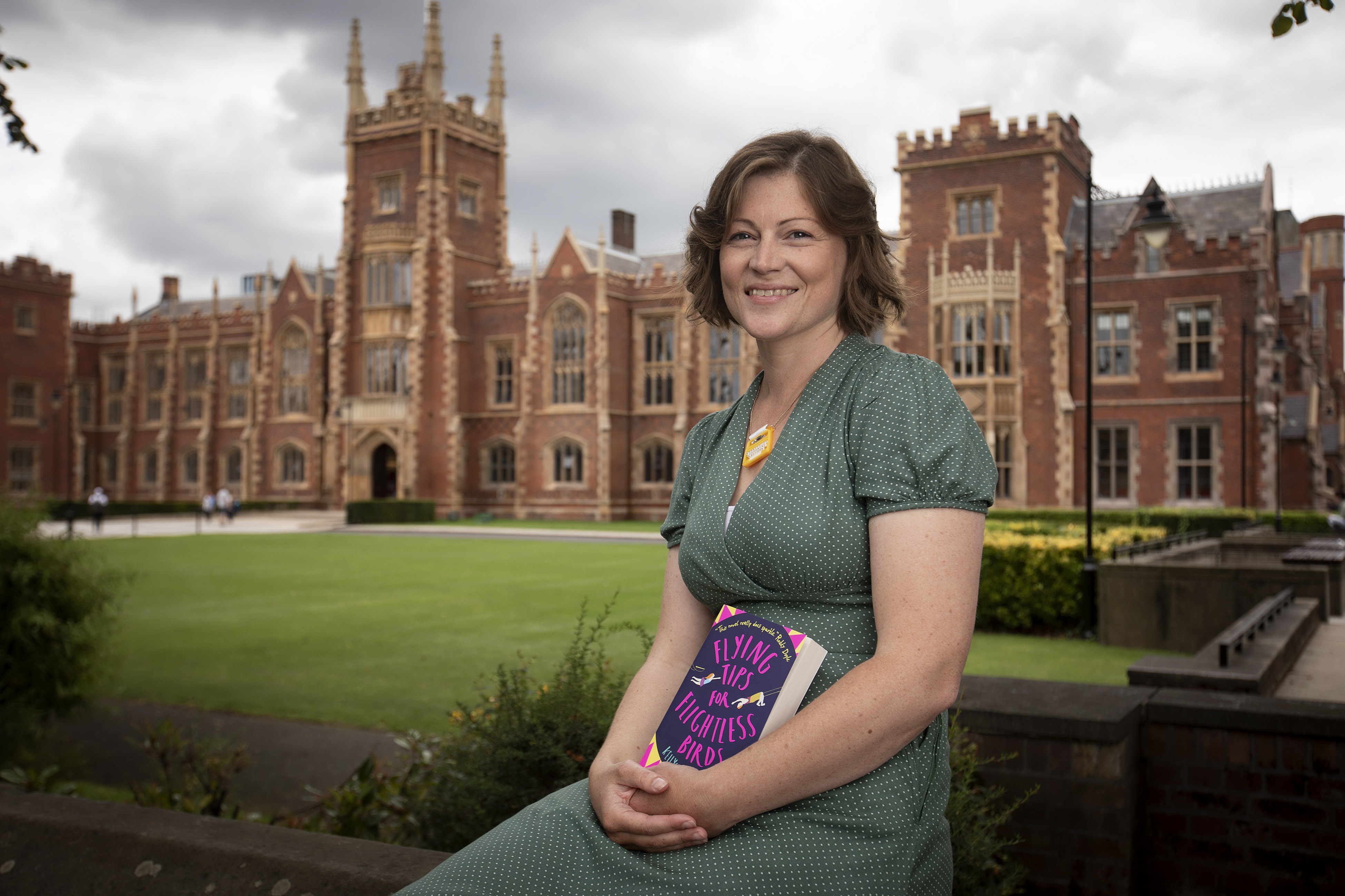
The Blank Page was created by Kelly McCaughrain, Children’s Writing Fellow for NI (2019-2021), as a support and resource for Librarians and Teachers running Creative Writing Groups in post-primary schools.
To read all the posts from the beginning, click here.
We use cookies on our website to give you the most relevant experience by remembering your preferences and repeat visits. By clicking “Accept All”, you consent to the use of ALL the cookies. However, you may visit "Cookie Settings" to provide a controlled consent.
This website uses cookies to improve your experience while you navigate through the website. Out of these, the cookies that are categorized as necessary are stored on your browser as they are essential for the working of basic functionalities of the website. We also use third-party cookies that help us analyze and understand how you use this website. These cookies will be stored in your browser only with your consent. You also have the option to opt-out of these cookies. But opting out of some of these cookies may affect your browsing experience.
Necessary cookies are absolutely essential for the website to function properly. These cookies ensure basic functionalities and security features of the website, anonymously.
Cookie
Duration
Description
cookielawinfo-checkbox-analytics
11 months
This cookie is set by GDPR Cookie Consent plugin. The cookie is used to store the user consent for the cookies in the category "Analytics".
cookielawinfo-checkbox-functional
11 months
The cookie is set by GDPR cookie consent to record the user consent for the cookies in the category "Functional".
cookielawinfo-checkbox-necessary
11 months
This cookie is set by GDPR Cookie Consent plugin. The cookies is used to store the user consent for the cookies in the category "Necessary".
cookielawinfo-checkbox-others
11 months
This cookie is set by GDPR Cookie Consent plugin. The cookie is used to store the user consent for the cookies in the category "Other.
cookielawinfo-checkbox-performance
11 months
This cookie is set by GDPR Cookie Consent plugin. The cookie is used to store the user consent for the cookies in the category "Performance".
viewed_cookie_policy
11 months
The cookie is set by the GDPR Cookie Consent plugin and is used to store whether or not user has consented to the use of cookies. It does not store any personal data.
Functional cookies help to perform certain functionalities like sharing the content of the website on social media platforms, collect feedbacks, and other third-party features.
Performance cookies are used to understand and analyze the key performance indexes of the website which helps in delivering a better user experience for the visitors.
Analytical cookies are used to understand how visitors interact with the website. These cookies help provide information on metrics the number of visitors, bounce rate, traffic source, etc.
Advertisement cookies are used to provide visitors with relevant ads and marketing campaigns. These cookies track visitors across websites and collect information to provide customized ads.