Before we all go off for the summer, I’m so excited to post this interview I did with NI teen writer Dara McAnulty!
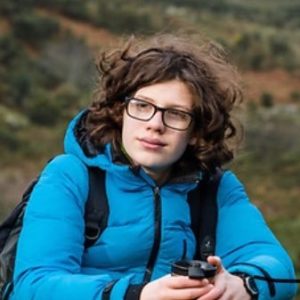
Dara is 16, and his first book Diary of a Young Naturalist, which was published in May this year, is about conservation, activism, writing, being autistic, being bullied, his school, his family and most of all, his deep love of the natural world.

I’m a keen wildlife gardener myself, and I’ve always kept a diary, and I love reading writing by teenagers, so I was really looking forward to this book and I was not disappointed. It’s the diary of a difficult year in Dara’s life and how his close connection to nature and to his family got him through it. It’s not only fascinating, it’s beautifully written and incredibly inspiring.
I couldn’t resist contacting Dara and asking if he’d answer a few questions and he very kindly agreed. I think it’s always so inspiring for teens to see published writers their own age so do pass this on to the young writers and naturalists in your life and encourage them to write their own diary!
Welcome to The Blank Page, Dara, I’m so thrilled you could join us! In your book, you describe writing as a way to deal with the pressures of life and you say that you only fully experience things by writing about them. This really resonated with me because I’ve always kept a diary and find both diary writing and fiction writing to be therapeutic and a way of processing my thoughts, as well as a good way to learn the craft of writing. Would you recommend that young people keep a diary and what does writing mean to you?
I really do feel that writing in any form, whether it’s a diary or anything else, opens a new window into your thoughts, actions and the inner workings of your brain in general. It helps makes sense of things, it unfurls problems or confusions and it is a powerful form of expression. A diary is an easy place to start, there are no rules, it’s your place to share your thoughts. Writing gives me a voice. Being autistic, expressing myself in everyday conversation is very difficult. It also focuses my thoughts and I just find writing gives me freedom to truly be my best self.
Your passion for the natural world is inspiring and infectious and made me want to be more involved in conservation. What advice would you give a young person who wants to get involved in environmental activism and engaging more with nature?
I have to say, I’m terrible at giving advice! What I can say though is environmental activism needs everyone. If it’s something you are interested in and are nervous or anxious about doing so – I’d be more than happy to help. You can of course join organisations such as Ulster Wildlife (I’m part of a Youth Forum there), the RSPB NI and Butterfly Conservation etc.
Engaging with nature is very simple, you just need your own senses and an open mind. Nature is everywhere, all around you, in every crack and crevice. Notice it. Appreciate it and stand up to protect it. I feel that when people really open their eyes to the nature on their doorstep, things can change automatically – the realisation too, that we are all connected to nature, we are a part of its fabric, can be an important catalyst for change. Growing things, tending to your own little patch of earth (even if it’s a single pot) is a very wonderful thing, planting something and watching it grow is giving back to nature, helping to support bees, butterflies and birds. If everyone planted one pot to help nature, can you imagine the impact that would have!
Your book includes a beautiful poem you wrote about the impact humans have had on nature, and you describe how your parents read poetry to you and your siblings. What is it about poetry that you like? Do you ever write fiction too?
I love the density of the language and how everyone can interpret it differently and not be wrong. Poetry is accessible, it can be short and really great to read. My sister struggled with reading and my mum used simple poetry to bridge the gap. Poetry has beautiful language which is felt deeply in short bursts. I also love the variety of form and style. It’s very interesting.
I have actually drawn maps and designed fictitious worlds but never actually written words to go with them. I really love reading fantasy books, if I were to write fiction, it would most likely be fantasy…I think!
How long did it take you to write the book, and what advice would you give to a young writer?
It took me fifteen months of writing it to submit the first draft. I then had a three month wait on editing to start. I was tempted to go in and start editing myself but I waited. I would tell any young writer, to just write! Write what you know, what you feel, what you imagine. The writer Robert Macfarlane once told me to write until your words become ‘strange’ and have taken on a life of their own, I love that and I definitely heard his voice – particularly in the ‘Winter’ chapter of my book. I write lists that have become a sort of poetry, a regular diary which has become a news report, Wildlife recordings which have become prose. I think in school we are taught that writing should have particular form, but my mum instilled the idea that all writing is worthy, that every pen stroke or keyboard tap could be a portal to anywhere and everywhere.
I love that the book is about the importance of protecting the natural world not just because humans need it to survive but because we need it to be happy. Do you think that’s a message that gets lost sometimes in political discussions around the climate emergency?
I think when we talk about the climate emergency that it becomes abstract – the only message we hear is that the world is dying but we lose the narrative of what is actually living, what we need to protect and how. I have always approached activism from a place of wonder, not fear. I don’t shy away from the facts of course but I feel like we all need a foundation of experiencing joy in nature. Otherwise, it doesn’t come from a place of knowledge and deep respect.
In the book you talk about how unhappy you were at your first high school where you were bullied for being different. I was very glad to read that you are much happier at your current school. What advice would you give to someone who was experiencing bullying? What do you wish people understood about autism and neurodiversity?
I am very glad that my parents took the brave act of removing me from that school – it was clear that the issues were not going to be resolved. If someone is experiencing bullying then a system exists which allows it. Unfortunately our society allows bullying and if you are going through this, then please reach out to someone, whether that is a trusted person or a helpline. Know that it isn’t your fault. That you deserve more and better. I would recommend Dr Emily Lovegroves’ ‘Autism, bullying and me’ it can really help, even if you are not autistic. Once I realised that people were bullying me because of being autistic or loving nature and I loved nature and the facets of my autism which allowed me to connect with and express my love for nature – the more I realised that the bullies didn’t matter. Knowing who you are and respecting yourself can protect you from bullies but obviously that cannot always happen. I have been beaten pretty badly, no amount of self esteem can protect you from that…although martial arts might help!
I wish people would just realise that it takes all kinds of people to make a beautiful world. If kids are reacting differently to you, it might be because they have a unique perspective and a different way of seeing the world. Appreciate that difference don’t persecute it. Know that we are capable of understanding jibes and taunts, it takes us a while longer to process them, but we know and we remember. Know that we are human beings, like everyone else and we deserve to live full and joyful lives. Know that we can make decisions and that we have opinions – we might just express them differently. We are not robots. We have great empathy and with nurture, are a pretty positive force for good, we love to make the planet better, for everyone. Many scientists and inventors are/were autistic!
The joy you get from nature really comes across in your writing. You mention that it seems like only young children are allowed to feel and express ‘joy’, and that being ‘grown up’ means suppressing or hiding those feelings. I’ve noticed that too and I think it’s sad, because I believe we achieve more when we’re passionate. I think teenagers are actually much more passionate than adults, it’s one of the things I admire about them, but I think in activism it’s often channelled into anger rather than joy. Which can get things done, but can end up being a depressing and dispiriting experience leading to feeling burnt out. Do you think activism can be as much about joy as about anger?
Absolutely. I agree, teenagers, we are a giant ball of energy and hope! Anger though, at the destruction of things that bring you joy is wholly justified! Joy and connection bring a deeper understanding, when you understand more, you fiercely want to protect it. In activism finding different forms of expression can be very powerful and creative. You are making art and simultaneously making a difference. That can be very joyful. Of course, when you live in an age whereby politics isn’t changing the things you care about, voting and becoming engaged with politics is the next step. If you do take that step, then coming from a place of joy rather than fear, from care rather than power – then that is a great philosophy to live by, and I think, it will make us happier in our work.
In your experience of publishing a book, what was the:
Best part? Writing the book and holding the finished copy for the first time!
Worst part? Publishing it during lockdown was very difficult. I haven’t seen it in a bookshop yet, which is sad but it will happen soon, hopefully!
Most surprising part? I think the editing process, it was pretty plain sailing.
What a great way to end this year at The Blank Page! I have to admit, since reading Dara’s book, I got a camera for my garden to see what was going on at my wildlife pond in the middle of the night and so far we’ve seen two foxes and a badger and it is literally the most thrilling thing in my life right now!
Forget Netflix, this is where it’s at.
Thank you so much, Dara, and very best of luck with Diary of a Young Naturalist, it’s a wonderful book!
You can find Dara’s book in all good bookshops, and you can find Dara on Twitter @NaturalistDara
Have a wild summer!