At Write Club we find that most of the time our teen writers want to come up with their own ideas and that they’re much more passionate about those ideas (and take them much further) than any that come from writing prompts and exercises. I find it much more beneficial to give a writer 5 minutes of quiet time to think of an idea than to give them a bunch of prompts.
However.
Prompts have their uses. Some writers love prompts. And sometimes you’re just feeling a bit stuck with a project and you want something new and low-stakes to tinker with. Sometimes you’re too tired from a whole day at school to think of an idea. Sometimes you want a springboard to launch an idea you already have. I’ve written whole novels in response to prompts. So we always have a few prompts at the ready for anyone who wants one.
Where do we find these prompts? Well, one brilliant source that I like to use, is the last line of chapter 1 of the nearest novel to hand. 95% of the time, it’s a cracker.
Why is that? It’s because the end of chapter 1 is very often a springboard into the story. We all know that the ‘inciting incident’ – the event that sets the story in motion – has to happen close to the start of the book. In children’s/YA books especially, this can very often be in chapter 1, because kids do not have time to hang around and wait for it.
The last line will often be something like a cliffhanger or a hook or something intriguing or mysterious, something that makes you want to read on. They make excellent prompts.
I usually provide 2 or 3 of them to choose from, and the writer can use them however they like. They can turn it into a story, poem, play, song lyrics… They can quote it directly, reword it, or just use it as inspiration for a place or character.
They also have the added benefit of maybe encouraging your writers to go and read that book, so I always make sure they know which book the line came from.
Try it, grab a few books and check out the last line of chapter 1. I guarantee you’ll find several that will make good prompts. And in the meantime, here are some good ones I’ve found recently.
A whoop-whoop sound startles us, and blue lights flash in the rearview mirror. (The Hate You Give by Angie Thomas)
I had the strangest feeling something or someone was waiting for me, right here at Knockmore. (Knock Back by Pauline Burgess)
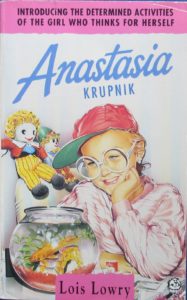
I got all the answers wrong. (Not my Problem by Ciara Smyth)
I know this is going to sound strange, but would you mind being my girlfriend for the next five minutes? (Nick and Norah’s Infinite Playlist by Rachel Cohn and David Levithan)
You see, the what ifs are as boundless as the stars. (Maggot Moon by Sally Gardner)
His name was P.T. Barnum, and he’d been looking for a mermaid. (The Mermaid by Christina Henry)
It’s quite rare to find someone who sees the same world you see. (Turtles all the way down by John Green)
Four hands were immediately laid upon me, and I was borne upstairs. (Jane Eyre by Charlotte Bronte)
Covered in blood, with his neck bent at a horribly wrong angle and his eyes wide open, staring at nothing. (Two Can Keep a Secret by Karen M McManus)
FREDDIE IS BACK FROM FRANCE AND I THINK TONIGHT IS THE NIGHT! (Lobsters by Tom Ellen and Lucy Ivison)
And then the first drops of rain began to fall. (The View on the Way Down by Rebecca Wait)
I’m still spitting up bits of sausage when I hear the loud rap at the door. (Taking Flight by Sheena Wilkinson)
But the noise is everywhere. (Are We All Lemmings and Snowflakes? by Holly Bourne)
All he’s heard are the rumours, stories, the speculation, and the swiftly lost words of whispered secrets, about the island where people have started to live forever. (Midwinterblood by Marcus Sedgwick)
Her second birth was the day the Watcher took her as its host. (Eliza and Her Monsters by Francesca Zappia)
One more’ll make no difference. (The Watch House by Bernie McGill)
In other news, my new YA novel, Little Bang, was published this month by Walker Books and we had a fabulous launch party at The Crescent Arts Centre. You can find out more about the novel here!
A new term, a new opportunity to write! There IS a budding novelist in your school. There’s also a poet, a playwright, a journalist, a diarist. There is someone using writing to process their feelings and understand the world. There is someone hiding their writing because they’re shy and they don’t know anyone else who writes. Do they have a writing club to go to?
If not, why not help them start one up? It’s easier than you’d think and there’s lots of advice here.
“When the writers start sharing their work out loud, those stereotypes shatter. Then students become people with their own stories, who so badly want to be heard and understood. I’m always surprised at people’s complexity. And willingness to be vulnerable, in hopes of being heard. I’m grateful for the opportunity to cross the threshold of the classroom — a field of possibility — to encounter it.”
(To be clear, the article is about writing workshops, where actual teaching happens. I REALLY don’t think you need to be a writer to lead a writing group, and I don’t think you need to teach young writers in your group, you just have to be there to create that space in which they can write, listen to their words and tell them what you loved about them. But the article is really insightful about how much that can mean for a young person and has lots of tips and tricks for working with them.)
“Teaching writing requires showing unabashed love, giving ready praise, sharing your appreciation of precision and specificity. Be unafraid to tell young people what you think is wonderful about their ideas and work, and what could be stronger. Just be gentle and do it with respect for whatever limits they’re working within.”
And if you already have a group, check these out:
BBC radio’s Two Minute Tales writing competition is back. The theme is What Happened This Winter and there are three age categories from 5-16, and this year there’s also an Irish Language category for ages 5-11! Send in your 300 word short stories by 7th November and they could be read on the radio in the week before Christmas, and maybe even turned into an animation for the website!
Following on from the success of their first Zine on the theme of Belfast, Fighting Words NI are publishing a new one. This time the theme is Happiness and entries should be in by 20th November. It’s open to anyone aged 8-18 and you can submit any form of writing.
They also have a page of free resources including video workshops and podcasts on writing.
And their teen writing group Write Club is open to all teen writers, with meetings happening in person in East Belfast, or on zoom.
Speaking of which, we’ve had lots of publications from Write Club members recently, including this one by 15 year old Kaila in the Afterpast Review, a feminist literary magazine dedicated to uplifting underrepresented voices (and open to submissions so check it out). Kaila’s story is beautiful, have a read with your coffee break!
January is all very well but September has always felt like a much more exciting New Year to me. Probably because of the stationery. So what better reason to buy some super sharp new pencils and… start a Creative Writing Club?
If your school doesn’t have one already, there are SO many good reasons for starting one.
It’s hugely beneficial educationally and psychologically to be creative. You’ll be giving your students such an important gift.
It’s also an amazingly relaxing, heart-warming, and bonding experience just to sit in a room with a bunch of people quietly putting their thoughts on paper. And when they share those thoughts with you it’s honestly such a privilege and a joy.
It’s SO much fun! Teenagers have incredible imaginations and ideas. My group inspire me constantly by coming up with stuff I could never have thought of. My mind is regularly blown.
You get tea and cake!
You get to hang out in the library after school like the cool kids in The Breakfast Club.
It doesn’t cost a thing!
It’s super easy!
Seriously, it is. If you’d like to set up a group but you’re worried that it’ll be a lot of work, or that you have to be a writer yourself, don’t. It’s so easy. In fact, the less you do, the better your group will be. I think the worst thing you can do is march in with a lesson plan and a PowerPoint presentation. It’s tempting to do that because we worry that if we don’t control things, nothing will happen, or if there’s a silence we need to fill it. But creativity happens in the gaps. In the unstructured, daydreaming, free time that teenagers get less and less of as they go through school.
All you need to provide for your group is time and space (and cake, obvs). If you’re new to this, have a look through the early posts on this blog, where I outline what I do with my group. It mostly involves letting my young writers bring their own ideas and letting them get on with it, but there are also some resources for writers who like writing prompts, or writers who want advice with things like character building, idea generation, dialogue writing etc.
But honestly, I’ve always got the best results by letting my young writers just pursue their own ideas. They’re always much more enthusiastic about those ideas than they are about any prompt or exercise I could give them. And if you give them five minutes to think, they always come up with something they want to write. It’s such a gorgeous thing to witness the light suddenly come on in someone’s eyes and see the real world disappear for them as they dive into a new one.
I beg to differ, Boromir.
And all you need to know about writing is how to listen and tell them what you loved about their work. There’s advice on that here too, but really it’s very simple. If you’re a reader, you’ll be fab at it. And your feedback and encouragement could mean so much to them.
I was a young writer once and I would have loved to have had writer friends and someone to encourage me but my school didn’t have a writing group so it was quite a lonely experience. I created this website because I know what these groups could mean to kids like me. So this is my annual plea to teachers and librarians to start your own club! Please Please Please!
And do feel free to email me if you have any questions or worries about starting a group or just want to chat about it!
And if you’ve already got a group going, yay, and here are some opportunities you could tell your young writers about:
Fighting Words NI have expanded their Write Club sessions so that, as well as the zoom groups in Prose&Poetry, Journalism and Playwrighting, there’s now an in-person group starting tonight 4.30-6pm at the Skainos Centre on Newtownards Road! Write Club is always free and all teens are welcome.
Fighting Words are also running a free story-writing workshop for 12-18s at the Skainos Centre on Thursday 22nd September 6-8pm. Participants will invent characters and create an original story set in Belfast and brought to life by an on-site illustrator! Book your place here.
The Paper Lanterns Journal of writing for and by young adults is always open for submissions (and if you have a club, why not subscribe to the journal! It’s always so inspiring for young writers to see published work by people their age, and they’re based in Ireland!)
Hope you all had a fantastic summer. I was off camping for two months and I actually really missed my writing group! It’s been great to get back to them and read what they’ve been writing. (One of them finished a whole novel! My inner teenager is in a state of deep awe.)
I shall be back with more opportunities and 1990s based memes and in the meantime, all my best to you and your young writers for the year ahead.
For me, character is everything in a story, and I generally find that when I’m stuck with my plot, it’s because I don’t know my characters well enough yet. Plot comes from character. People want/hate/fear something and that leads them to do something, and that’s all plot is.
So when my young writers are stuck on plot, I always tell them to try going back to their characters and finding out more about them. Character interviews are really helpful when you’re first getting to know a new character, and there’s one here you can use, but when you get deeper into the plot it’s helpful to start really interogating a character’s motives.
I find these 6 Questions To Ask Your Charactersreally useful for that. And you should use them for all the most important characters in your story, not just the main character.
(Stand by for memes!)
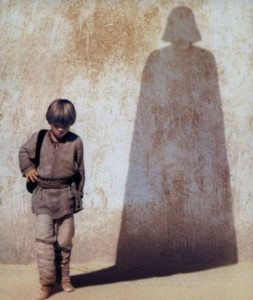
1. What do they want? – this is the external goal they’re aiming for, eg to win the race, to get the girl, to defeat the monster, to find the buried treasure etc. The antagonist is in the way of this (or, if the character is the antagonist, then the protagonist is in the way). e.g. Darth Vader wants to rule the Galaxy
2. What do they need? – this is an internal transformation which they may not even be aware that they need, e.g. love, to learn to ask for help, to be their true self, to be less arrogant, to be more confident, to learn to trust someone, to stand up for what’s right, to see their own or someone else’s worth etc. Darth Vader needs to remember he was once a good person
3. What is the lie they believe? – this is the reason they have to be transformed. E.g. they believe they are worthless, powerless, guilty of something, unlovable etc, or maybe they believe that one person can’t make a difference, that boys don’t cry, that winning/money/popularity is all that matters, or that people can’t be trusted etc. Darth Vader believes that power is all that matters
4. What is their ‘ghost’ or ‘wound’? – this is something that happened in their past (probably long before this story even started) and it’s the reason they believe the lie. E.g. someone once betrayed them and now they believe that people can’t be trusted, or their parents rejected them and now they feel no one could ever love them, their dad yelled at them for crying and now they think boys shouldn’t show emotion, etc. Darth Vader was once a slave with no power who couldn’t save his mother from slavery so now he believes power is all that matters
5. What flaw results from their lie? – as a result of their lie they will behave in a certain way, e.g. if they believe people are not trustworthy, they may be hostile and keep people at a distance. If they believe they aren’t worthy of love they may be very shy and try to hide. If they believe winning is everything they may be arrogant and competitive. Darth Vader becomes a power-hungry tyrant and bully
6. What truth will they discover? – this is the opposite of their lie, and finding it out will transform forever their behaviour and their life. E.g. they discover that there’s more to life than money/popularity, or that they are capable of making a difference or being brave etc. Once they know this truth, it will help them to fix their flaw and either achieve their original goal (their ‘want’) or see that they don’t need it after all. Darth Vader discovers that his son’s life matters more to him than power (so he stops being a bully and gives up his original power-hungry goal by killing the Emperor)
By the time you’ve done this for your main characters, you’ll be bursting with new ideas for your plot!
I think all the NI schools are wrapping up now so I’d just like to say a massive well done to everyone for getting through this absolute melter of a year!
I do hope your writing groups have provided some relief/entertainment/therapy/comradeship and above all inspiration through all that’s happened. My Fellowship is coming to an end and I’m so glad I set this up online because I’ve loved hearing what you’re up to via Twitter and it’s been a joy to be able to connect and share here when we’ve had to be so distant.
I wish I’d got to meet more of you in person but it just makes me so happy to think there are new writing groups and new writers out there. It’s all been about spreading the message that anyone can run a writing group and anyone can write. We all have permission to write and we all have something worth saying. And the time we devote to creativity is valuable in immeasurable ways. Thank you SO SO much for taking that message and running with it!
I will keep posting anything I find that might be of interest to young writers next year so I hope the blog will continue to be a useful resource for new and existing writing groups. Please do pass on the details to anyone you know who might like to set up a group. I guarantee there is a young person out there to whom these groups and your efforts will mean the world.
And I will of course continue to be a writing mentor with Fighting Words. Our online Write Club group has been going so well that we will probably continue an online version even after the pandemic. I love that it’s allowed kids who live too far away to attend our regular Write Club to come along. We’ll be there over the summer too so do tell your young writers about us, they’re very welcome to join.
Last week Write Club went on a virtual field trip to Fighting Words in Dublin for a Q&A with none other than Roddy Doyle! He had a wealth of tips and advice to share so I jotted down a few of my favourites to share with you:
Your characters don’t have to be likable, they just have to be real.
It’s all about the words! And we own the words already so don’t be daunted.
Characters stay with you when plots don’t.
Inspiration hits when you’re writing so be at your desk waiting for it.
Some days are rubbish and that’s OK.
Live through the doubts. Keep at it. Add words.
Get into good habits. Writing every day creates momentum.
Try out all your ideas and see where they go. It doesn’t matter if some of them don’t go anywhere.
Deleting stuff is satisfying. Once you’ve got loads written, deleting a big chunk can be a good day’s work.
Comedy and tragedy go together. Neither means anything without the possibility of the other.
Be kind to yourself. Do whatever makes it easier for yourself.
There’s a hidden artist in every headcase. It takes a lot of creativity to be a header.
As a final writing prompt, I’m going to steal an idea from St Catherine’s Armagh. Massive kudos to St Catherine’s, who started a writing group with one of the Blank Page resource packs I sent out at the beginning of my Fellowship. Working with past pupil, Amy (who sounds like an absolute gem!), for their Year 10 Poetry Anthology (they have a Year 10 Poetry Anthology! How cool!) they used their favourite books and fairy tales as prompts to create their poems. What a fab idea. And aren’t they amazing! I’ll post their Twitter pics below so you can have a read.
I’m so impressed with these. This might be a great idea to try with your own group! As their teacher says, “Blank pages no more!”
Fitting words to end on! So thank you thank you thank you for being here this year, for putting up with my memes…
…and I hope everyone has the most amazing (and well deserved) summer ever!
Thanks St Catherine’s for this lovely end to the year at The Blank Page!…
Just updating with a link to a writing tips YouTube channel – Writing with Jenna Moreci. I was told about this by a teen in my writing group who’s found it really helpful.
Jenna Moreci is an American YA dark fantasy and sci-fi writer and she makes short (and hilarious) videos about loads of different aspects of writing. They’re really very funny and entertaining as well as informative. (Some adult language and content so this is maybe for older teens, or if in doubt check them out yourself first).
Eg:
These are great tea-break fodder and might be good for your writing group to use over the summer to keep them inspired! Check them out!
Just to let you know there are more Tiny Masterclasses up on the Seamus Heaney Centre site (including one by me!)
Thanks to some wonderful Creative Writing students at QUB, we’ve got 5 minute videos on Point of View, Food Writing, using Memory to start a story, using Sound Maps for inspiration, and Writing Flash Fiction. I’d never even heard of a Sound Map but it’s a fascinating way to look at the world (or listen to the world)!
So if you’d like some bite-sized writing prompts for your young writers, look no further, check them out here!
This is an exercise for writers who feel completely paralysed by the prospect of a blank page. Blank pages can be scary for any writer. They’re so pristine, so empty! And you’re thinking What if I spoil this lovely clean page with my silly rubbish? What if I can’t think of anything to write at all?
You might also have lots of great ideas but the idea of putting them into words is scary. What if I spell everything wrong? What if I can’t think of the right words?
But you can make your brain feel safer by breaking the task down into very small chunks and this is one way to do that. It’s a bit like the Snowflake Method but it has emojis and is therefore way more fun:
1. Without writing anything down at all, think of a story in your head. (Or tell it aloud to the group or a partner.) It can be extremely rough and vague, it’s just the bare bones of a story. A character, a beginning, middle and end is plenty. E.g. the whole of Harry Potter might be summarized as: ‘An orphan is told he’s a wizard and gets sent to wizard school, where he encounters the evil villain who killed his parents, fights him and avenges their deaths.’ Done!
2. ‘Write’ the story down in the form of emojis. There are hundreds of emojis online you can search for and even if there isn’t one for the specific thing you want, you can just choose one that’s close. Again, it’s just an outline, ten emojis would be fine, or however many you want to use. The beginning of Harry Potter might look like this:
This is quite detailed actually, yours can be much simpler if you prefer
3. Take each emoji and turn it into one sentence. So now instead of ten emojis, you’ve got ten sentences. Maybe 100-200 words. It’s still just a skeleton plan of a story but you’re probably already thinking of lots more detail you’d like to add to flesh it out. So the first 6 emojis of the Harry Potter example might become:
Once there was a happy family called the Potters. The baby in the family was called Harry. The family got mixed up in a war. The war was with an evil wizard called Voldemort. He killed Harry’s Mum. In the attack, Harry was left with a scar. Etc.
4. Now turn each sentence into a whole paragraph by adding the details. You could include physical descriptions of people and places, dialogue, actions, what people are thinking etc. So now instead of ten sentences you’ve got ten paragraphs. And instead of a hundred words you’ve got maybe 500 or 1000! So the first sentence in the Harry Potter example could become: James and Lily Potter lived in a small house on a quiet street in Surrey and none of their neighbours knew they were actually wizards. James was tall with dark hair while Lily had red hair and green eyes and when they’d been married for 2 years they decided to have a baby… etc. (Hey, I never claimed to be JK)
5. If you feel your story is finished, great, well done! If you feel there’s more you’d like to add, or bits you’d like to change or polish, go back and do that. Keep expanding each section until you feel the story has been told.
Obviously, it’s easier to do this on a computer or phone where you can edit more easily. I think it’s great because it never actually feels like you’re ‘writing’ (which is the scary part because you feel like you can get it wrong or write something rubbish). It feels like you’re just planning the plot right up until the last moment, when you realise you’ve actually written a whole story! And going back and changing things over and over is a good way to learn how important editing is and how you really don’t have to produce something perfect first go on that blank page.
It’s World Book Day! And a much quieter one than last year but that’s OK, we can read quietly.
We can also write! Fighting Words NI have been busy bees this year, creating videos of creative writing workshops for schools to use (more on that later), and I’ve asked the writing students at the Seamus Heaney Centre QUB to contribute five-minute ‘Tiny Masterclasses’ of their own favourite writing tips, tricks and exercises for young writers, schools and homeschoolers to use.
Our first one, by poetry student Milena Williamson, is this lovely exercise on how to write an Ode, and features Ode to My Socks by Pablo Neruda (great choice!). So why not have a go at writing your own Ode to something or someone you love!
As you may have heard, there are two kinds of writer in this world: planners and pantsers.
Planners like to plan out their story in advance, down to outlining every scene before they put pen to paper.
JK’s plan for Order of the Phoenix
Pantsers like to hit the page running, with maybe only the vaguest idea of where this story is going and write ‘by the seat of their pants’.
Actually I think most writers combine both of these strategies to some extent. I’ve always been mostly a pantser but lately I’m coming round to the benefits of doing some planning (it really does save time in the long run). So I thought I’d share one of my favourite planning tools in case any of your young writers are natural planners or would like to try planning their stories in advance.
There are loads of very complicated (and fascinating) theories about story structure, but I like The Snowflake Method because it’s so very simple. It’s just ten steps that take you from a one sentence description of your story, to a description that’s several pages and includes character synopses and even lists of scenes if you want to go that far. I usually get to about step 6 and find that’s enough to start writing but if you’re someone who thrives on planning and organisation you can go the whole hog and do spreadsheets and everything.
You can find The Snowflake Method on various sites but I took mine from here. This is aimed at published writers so I’ve further simplified it and made this document for young writers that you can download for your writing groups. Even doing the first 5 or 6 steps of the ten is a really good way to brainstorm your story and get started. Download here: The Snowflake Method For Designing A Novel
In other news:
MoLI is offering a five-day, immersive, blended learning programme to 15 lucky students aged 15-17 around Ireland. The Edna O’Brien Young Writers Bursary will take place both online and onsite in MoLI from 19 to 23 July 2021.
You will be mentored through a creative writing project by one of Ireland’s leading writers, and you’ll meet with publishers, authors, literature academics and fellow writing enthusiasts.
They aren’t looking for polished, finished pieces of writing, or writers with large amounts of experience. They are simply interested in hearing about you, your passion and your creativity.
Travel costs and meals will be provided for all week-long bursary attendees. Entry is easy and doesn’t cost anything. The closing date for applications is 10pm on 29 March 2021.
Great news for these dark winter days! No, not the vaccine (TBF, that’s pretty cool too), but our new online Write Club!
I was disappointed not to get to go out and visit as many writing groups as I would have liked last year (stoopid covid!) but I’ve been lucky enough to be working with Fighting Words NI instead so I have got to hang out with some teen writers, which has been brilliant. And now we’ve moved our fantastic teen writing group, Write Club, online!
Write Club is a free, write-what-you-like, writing group for all teens (13-18). We chat about writing and reading, we write anything we feel like writing, we read our work aloud (only if you want to, there’s no pressure), and we give each other feedback.
We also have writing mentors (including me) who run the group and give enthusiastic and amazingly useful feedback on your writing and help with any writing questions you might have. We can provide writing prompts and exercises for anyone who’s stuck but we’re happy to let you write whatever you feel like writing. Stories, poems, plays, fanfic, non-fiction, graphic novels, anything goes!
We’re going to be online via Zoom every other Wednesday 4.30-5.30 and you can sign up here to join.
We also have a website where members can post their writing or illustrations and get feedback from the writing mentors. The website is members-only so it’s private and only members will get to see your work.
I absolutely love Write Club, it’s such a friendly, welcoming group, we have so much fun, and it honestly feels like a real privilege to get to hear our young writers’ stories and see them grow in confidence and creativity each week. I really believe our creative muscles are like any other muscles – if you don’t use them, you lose them. So a regular space and time to write is so important for teenagers, who probably get less time to be creative in school than younger kids. And writing is a great way to blow off steam when everyone’s so stressed out!
Before Write ClubAfter Write Club
Having the club online is a wonderful opportunity to reach out across NI to keen young writers who live too far out for our regular IRL meetings. So please do spread the word and let your young writers know about Write Club, we’d love to see them there!
You may know that November is National Novel Writing Month (or #NaNoWriMo). NaNoWriMo began back in 1999 as a challenge to write a novel (or 50K words) in a month. Today thousands of people around the world sign up for the challenge each year. It’s free, and there are forums, support groups, apps to record your wordcount, places to discuss your progress and keep you accountable, hashtags and a big website full of advice with a section specially for young writers.
This might sound like a huge task but the idea is not to produce War and Peace in a month, it’s just to bash out a messy first draft, or most of one, that you will edit later, and it’s a way to do it along with a bunch of other writers who you can moan and celebrate with and who will motivate you to keep going. The time pressure can actually be a great way to silence that inner critic, since you won’t have time to listen to them, you just have to get words on the page.
Two treats in fact! Two fab new writing opportunities for young people.
Fighting Words are a powerhouse when it comes to encouraging creativity, and they are once again running their scriptwriting program, The Right Twig. This is a series of workshops where 8 young people (14-18) get to each write a short radio play over the course of 7 sessions that will then be broadcast with real actors, directors, and sound designers!
They’ve done a couple of these workshop series already, but for the stage. They were put on at the Lyric with professional actors and I was honestly stunned at the quality of the short plays they produced. It’s an absolutely brilliant program where professional writers help the kids, who are total beginners, to develop an idea from scratch and write a whole play. I can’t recommend this highly enough, the kids get so much out of it.
And if 2020 hasn’t scared you enough, Halloween is coming! Halloween is always a great time for themed writing and Paper Lanterns literary journal are having a Halloween-themed poetry competition with teen and adult categories. Entries are 3Euro but they also sponsor submissions from people who can’t afford the entry fee.
The deadline for this creepy competition is 25th October. DEAD-line. Geddit?
If you’re looking for Halloween writing inspriation, there are loads of prompts online:
Take some slips of paper and write a different genre of writing on each (e.g. Romance, Sci-Fi, Crime, Climate Change Fiction, Poetry, Western, Fairy Tale, Myths and Legends, Fantasy, Historical, Thriller, Action Adventure, Superhero, Fan-Fic, Dystopian, Magic Realism). Everything except ‘Horror’. Put the genres in a hat and have everyone choose one. Pair your chosen genre with ‘Horror’ to write a Halloween-themed piece with a twist that’ll make it stand out among all the usual ghost stories.
Halloween Romance? It worked for Tim Burton.
Or just let your young writers loose and let them do their own thing!
In other news, I wrote an article for the Arts Council reflecting on my first year as Children’s Writing Fellow and my thoughts on creativity in a new school year full of restrictions and pressure. It was actually very nice to look back over last year, as it went by in a bit of a blur! You can read it here.
I hope everyone had a great (if incredibly weird) summer, and that you’re all settled back into a great (if incredibly weird) new term!
I said I’d update the site if I saw anything interesting/useful and I’ve got two really brilliant opportunities to tell you about.
For your young writers, there is an Irish Literary Journal dedicated to writing for and by teens called Paper Lanterns and, as well as welcoming submissions from young writers, they are doing a free online workshop for young writers as part of the Dublin Book Festival on 28th November 3pm-4pm.
This will cover: “all you need to know about submitting to literary journals. Learn how to write the best poem, short story, or flash fiction piece that you can. Find out how to create an essay proposal on a topic you are passionate about. Discover how to make an informative and honest book review. At the end of the workshop, you’ll get the chance to showcase some of your creative writing, proposals, or book reviews to the group!”
And for adults working with young writers, Arts Council England, as part of National Poetry Day, are running 4 free Zoom workshops with “Super-teachers” Kate Clanchy and Peter Kahn, plus a Young Poets Showcase with six of their students. 28th Sept – 2nd Oct.
I absolutely loved Clanchy’s truly insightful book Some Kids I Taught and What They Taught Me, about doing poetry workshops with kids from very difficult backgrounds, and I know loads of teachers loved the book too so I’d really recommend these workshops. You can register here.
I know this year will be all kinds of weird and that there’s a lot to catch up on, but I hope all the lovely non-curriculum artsy stuff that enriches the school experience for so many kids won’t fall by the wayside and that writing groups will continue to run and to provide an outlet for your young people (and you!) in what is bound to be a strange and difficult year ahead.
Before we all go off for the summer, I’m so excited to post this interview I did with NI teen writer Dara McAnulty!
Dara is 16, and his first book Diary of a Young Naturalist, which was published in May this year, is about conservation, activism, writing, being autistic, being bullied, his school, his family and most of all, his deep love of the natural world.
I’m a keen wildlife gardener myself, and I’ve always kept a diary, and I love reading writing by teenagers, so I was really looking forward to this book and I was not disappointed. It’s the diary of a difficult year in Dara’s life and how his close connection to nature and to his family got him through it. It’s not only fascinating, it’s beautifully written and incredibly inspiring.
I couldn’t resist contacting Dara and asking if he’d answer a few questions and he very kindly agreed. I think it’s always so inspiring for teens to see published writers their own age so do pass this on to the young writers and naturalists in your life and encourage them to write their own diary!
Welcome to The Blank Page, Dara, I’m so thrilled you could join us! In your book, you describe writing as a way to deal with the pressures of life and you say that you only fully experience things by writing about them. This really resonated with me because I’ve always kept a diary and find both diary writing and fiction writing to be therapeutic and a way of processing my thoughts, as well as a good way to learn the craft of writing. Would you recommend that young people keep a diary and what does writing mean to you?
I really do feel that writing in any form, whether it’s a diary or anything else, opens a new window into your thoughts, actions and the inner workings of your brain in general. It helps makes sense of things, it unfurls problems or confusions and it is a powerful form of expression. A diary is an easy place to start, there are no rules, it’s your place to share your thoughts. Writing gives me a voice. Being autistic, expressing myself in everyday conversation is very difficult. It also focuses my thoughts and I just find writing gives me freedom to truly be my best self.
Your passion for the natural world is inspiring and infectious and made me want to be more involved in conservation. What advice would you give a young person who wants to get involved in environmental activism and engaging more with nature?
I have to say, I’m terrible at giving advice! What I can say though is environmental activism needs everyone. If it’s something you are interested in and are nervous or anxious about doing so – I’d be more than happy to help. You can of course join organisations such as Ulster Wildlife (I’m part of a Youth Forum there), the RSPB NI and Butterfly Conservation etc.
Engaging with nature is very simple, you just need your own senses and an open mind. Nature is everywhere, all around you, in every crack and crevice. Notice it. Appreciate it and stand up to protect it. I feel that when people really open their eyes to the nature on their doorstep, things can change automatically – the realisation too, that we are all connected to nature, we are a part of its fabric, can be an important catalyst for change. Growing things, tending to your own little patch of earth (even if it’s a single pot) is a very wonderful thing, planting something and watching it grow is giving back to nature, helping to support bees, butterflies and birds. If everyone planted one pot to help nature, can you imagine the impact that would have!
Your book includes a beautiful poem you wrote about the impact humans have had on nature, and you describe how your parents read poetry to you and your siblings. What is it about poetry that you like? Do you ever write fiction too?
I love the density of the language and how everyone can interpret it differently and not be wrong. Poetry is accessible, it can be short and really great to read. My sister struggled with reading and my mum used simple poetry to bridge the gap. Poetry has beautiful language which is felt deeply in short bursts. I also love the variety of form and style. It’s very interesting.
I have actually drawn maps and designed fictitious worlds but never actually written words to go with them. I really love reading fantasy books, if I were to write fiction, it would most likely be fantasy…I think!
How long did it take you to write the book, and what advice would you give to a young writer?
It took me fifteen months of writing it to submit the first draft. I then had a three month wait on editing to start. I was tempted to go in and start editing myself but I waited. I would tell any young writer, to just write! Write what you know, what you feel, what you imagine. The writer Robert Macfarlane once told me to write until your words become ‘strange’ and have taken on a life of their own, I love that and I definitely heard his voice – particularly in the ‘Winter’ chapter of my book. I write lists that have become a sort of poetry, a regular diary which has become a news report, Wildlife recordings which have become prose. I think in school we are taught that writing should have particular form, but my mum instilled the idea that all writing is worthy, that every pen stroke or keyboard tap could be a portal to anywhere and everywhere.
I love that the book is about the importance of protecting the natural world not just because humans need it to survive but because we need it to be happy. Do you think that’s a message that gets lost sometimes in political discussions around the climate emergency?
I think when we talk about the climate emergency that it becomes abstract – the only message we hear is that the world is dying but we lose the narrative of what is actually living, what we need to protect and how. I have always approached activism from a place of wonder, not fear. I don’t shy away from the facts of course but I feel like we all need a foundation of experiencing joy in nature. Otherwise, it doesn’t come from a place of knowledge and deep respect.
In the book you talk about how unhappy you were at your first high school where you were bullied for being different. I was very glad to read that you are much happier at your current school. What advice would you give to someone who was experiencing bullying? What do you wish people understood about autism and neurodiversity?
I am very glad that my parents took the brave act of removing me from that school – it was clear that the issues were not going to be resolved. If someone is experiencing bullying then a system exists which allows it. Unfortunately our society allows bullying and if you are going through this, then please reach out to someone, whether that is a trusted person or a helpline. Know that it isn’t your fault. That you deserve more and better. I would recommend Dr Emily Lovegroves’ ‘Autism, bullying and me’ it can really help, even if you are not autistic. Once I realised that people were bullying me because of being autistic or loving nature and I loved nature and the facets of my autism which allowed me to connect with and express my love for nature – the more I realised that the bullies didn’t matter. Knowing who you are and respecting yourself can protect you from bullies but obviously that cannot always happen. I have been beaten pretty badly, no amount of self esteem can protect you from that…although martial arts might help!
I wish people would just realise that it takes all kinds of people to make a beautiful world. If kids are reacting differently to you, it might be because they have a unique perspective and a different way of seeing the world. Appreciate that difference don’t persecute it. Know that we are capable of understanding jibes and taunts, it takes us a while longer to process them, but we know and we remember. Know that we are human beings, like everyone else and we deserve to live full and joyful lives. Know that we can make decisions and that we have opinions – we might just express them differently. We are not robots. We have great empathy and with nurture, are a pretty positive force for good, we love to make the planet better, for everyone. Many scientists and inventors are/were autistic!
The joy you get from nature really comes across in your writing. You mention that it seems like only young children are allowed to feel and express ‘joy’, and that being ‘grown up’ means suppressing or hiding those feelings. I’ve noticed that too and I think it’s sad, because I believe we achieve more when we’re passionate. I think teenagers are actually much more passionate than adults, it’s one of the things I admire about them, but I think in activism it’s often channelled into anger rather than joy. Which can get things done, but can end up being a depressing and dispiriting experience leading to feeling burnt out. Do you think activism can be as much about joy as about anger?
Absolutely. I agree, teenagers, we are a giant ball of energy and hope! Anger though, at the destruction of things that bring you joy is wholly justified! Joy and connection bring a deeper understanding, when you understand more, you fiercely want to protect it. In activism finding different forms of expression can be very powerful and creative. You are making art and simultaneously making a difference. That can be very joyful. Of course, when you live in an age whereby politics isn’t changing the things you care about, voting and becoming engaged with politics is the next step. If you do take that step, then coming from a place of joy rather than fear, from care rather than power – then that is a great philosophy to live by, and I think, it will make us happier in our work.
In your experience of publishing a book, what was the:
Best part? Writing the book and holding the finished copy for the first time!
Worst part? Publishing it during lockdown was very difficult. I haven’t seen it in a bookshop yet, which is sad but it will happen soon, hopefully!
Most surprising part? I think the editing process, it was pretty plain sailing.
What a great way to end this year at The Blank Page! I have to admit, since reading Dara’s book, I got a camera for my garden to see what was going on at my wildlife pond in the middle of the night and so far we’ve seen two foxes and a badger and it is literally the most thrilling thing in my life right now!
Forget Netflix, this is where it’s at.
Thank you so much, Dara, and very best of luck with Diary of a Young Naturalist, it’s a wonderful book!
You can find Dara’s book in all good bookshops, and you can find Dara on Twitter @NaturalistDara
When I started this year as Children’s Writing Fellow I had no idea what to expect. But I bet none of us expected to be ending the year like this!
It’s been an absolutely mad year but also really wonderful and I just want to say thank you so much to all the schools who’ve contacted me and used the blog. The thought that there are new creative writing groups being set up around NI makes me so happy! I hope they run for years and give lots and lots of young people opportunities to be creative, and all the benefits that creativity brings.
And if you’re in any doubt about what those benefits are, here’s a great article from Penguin on why storytelling matters, including some brilliant tips for helping a young writer find their voice.
“Writing stories gives children a sense not only of what they can do as writers, but also what they can do in the world.”
I hope The Blank Page has provided some useful tools, ideas and resources, but most of all I hope I’ve convinced you that it’s not hard to run a writing group and that your young people will get SO MUCH out of it. I know how grateful I would have been as a teenager to have had one, and I would love it if every teen in NI had that opportunity as part of their school week.
So that’s largely it from me for this year, though I will keep occasionally posting anything I come across that might be useful, and the blog will remain online for groups to use in the years to come. I hope it’ll be helpful, and do feel free to get in touch if there’s anything you’d like advice on.
I know there were some schools I didn’t get to visit due to Covid but (time and restrictions-depending) we can maybe arrange something for next year so do get in touch when things are back to normal. I think the next school year is shrouded in a bit of mystery for all of us so I don’t know exactly what I’ll be doing with my Fellowship in 2020/21 but I can’t wait to find out!
So well done everyone for making it to the end of term! Especially all the homeschoolers and remote-teachers and virtual writing clubbers. We definitely deserve a great summer.
And a HUGE thank you again for being part of this, and for making this year so incredible!
Just a quick post to share this amazing Zoom recording by the Embassy of Ireland, Pretoria, of young writers from South Africa and Ireland reading pieces they’ve written about what it means to be a young person today.
I’m so proud to say that one of the young writers, Niamh, is one of our own! She’s a regular at our Fighting Words writing group. She’s been coming along for a couple of years now and I know she impresses and inspires the whole group (including me) with her dedication to writing and her beautiful stories and poems. She’s a really fantastic writer and apparently a fantastic reader as well! Well done, Niamh!
Inspired by the topic, another of our group made this video with his piece on Growing Up. JJ is a brilliant writer and his stories are so full of imagination and humour and this piece shows he can tackle really serious topics as well. I particularly love the line, “Growing up isn’t about waiting until you’re an adult, it’s about deciding who you’re going to be as an adult.” Well done, JJ, this is wonderful!
I think young writers are always interested in hearing or reading things written by people their own age so you could pass this on to them. It’s also a great topic for a writing prompt if you wanted to make your own collection/zoom reading etc with your group. What does it mean to be a young person today? Discuss…
I did a BA in English and Creative Writing at Queens University Belfast and I loved it. But I did it as an adult because when I left school I’d never even heard of a degree in Creative Writing. There wasn’t a course in Belfast, as far as I was aware, and no one told me anything about it at school.
These days loads of universities offer creative writing, including QUB (hurrah!) so today on the blog I’ve got Glenn Patterson, author of many many wonderful books, and Director of the Seamus Heaney Centre at Queens, who has kindly agreed to answer some questions that might help you make your decision. Thanks Glenn!
Glenn is a man who knows how to do an Author Photo
Why should I study creative writing at university?
It might sound like an odd thing to say, but first and foremost studying creative writing will make you a better reader. By thinking about – and talking about – your own writing, and the writing of fellow students, you will have a new understanding of how other, published works came into being: the decisions their writers made along the way. It will, undoubtedly, make you a better writer too, or help you to see how to become the best writer you can be. But being a good reader – someone, that is, who is alive to language, its uses and abuses – strikes me as no small benefit in a world where you are constantly assailed by text of one kind or another.
What happens at a university creative writing class?
Most creative writing classes are focused on the students’ own work. So, usually, a small number of pieces are submitted each week, and circulated in advance of the classes, for group discussion. There will also, though, be other classes in which students are introduced to certain aspects of the craft of writing. The first-year Introduction to Creative Writing class at Queen’s brings all students together for lectures, given by the poets, playwrights and prose writers from the university’s Seamus Heaney Centre, with follow-up workshops where you get to try out different forms and genres.
How did you learn to write?
Like a great many writers, I suspect, I can’t really remember a time when I didn’t write – certainly I was doing it in primary school, although then I would probably have called it just making up stories. I won’t say I didn’t think seriously about it, but there were lots of other things I was just as interested in. When I did start to talk about ‘wanting to write’, people assumed I meant become a journalist and, because they assumed that, I started to assume that too. Just after I left school, though, I heard about this course in the University of East Anglia, in Norwich, where you could do a whole degree in making up stories. That wasn’t strictly true (the whole degree bit, I mean), at least not then, but they did have a Master’s degree – MA – in Creative Writing: the first one in the United Kingdom. (This was way back in the early 1980s.) So, I went to East Anglia and wrote lots and ended up on the MA with five other students and had the best year of my writing life – because the tutors, who were both very well-known writers, treated the six of us not as students, but as fellow writers. I began a novel there, called Burning Your Own, which I was fortunate enough to find a publisher for soon after I finished the course. So that was me started.
Can you recommend a book about creative writing?
You can learn a huge amount just by opening up a novel, or a book of short stories, or a poetry collection, or the text of a stage- or screenplay. Take time to look at the page. Be aware of things like dialogue – how do writers set it out speech and indicate who is speaking? (it might sound straightforward, but there are many ways of doing it) – or the way they divide up the book: do they use sections, chapter names, or chapter numbers? All of these contribute to the reading experience, and all of these are techniques you might one day want to use yourself.
As for ‘how to’ guides, Andrew Cowan’s The Art of Writing Fiction is a good place to start.
Will studying creative writing help me get published?
It would be a false promise to say that studying creative writing will help every student get published: there are creative writing courses in most universities in Britain and Ireland, with scores, possibly hundreds, of students taking them every year. What it can do is make sure that when you send a poem or a story or a novel out to a publisher or a commissioning editor it is the best possible work of which you are capable at that moment. I always tell students that rather than focus on making a living from writing they should think about making a writing life for themselves: if you feel the need to write then how best can you fit it in with the other work you might do, or fit other work in with your writing? A former student of ours recently signed what is referred to as a ‘six-figure book deal’, that is she was paid over £100,000 for a single book. Others will publish for years – online, in magazines, and even in book form – and never be paid anywhere remotely close to that. And they can equally count themselves to have enjoyed success, and to have enjoyed writing.
Will studying creative writing help me to get other kinds of jobs?
Anyone who has studied creative writing will have gained certain valuable skills in the use of language, the organisation of words on a page, or a screen, for maximum effect. So many jobs now depend on conveying information in one form or another. Clarity, precision, and originality of expression are all in greater demand than ever.
What kinds of writing can I study at Queen’s?
Creative writing is evolving all the time. At Queen’s, students will be introduced to poetry, fiction, playwriting and screenwriting, but will also be able to work with songwriters, as well as writers who are working on video games (and board games), and the new ‘immersive’ technologies: Virtual Reality and Augmented Reality. We work very closely with people like the Lyric Theatre and Northern Ireland Screen, which is the body that encourages and supports film here.
How can I get the most out of my creative writing degree/MA?
The way to get the most of it is to put the most into it. Take part in as many of the activities that are offered alongside your taught courses as possible. In the Seamus Heaney Centre at Queen’s in the last couple of years you would have had the chance to go to workshops with Lisa McGee, the writer of Derry Girls, and Jed Mercurio, writer of Line of Duty, or even have a one-to-one chat with Iain Archer, the songwriter who co-wrote ‘Hold Back the River’ with James Bay (viewed by 210 million people), and ‘Run’ with Snow Patrol (just the 43 million views so far).
Do you get writer’s block and how do you deal with it?
It doesn’t matter what job you do, or for that matter what your favourite pastime is, some days just aren’t as much fun as others. Think of the times when writing does not come easily – or at all – as part of the rhythm of whatever you are working on. Pick up a book that you have been using for research, maybe, or look down your list of potential titles (you don’t have a list of potential titles? Make a list of potential titles!), or jot down a few notes about one of your characters. Or get up and go for a walk. I’ve lost count of the times I have come in from just walking to the shops and written into the novel something I have seen or heard, or thought, along the way.
What’s your top tip for a young writer?
Read as much as you can, or if you aspire to be a writer for a visual medium watch as much as you can. If this is the world you are going to be working in then the more you know about it – what writers are doing now, what they have done in the past – the better. If you don’t like novels or short stories, you are unlikely to gain much from a creative writing fiction course, so be honest with yourself too. And, remember, words do not control you, you control words. Make them speak for you and your world, without fear.
Thanks Glenn, this is great advice! If you’d like more info about the courses at Queens, check out the Seamus Heaney Centre website.
And if you’d like some advice from someone who’s been there and done that (i.e. me), here is it. I’m not as grown up as Glenn so mine has memes.
Me in the actual process of graduating!
When I started at Queens I was absolutely terrified! Proper writers? Reading my scribbled rubbish? I had visions of them ceremoniously snapping my pencils, taking my thesaurus away and sending me packing.
The very first time I had to show my writing to anyone involved me writing a poem (I am NOT a poet) and showing it to Sinead Morrissey. SINEAD MORRISSEY!
But I soon discovered that it’s not that different from being in a writing group except that you get support from tutors who are published writers themselves (and therefore know how hard writing is and are more likely to sympathise than beat you round the head with a dictionary). You also get to critique each other’s work, which is really helpful. You can learn as much from critiquing someone else’s work as from having your work critiqued. And it’s great to have three years where you’re allowed, nay expected, to focus on writing.
I found the teachers supportive and helpful, but it’s like anything – you get out as much as you put in. No one’s going to wave a magic wand and turn you into a writer if you’re not prepared to work hard. But I think this is a good thing because working hard, being self-motivated and independent are skills you need to learn as a writer. No one will give you a job as a ‘writer’, it’s a freelance sort of gig, which means you write stuff and then attempt to sell it to a publisher/journal/magazine/theatre company etc. University study is a good way to learn that kind of self-discipline.
You’ll also meet people who love books and writing, and it’s important to have that kind of support and community if you’re going to embark on a literary career.
I completely agree about writing making you a better reader and I think it works both ways. I found the English Lit modules as useful as the Creative Writing modules. You learn to write by reading, so studying the work of other writers is really important.
Of course it’s not absolutely necessary to study writing to become a writer. Lots of published writers didn’t. Lots of writers write for themselves alone and aren’t interested in qualifications or publication at all. And studying other subjects can also be useful. When I left school I did a psychology degree and I loved that too. It’s basically the study of why people do the things they do, which I believe is useful for any writer. A writer needs something to write about, so anything you study will eventually feed into your writing.
What I got out of my degree was brilliant feedback, encouragement, and time dedicated to reading and writing, not to mention a qualification in a subject I really enjoyed. Three years is a long time to study something you’re not interested in, and you’re much more likely to end up with good marks if you’re having fun, so think very carefully about what you enjoy.
So thanks again to Glenn, and do pass this on to any young writers you know who might be considering studying creative writing at uni someday. Might be something to chew over during a long, hot, socially distanced summer!
They’re also keen to contact previous winners and highly commended poets to interview them for a research project so if you know any, send them to the website.
This will be judged by Roddy Doyle, no less, and the winner in each age category wins a £250 Lidl voucher (think of the chocolate!) AND a creative writing masterclass hosted by Roddy Doyle and Fighting Words AND a signed copy of Roddy’s book. Entries have to be in by 31st May.
Generation Lockdown is open for entries from 7-17 year olds until 17th July. They want to know about your life in lockdown, in the form of stories, personal experience or poems. This is for writers aged 7-17 and should be 700 words or less and will be judged by a group of published authors. Winners will be published in a book as well as winning a prize and you get to go to the book launch and meet the judges! All money raised from the book will go to the BookTrust charity.
Our Corona Diary is creating an archive of young people’s experiences during lockdown by collecting their diaries. They also hope to publish some of them in an anthology so if you’d like to contribute, just start a diary. They stress that a diary doesn’t have to be written. It can be drawn, painted, photographed, filmed, recorded, sung, sculpted, knitted or a combination of all of these!
They’re also collecting on Instagram (@ourcoronadiarygram) and Twitter (@OurCoronaDiary)
So loads to be getting on with there. And if you know a young writer who’d like to share their work, I’m happy to do that here on The Blank Page, just send it to me. While I think it’s perfectly OK to write just for yourself and never show it to anyone or enter competitions, for some people it can be a real confidence boost to put their work out there so it’s great to have all these opportunities!
I’m delighted to be involved in another exciting writing opportunity for secondary-age students in NI, and I’m particularly thrilled about this one because it’s for essay writing!
Which you don’t see a lot of outside the classroom. I was always one of those odd kids who actually loved writing essays as much as I loved writing fiction. The general consensus about doing English Lit in school is that everyone loves books until you start making them write essays about them, and I completely agree, that can be off-putting, especially when it feels like the whole point of the essay is just to test what you know and it has to fit into a certain easy-to-mark structure that doesn’t allow any room for creativity.
I’ve heard horror stories of students being given essay plans that tell them exactly how many paragraphs to write, how many sentences in each paragraph, and what each paragraph should do.
I’ve always felt that essay writing can and should be a really creative process. There’s so much scope for self-expression and originality of thought. There are as many ways to structure an essay as there are ways to structure a novel. There’s the same scope for beautifully constructed sentences, fresh metaphors, startling similes, passion and personality.
When I was a student we were literally told, Don’t use “I” in your essay and don’t give your own opinion because “who are you?” We were there to regurgitate stuff that had already been written, and that was all. This completely put me off studying English at Uni actually and I only went back to it ten years later.
But things have changed, and the ‘personal essay’ is a really popular form of writing these days. This is usually autobiographical non-fiction, with an emotional and intimate style. Anyone can write it, you don’t have to be an academic, and you can play with the form and reinvent it to your heart’s content.
And the best part is, you get to write about something you are passionate about. Not the exam text, not the set question, not someone else’s idea of an interesting subject. You can take a theme and use it to explore your own feelings, your own life. In my experience, you always produce better writing if you’re writing about something you care about. You’ll also enjoy writing it, and if you enjoy writing it, your reader will enjoy reading it.
The idea of an ‘essay’ might seem scary and difficult if it’s something you’ve only ever encountered in exams, but actually, if you’ve ever written a blog post, a diary, a letter, some journalism, then you’re already writing creative non-fiction. It’s much easier and more fun than you’d think.
The Left Side Up Essay Competition want “excellent, imaginative essays about our experience in lockdown here in NI.”
There are three categories, themes and wordcounts:
Key Stage 3 the theme is ‘Home’ (750-1000 words)
For Key Stage 4 the theme is ‘Community’ (1000-1250 words)
For post-16s the theme is ‘Citizenship’ (1250-1500 words)
These are huge themes, and that means there’s massive scope to interpret them in your own way. These words have as many meanings as there are people. So what does Home or Community or Citizenship mean to you? How has lockdown changed that? What will the post-lockdown future of these things be? Start brainstorming what these words mean to you and I bet you’ll come up with loads of ideas that you could write about. My advice is not to try and take on every single one of them because it’ll be overwhelming and you won’t be able to cover them fully within the wordcount. Pick a small, specific idea that means something to you or interests you and then explore all the aspects of it more fully.
The judges have stressed that there is no marking criteria and no set structure. You don’t have to use quotes or references or a particular style. They just want you to be creative. You can come up with your own structure. It can be funny, sad, personal, about the future or the past. They don’t want stories, poems or plays but other than that, it’s up to you how you write your essay.
They’ve also made a really helpful podcast about how to write a great essay, how to generate ideas, how to think about structure, and how to get started so I recommend you listen to that first. It’s on the website.
Then when you’ve written your essay you can submit it via the website. The closing date is Sunday 24thMay and winners will be published in a pamphlet entitled ‘Living in Lockdown’ as well as winning a prize. Highly commended essays will be published on the Left Side Up website.
So teachers and parents please do recommend this to your students. It could be a really good home-schooling project as well as a chance to try a new style of creative writing that they mightn’t normally get a chance to within the curriculum.
At Christmas I got to be a judge for BBC NI’s Two Minute Tales competition. Kids wrote Christmas themed stories that could be read aloud in 2 minutes and the winners were read on the radio and animated on the website.
It was so much fun to read the stories (there is some serious writing talent in NI). We did the final judging in the BBC offices and they’d dressed the room up for Christmas! (Note the awesome TV fire. Don’t know why I bothered tiling my fireplace TBH.)
Being a writer is hard work, honest
The response to the competition was so massive that they’ve decided to run it again! And, most excitingly, open it up to teenagers too!
The competition was launched again on Monday and entries have to be in by Friday 15th May. The theme is ‘Home’, but you can interpret that any way you like. It can be magical, fantastical, realist, whatever you like. Even a spaceship, a castle or a fantasy forest is someone’s ‘home’. Or it could be set in your own home town (but obviously don’t write about real people, keep it fictional!)
The stories must be no longer than 300 words and they don’t care if you can’t spell! The focus is on creativity rather than spelling and grammar. There are three age categories:
5-8
9-13
14-16
There’ll be a winner and two runners up in each category. All 9 stories will be recorded by an actor for a radio broadcast and the three winning stories will be turned into animations and featured across the BBC. Runners up will receive a specially commissioned illustration of a scene from their story. And all 9 stories will be published in a downloadable digital storybook.
Entries will be judged on the following criteria:
Originality – We want stories and characters we’ve never seen before!
Plot – I firmly believe that plot comes from character. As readers all we want is a character we care about, and that character should have a goal (something they want to do/get/be etc). We read on to find out if they achieve it, and that’s all plot is.
Characterisation – Emotions are what turn words on a page into real life people we believe in. What do your characters love/hate/fear/want?
Language – You’ve only got 300 words so think carefully about every one of them. Is there a shorter way of saying something? Is there a more interesting or effective word you could use? Do we really need to know what they had for breakfast?
Enjoyment – If you enjoy writing your story, your reader will enjoy reading it. Fun somehow gets woven into the stories you’ve loved writing and your reader will sense it. So the most important thing to do is have fun!
The website also has a brilliant ‘Creative Writing Kit’ to download with loads of tools and exercises you can use to develop your story, like story dice and character profiles.
I’ll be judging the stories along with NI writer Lucy Caldwell, who’s one of my favourite short story writers and was shortlisted in the BBC National Short Story Award recently. If I was a young writer I’d kill to have her read my work!
And if all this wasn’t enough, Fighting Words are also running their Global Writing Lockdown project! This is open to young writers all over the world (you can be over 18 for this one too). You can enter a story of up to 2000 characters, or you can send a poem, drawing, haiku, comic, anything you like! There’ll be a digital release party in July. Entries have to be in by 5th May so get going!
Do pass these on to any young writers you know. Maybe make it a home-schooling project!
Today on The Blank Page we’ve got special guest, Shirley-Anne McMillan to tell your young writers how to make their own Zines! She’s even made a video!
Zines are basically mini books you can make yourself, on any topic at all. I’ve never made one but it looks like so much fun I might give it a go.
Shirley is a YA writer from Co. Down and I’ve LOVED every one of her books. She likes to tackle big issues like LGBTQ+ rights, social injustice, teen pregnancy, living in care, and she’s as much of an activist in real life as she is in her books so she’s the perfect person to give us some tips on how to use Zines as a way to respond to injustice and maybe even change the world.
You could even make a Coronavirus/Social Distancing Zine! Someone said to me recently that we’re basically living through a future GCSE History question. People will look back at this time as being historically significant and they’ll want to know how we felt about it. So why not make a record. I’m keeping a diary myself, but if diaries aren’t your thing you could make a Zine! I’ll let Shirley tell you how…
Zine-Making in Isolating Times – Shirley-Anne McMillan
My name is Shirley-Anne McMillan and I write YA fiction. My second book, The Unknowns, is the one that I think of most often in these weird, virus-cautious days. It was originally pitched as a dystopia to my agent- a story about NI in the near future, when all the arts had been shut down- I mean really shut down- the funding was gone and the government wanted to focus on industry above all else, so nobody was allowed to make art- it simply wasn’t seen as important any more. In the cultural wasteland a gang of young people would meet secretly to produce and share underground art.
My agent said no. No dystopia right now (at the time everyone was bringing out dystopian novels and my book would have been out about two years after the interest had died down). She was right, of course, but I still wanted to write it. In the end I decided to keep my gang and focus on the dystopia of NI as it was at the time.
I am a GREAT complainer. I always have something that’s making me really angry. I am always trying to keep a positive, cool, head because left to its own devices my head would be constantly raging. It comes naturally to me. I watch Henry Rollins videos to calm myself down. Anyway, I decided there was plenty of dystopia to be found in the present day: our society is so divided, so elitist. We have problems with racism. We blame all our ills on the young. We still have a massive problem with homophobia and transphobia. We still treat women poorly. So I wrote The Unknowns and kept the story pretty much the same, simply setting it in present times: a gang of young people get together in secret to do something about the problems they and their friends face in modern day Belfast.
When people ask me about The Unknowns sometimes they want to know if I made it all up. Were there elements of reality to the story? I tell them that almost every single action that the gang performs is something that I know happened in real life. Painting new graffiti over old in the dead of night. A biker gang community who make customised bikes. Ninja gigs. People trying to disrupt violence using music. The disruption of racist gatherings. Anarchy, organisation, activism, put to their best uses. I wanted the story to reflect things that ordinary people actually do. They might not be famous, they don’t get called heroes, but they live these lives of thoughtful activism- asking themselves ‘What is the situation before me? What can I do to stand in the way of this injustice? What questions must I ask of this?’ and sometimes it is a very small thing. So I want to share with you today a very small thing that you can do. It’s easy and fun and creative. It can bring joy, and life, and maybe it can change things politically for people too.
Here is my How-To video about making a mini zine:
Zines are the ultimate in radical self-publishing. They are the most accessible and cheapest way to create a hard-copy publication. They are easy to reproduce. They can be written quickly, or you can take your time over them. Some people sell their zines. Others distribute them freely. I have found zines that people have deliberately left around in art galleries, cafes, writing centres, libraries. I have been given zines in the street and in a queue for a gig- handed around by the band who were playing that night. Sometimes they are on a particular topic. Sometimes they take the form of a little comic book. Sometimes it’s a collaboration between a group of friends. A drag queen friend of mine produced his manifesto as a zine which he could distribute at his gigs. Another person made one just for himself- a collection of personal items, like a kind of magazine scrap book. You can find fan-zines online about people’s favourite bands including art work, fan fiction they’ve written, fantasy interviews etc. Some are just art. Some are just words. Some are info-zines explaining a particular political ideology. Some are mega-rants about the things that make the author most angry. Some are love letters. Some are tiny books of poetry.
Have a look on YouTube for various zine ideas and information about different kinds and sizes of zines. Use old magazine or papers for collage, use felt tips, do a whole zine in black and white. There are no rules. I love the mini zine so much because it’s just on one side of the paper and if you have access to a photo copier you can easily have your own printing press. If you and your friends are keen you can get together and have a zine gang, swap them, make them together, have a new theme each month. Do a series of Social Distancing Zines that you can publish when this is all over and then hold a zine party when you get together and bring copies to swap. Please invite me to this party.
I hope that this post has inspired some to get making in these days of isolation. We’re not really alone you know- we’re just physically further apart. Imagine everyone writing, everyone drawing or cutting and sticking. We’re going to produce art for ourselves and each other. If we can’t send them now, we will post pictures online and send them physically later. The main thing is to get your hands involved directly with the paper- make your mark- and then share it.
Good luck and happy zineing! I have no idea how to spell that. Answers on a zine…
Shirley-Anne McMillan is an author of contemporary Young Adult fiction. She lives in Co Down with her family where she writes, tutors, and works in the local Integrated school as an Alternative Chaplain. Shirley-Anne’s third novel, Every Sparrow Falling, was published by Atom in 2019.
Next up in my series of special guests on The Blank Page is the multi-talented Myra Zepf! Myra writes for children and teenagers, in English and Irish. Her latest picture book has been adapted into a beautiful dance performed at the Ulster Folk Museum and her verse novel for teenagers is up for the Children’s Books Ireland Book of the Year Award.
She was the first Children’s Writing Fellow for Northern Ireland and with 5 (!) teenagers at home, she’s the perfect person to share her advice for young (or young at heart) writers in these strange days we find ourselves in. I think (after I deliver my parents’ shopping) I’ll be taking her advice today myself!
Thanks for being here (in a virtual, socially-distant way) Myra!
Writing without words – Myra Zepf
We’re stuck at home in Coronavirus-quarantine. Five teenagers and two wildly juggling working parents trying to keep this show on the road.
I’m trying to write something and I have a deadline. But in this new communal sardine tin of home-schooling, home-working and home-socialising, there simply isn’t peace or quiet to string my thoughts together. It’s nobody’s fault – it’s just the crazy times we’re living through.
‘Mum, my school log-in isn’t working!’
‘Mum, there’s no milk!’
‘Mum, I’ve accidentally pulled down the curtain rail!’
‘Mum, will you ask me my French oral questions?’
‘Mum, when’s dinner?’
‘Muuuuuummmmmmmmmmm!!!’
You get the idea. So, I hide in the garden.
The youngest sniffs me out with his telepathic sixth sense. I shoo him away like a cat.
‘Can’t you see I’m writing?’
‘Eh, no?’ he says, utterly confused.
I’m writing. I’m definitely writing. But there is no pen, no paper. No computer or hand-held device. I’m not at the making-squiggles-appear-on-the-page part of ‘it’ yet, that’s all. There aren’t even proper in-my-head words yet. It’s more like mixing together idea ingredients or knitting with thoughts. Sounds mad when I try to describe it, to be honest.
This is the part of the process that sometimes kills me – the torturous what-will-I-write void. Or the tangled web of my-idea-isn’t-working. On a good day, though, it’s all fizzy popping whooshes of fun – my favourite part of being a writer.
It’s something I had to train myself to do, this writing without words. It’s like dumping a grown-up in a kids’ room and telling them to play, as if they have a clue how to do it. Playing is complex if you’re out of practice. It involves loosening something that we always hold tight. Shaking your brain and seeing what falls out. Or staying still for long enough for something wild to land on you. These are things that school/work/life train out of us.
What place has all this got on Kelly’s wonderful blog? And what’s so important that I’m neglecting my children’s French homework to tell you?
It’s this. The times we are living through. The school closures, the social distancing, the looming health and economic crises are going to be tough. There are dark times ahead. But I’m a seeker of the bright side.
I can see a glittering creative opportunity here.
We have time. We have freedom. Exams are cancelled. School is cancelled. Social lives are cancelled. Whereas we normally squeeze creativity into the cracks between all the things we stuffed our lives full of, now those things have all evaporated overnight.
This is the time to experiment with new styles and subjects and genres. To write without giving a second thought to what teachers or parents or peers think is good.
Start a notebook.
Fill it, not with finished pieces of polished writing, but with questions and observations and scrappy embryonic bits of ideas that don’t yet make sense. They will grow, I promise.
But even before that (in order to NEED a notebook to record the creative chaos), do this.
Find a comfy spot. A sunny one near a window. Or a comfy one curled up with a blanket. And let your mind freewheel.
You have time.
Use a writing prompt if you like. Or just let go. Stop for long enough to see what idea lands on you. Let it grow. Let it fly away again. Another will come.
Don’t worry about the outcome. Enjoy the moment. This is not something to measure in productivity or success. This is not a test. It’s writing.
Maybe an idea for a character or a place or a poem will appear like a little spark of magic. Or maybe the headspace itself will be your prize. Imaginative muscles need exercising, but they also need relaxing.
And one last word of advice – this notebook should stay private.
Keep it somewhere where you know no one will read it. It is yours and for your eyes only. That will free you to write what you really want rather than twisting it through the lens of what other people think. I think this is important.
I often wonder whether calling us ‘writers’ isn’t a bit misleading. Shouldn’t we call ourselves wonderers? Or maybe questioners? Observers, thinkers, brain-doodlers, imaginers? Because it’s only after we’ve done those things over and over, that we then have something to write down.
Good luck and enjoy the ride!
Myra
Myra Zepf has written 11 books for children, from picture books to a YA verse novel. Winner of two Children’s Book Awards from the Literacy Association of Ireland (2017 & 2019), an IBBY Honour Award (2018) and two Oireachtas Awards for Fiction (2016 & 2018), her books appear in 7 languages worldwide. Her verse novel ‘Nóinín’ is currently shortlisted for the KPMG Children’s Book of the Year.
I’m sure that in the worry and uncertainty of the last couple of weeks, afterschool clubs are the last thing on anyone’s mind! But since the schools are closing and students are looking at weeks of working at home, I’ve made a list of some online resources that might entertain, help them feel less isolated, and allow creativity to continue to flourish. And being creative might even help those who are feeling anxious about what’s going on to express and deal with those feelings.
And it’s all a matter of perspective. We can believe we’re prisoners in our own homes or we can pretend we’re JD Salinger, shunning the press and writing our next classic novel!
For older kids and adults (you might be going stir crazy too!) YA writer Claire Hennessy will be posting writing prompts to keep us sane for the next couple of weeks.
Illustrator, Chris Judge is posting drawing prompts on Twitter and you can post your drawings on his feed
John Boyne has set up a 300-word short story competition for writers aged 6-18. Winners in each category get a 200Euro book token and it’s judged by a panel of writers including John Boyne and Cecelia Ahern. The closing date is 25th March.
Joss Stirling (AKA YA writer Julia Golding) is doing a series of videos on writing a novel for beginners.
Fighting Words are looking for submissions of stories, poems, graphic fiction and plays and more from secondary school students, age 13 to 18, for inclusion in Analecta, their online anthology. The deadline is 29th March.
Sarah Crossan and is doing daily scheduled live Instagramming of short poetry workshops to get young people writing and chatting about books, and she’s taking requests from teachers.
Hopefully there’s something there for everyone, and if you’re looking for more, there are many writers and artists on Twitter offering free stuff for young people so you should take a look.
Incidentally, I think this is incredibly generous and public spirited of these writers and artists, especially since freelance workers like them are going to be among the hardest hit economically by all this, but it just shows how dedicated and passionate they are about sharing art and creativity with young people and how important they feel this is.
If you want to support a freelance artist/writer now would be the time to buy their book/art/music and ask them to come to your school next year. And if you want to keep independent bookshops going, please go to them instead of Amazon. Many are posting books out even if they’re closed.
I saw this online and thought it would be great if everyone’s home-schooling experience included Creative Time! (Not sure why Creative Time should be separate from Academic Time but that’s a discussion for another day)
So do point your young writers towards these resources before the schools close. Maybe they’ll come back with a novel or a poetry collection instead of square eyes from watching Netflix!
And take a look at them yourself, they could be useful even just to stock up on ideas for when we’re all back to normal.
I’ll continue to post on The Blank Page in the meantime. I know writing groups won’t be able to run if the schools close (unless you’re running online) but I’m aiming to put as much as possible on this blog so that it’s not just useful this year but will be a helpful resource for any school to use in the years ahead.
And if you’re trying to inspire your writers to do some creative work at home during the Covid-19 school closures and would like to send me their work or their questions I’ll be happy to respond with feedback/answers.
Stay safe, look after each other and continue being your amazing, inspiring selves. In the meantime, here’s a poem by Mary Oliver.
Today I’m thrilled to welcome local writer Jo Zebedee to The Blank Page! Jo is a Sci-Fi and Fantasy author and knows much more about these genres than I do, so if you have any young writers who are into Sci-Fi/Fantasy, you could pass on these tips to them and introduce them to a local writer at the same time. Thanks Jo for sharing your expertise!
Enjoy!
So you wanna write a sci-fi book….? – by Jo Zebedee
DO….
Spend time thinking about your world. Daydream, draw pictures of cities, maps or space charts. The basis of speculative fiction (that’s sci-fi, fantasy, horror and all things related) is Worldbuilding. You’re creating something new (even if you set it in the real world, there will be something cool and unreal in it, right?) that you want people to believe in. To do that you need to know so much about your world that it feels real – even if you won’t use all that information in your story.
Try this: Think of story you could set in your school. Next, think about everything you know about your school. You know way more than you need for the story, right?
It’s the same with your imaginary world – the more you know, the more real it will become, and the less likely you are to make a mistake when you’re describing it or setting scenes in it. But you don’t need to feel like you have to get everything about your world into the story; only what’s needed.
Ask ‘what if….?’ That question is at the the centre of most sci fi stories. What if a dude with two hearts became a time traveller who saved Earth? What if a superhero came from another planet and lived on Earth? What if you got left behind on Mars?
I was standing on the beach one day, looking towards Belfast and the two cranes, and wondered what if the aliens invaded Northern Ireland. I kept wondering about that, and then I wrote a book about it (Inish Carraig), which grew bigger but, always, the first ‘what-if’ was central: what if they invaded? How would our world change?
Research. You don’t have to be the greatest scientist in the world to write science fiction. I didn’t do any science A-levels (although I did geography and sometimes have fun with ecology in my stories). Science fiction can be as real or as farfetched as you like. But if you are going to play with science, you will need to do enough research to make things believable. If your character goes to a planet with heavy gravity, for instance, they’ll find it tiring to walk around.
But it’s not just the science you might need to research. It’s the other elements of your story. What if someone gets attacked in your story – do you know where they can be injured and still live? Or, if a character wears perfume in your story, do you know what a certain brand smells like before you mention it? Getting little details wrong can make a reader stop to think about things and that makes it harder to get them to start reading again. It’s best to get it right, if you can, instead.
Enjoy science fiction! Most writers read quite a bit. Through reading they learn how to tell a story and telling a science fiction story, where you are blending lots of different elements, can be tricky. By reading science fiction, you can look at how other writers get their world information into the story, for instance. Most science fiction writers I know are very, very into the genre. They like different parts – some love graphic novels, some are Marvel-addicts, some love Star Wars or Star Trek (not always both), some love comics and some are gamers. It doesn’t matter what you like (no one cares which part of the genre you love and want to geek out about) but knowing the genre will give you confidence when you write your own stuff.
Write! It can be so much fun building the world that it’s easy to keep doing that and forget about the writing. Sometimes, when you have a big world it’s hard to know where to start the story, or how to get the information in. There is an old saying that you need to write a million words to become really confident as a writer – but you have to write them, not think about writing them. They can be very bad words (no one needs to see your early drafts), or very good words. But the most important thing is that you have words.
DON’T!
Get hung up on creating a book Sci-fi uses a lot of different writing platforms and it doesn’t get hung up on being-just-this-type of writer. Some writers, like Margaret Atwood or Jeff Vandermeer, are known for their prose, where someone like Stan Lee is revered for their graphic work. It’s also a big visual medium that does well on television and in films, so there are writing opportunities there, too – and don’t let anyone tell you they’re easier than writing a novel! Graphic novels are popular – and they’re tricky to write. As well as the art skills, you need to learn how to tell a story through dialogue and action, and that’s difficult. Designing an RPG (role playing game) requires writing – the introduction to the world, the little snippets of stories that make a player feel part of it. A lot of this kind of writing is done in partnership, with one person creating the story and another the art to go with it.
Worry about mixing genres. Want to start a heated debate? Ask fans if Star Wars is fantasy or sci fi. Sure, it has a space setting but it’s a save-the-princess fantasy-quest story. The force is a kind of magic but lightsabers use laser beams and need science to do that.
There’s a thin line between science fiction and other genres. Take Alien. It’s horror but it’s also sci fi. That’s absolutely fine. Mashed up genres are fun and they have a wide audience.
Take things too seriously. Sci fi can be a lot of fun. Between designing worlds and creatures, to making the coolest space ship you can imagine, there’s a lot of room to enjoy yourself. The more you enjoy your writing, the more confident you will be and the better the project will become. Enjoy it, if you can – the day I don’t is the day I stop writing.
Jo Zebedee is the author of five science fiction and fantasy books to date with her next book, The Wildest Hunt, due for release by Inspired Quill in 2021. She’s also written a lot of short stories both online and in anthologies. As the chair of Titancon, Belfast’s science fiction and fantasy convention, and founder of Otherworlds NI, who promote sci fi and fantasy writers in Northern Ireland, she is passionate about making the genre accessible to all.
For older writers (or group leaders) who’d like to do some serious study into story theory, I highly recommend KM Weiland’s site Helping Writers Become Authors. It’s absolutely chokka with useful information about how novels are structured and how character arcs work.
It’s quite in-depth and might be too complex for younger or less serious writers but something that I thought would be useful to any young writer was her list of the different types of characters in a story.
Every character in a story is there for a reason, and that reason relates to the Protagonist’s journey. Obi-Wan doesn’t just wander into Luke’s Skywalker’s path coincidentally, he’s there to lead Luke to his quest.
So if you’re a bit stuck with a story, it can help to consider exactly which role each of your characters is playing, because that can help you figure out what they should do next or how they should react to things.
I’ve put together a list based on KM Weiland’s article on the different character archetypes so you can download it for your young writers to use as a checklist. (Her article also has a nice diagram of the 5 most important character roles that you can print out though, so check it out.)
I’m very excited because today on The Blank Page I have a special guest post by a special guest author!
Caroline Busher is the Irish Times best-selling author of “The Ghosts of Magnificent Children” and “The Girl Who Ate The Stars” (Poolbeg Press). She’s also done a lot of work with young readers and writers with dyslexia.
Welcome, Caroline! I do my best to make my writing club a welcoming and inclusive space but I admit I don’t know a lot about things like dyslexia that might make participation more difficult for some kids, and I imagine many writing group leaders might be in the same boat. So I thought I’d ask Caroline to give us some of her expert advice and she kindly sent me the following guest post (thanks Caroline!)
Enjoy!
How to create a book or creative writing club for young people with Dyslexia – by Caroline Busher
As a children’s author and the Reader in Residence at Wexford Public Library Services. I work alongside dedicated and hardworking librarians and teachers to engage with schools in a way that has a positive impact on young people’s literacy levels.
As soon as I was awarded the position of Reader in Residence I knew that this was my chance to make a real impact on literacy levels in County Wexford and I was determined to do just that.
I realised that in order for young people’s literacy levels to improve, books need to be central to their lives. I had no doubt that books changed my life. I wouldn’t be an author today if it wasn’t for the adults such as librarians and teachers who introduced me to books at a young age. I wanted to encourage children and young people to read and write just as others had encouraged me. I hit the ground running establishing creative writing groups and book clubs across County Wexford.
However, there was one area that I knew I needed to focus on. I was receiving letters and requests from parents and teachers on a weekly basis they were all asking me the same question.
“My child/student has been diagnosed with Dyslexia how can I encourage them to read and write?”
One mother told me that her daughter found reading and writing a real struggle and it had really knocked her confidence. This was heart breaking to hear and I made the decision that I would do everything in my power to change this so that every young person felt that they had a place in a library or at a creative writing workshop.
That’s when I approached the County Librarian Eileen Morrissey and I asked her if I could set up book clubs and writing programmes specifically for children and young people with Dyslexia.
Eileen agreed that this was an excellent idea so I set about researching book clubs and creative writing clubs for young people with Dyslexia, however, much to my dismay I was unable to find anything. That’s when I realised that we would have to create our own model.
So together with librarian Patricia Bloomerde, I met with the Dyslexia Association of Ireland and a group of parents of children with Dyslexia. It was important to me that if we were going to do this, we would have to do it properly and find out exactly what parents wanted.
The Dyslexia Association gave us lots of advice and the parents said they were delighted to hear that their children would have a book club that they could go to where they would not feel under any pressure to read books.
It was important from the start that this would be about building confidence in a library setting rather than counting the number of books that were being read. We also thought that it would be beneficial to have the audiobook version of the physical book available so that young people could listen to their favourite book if reading it became too difficult.
The Dyslexia Association also mentioned that young people with Dyslexia often find it easier to type than to write by hand, so Wexford Libraries invested in a computer programme that teaches typing to children with Dyslexia.
The first Dyslexia book club has been running in New Ross Library for over a year now and it is a huge success, growing in numbers all the time. I am delighted to say that this model has been replicated in all the libraries across the County.
Establishing book clubs and creative writing groups for young people with Dyslexia has been one of the most worthwhile initiatives that I have worked on during my time as Reader in Residence in Wexford Public Library Services.
I believe that reading and writing should be accessible to everyone. The feedback we are receiving from parents has been phenomenal.
One e-mail, in particular, moved me to tears. It came from a woman whose grandson has severe dyslexia and had never voluntarily read a book before. However, he is now a member of his local library. His family has described it as a “major miracle.”
To hear a personal story of how the programme impacted directly on a child’s life, and specifically a child with a learning difficulty, who struggles with the written word on a daily basis, is phenomenal. It makes it all worthwhile.
Occupational therapists are recommending the book clubs in the libraries to parents of young people with Dyslexia.
If you are a librarian and would like to establish a book/writing club for young people, I would encourage it. Here are some tips to help you get started.
If possible make audiobooks available for young people who struggle with reading.
Check out Barrington Stoke. They are a publisher who specialize in books for children and young people with Dyslexia.
There is a brilliant book called – Dyslexia is my Super Power (Most of the time.) by Margaret Anne Rooke (Jessica Kingsley Publishers.) It contains more than one hundred interviews with children and young adults who reveal their tips for honing the creative benefits of Dyslexia, to enable them to thrive in school and beyond.
Make it clear that you are not concerned about spellings, that it is their ideas that count and their imaginations and every child and young person has an excellent imagination.
If you have access to computers or laptops allow the young people to type their stories. There is often a spell check feature that they can use and it takes away any pressure associated with handwriting.
Most of all – Make it fun! Introduce a social element to the book/creative writing club. A few snacks are often very welcome!
Caroline Busher is the Irish Times best-selling author of “The Ghosts of Magnificent Children” and “The Girl Who Ate The Stars”(Poolbeg Press). Caroline graduated with a First Class Honours MA in Creative Writing from UCD. She was the Reader in Residence with Wexford Public Library Services and a Heritage Expert with the Heritage Council of Ireland. Caroline worked as a curator and Chair of Wexford Literary Festival and the Festival Manager of “Towers and Tales” International storytelling festival in Lismore Castle. Caroline is on the Poetry Ireland Writers in Schools Scheme and is represented by Trace Literary Agency (USA). She facilitates Creative Writing workshops in schools, libraries, and festivals and can be contacted via her website:-
As it’s WORLD BOOK DAY (!!!) I’ve been writing articles for a couple of newspapers about encouraging kids to read, which basically means me banging on about getting parents to read. (If you treat reading like it’s ‘Kids Stuff’ or ‘Homework’ or ‘A Less Valuable Use of Your Time Than Facebook’, then your kids will see it that way too.)
It occured to me that we could say the same about writing and creativity in general. I was also inspired by this blog post by the wonderful NI children’s writer, Sheena Wilkinson.
Sheena, as well as writing many wonderful books (new one launched today!!!), used to be an English teacher and has taught creative writing workshops for years. I recommend the blog post (and her books), but to summarize, she says that in a survey of secondary school teachers she once did, she found that:
“The vast majority admitted to feeling underconfident when it came to teaching creative writing. Most had not themselves written creatively since GCSE days, having studied English Literature only for A level and at university. Every year I give a short creative writing workshop to PGCE English students: two hours out of a year-long course. (It used to be three.) The students seem to enjoy the chance to write, but it’s a hard sell to make them see it as important. They think it’s a bit of a jolly, not to be confused with real work. And they are always more concerned about how they can use the skills and insights in the classroom than recognising their intrinsic value for them.”
In our writing group I’ve always felt it was important that the volunteers be seen to be writing or reading along with the kids. Not chatting, answering emails, scrolling on phones or catching up with work. I want them to see that writing and reading are not just things you’re made to do in school and then can leave behind when you’re an adult like calculus and Latin vocab. I want them to see adults writing, adults having a bad writing day, adults coming back next week and trying again.
You don’t have to be a writer to lead a writing group. You don’t have to be a ‘Writer’ to do some writing either. Why not give it a go yourself? At the very least, you’ll have more of an understanding of what your young writers are going through when they pick up a pen, when they overcome their inner critic long enough to put words on the page, when they are brave enough to read their work aloud, when they make time in their busy lives to come to a writing club. You might even find it’s as beneficial for you as it is for them!
Neil Gaiman says so
Sheena also notes that, although there are wonderful initiatives out there to encourage creativity in schools:
“Increasingly these initiatives are in primary schools, not secondaries ‘because we don’t have time for that’, and usually when I am delivering the workshop the class teacher is marking, or on the computer. Understandable given their workload, but it reinforces the idea that creative writing isn’t really important, or something you would do as part of normal life, or continue to do as an adult.”
If writing really isn’t for you, then that’s fine. But maybe read something instead. Read some YA. Ask them to recommend some YA. Be part of their group, not just the leader of it, and show them that reading and creativity is as valuable in adulthood as it is in childhood.
I suspect the root of all of these problems is that, for all our ranting about the importance of reading and creativity for kids, maybe adults don’t really believe they’re important at all. We certainly seem to think they’re less important the older you get. Not important enough to continue into secondary school. Not worth making time for in adulthood.
Recently I was talking to someone about how adults will blithely walk into the room where our young writers are writing and not even lower their voices. We’re in a slightly public space, which we love and are grateful for but it’s a community centre and people will walk through while having conversations, answer their phones, have meetings, even play music. I’d always just accepted this as part of the nature of the space but my friend pointed out that if we were a group of adults sitting around a table working, people would have a much more respectful attitude towards the work going on, and that this is just typical of the way we treat young people and anything they’re involved in.
I think she may be right, and if we treat reading and creativity as ‘kids stuff’, then kids will pick up on that and see it that way too. They want to be adults. They want to be like us. And if that means treating books and writing like they’re childish, or luxuries we don’t have time for, or less important than our phones, rather than valuable parts of our lives and continuing development, then of course they’re going to quit the moment they leave school.
I’m as guilty of this as anyone. Adult life is busy and I don’t read or write half as much as I should and I know if I put in a bit more effort I could make more time for it. But I do make sure that my young writers see me and the other volunteers reading and writing.
I visited Sullivan Upper this week where they told me that when they have someone in to give a writing workshop they invite the staff too. So adults come and participate and write along with the kids. I thought that was the best idea ever!
So be the change! Be the adult you’d love to see them grow into. Ask yourself if you really do value creativity, and if you do, then give yourself the gift of making time for it in your own life. And maybe you could make your writing group open to staff members who’d like to do the same!
This exercise is based on the notion of the ‘Elevator Pitch’ and it’s just a way to get the imagination going.
The Elevator Pitch is based on the idea that if you ever happened to get in a lift with a top publisher/director/agent, you could tell them the idea for your brilliant book/film/play in the time it takes to get to their floor.
The lift scenario is quite unlikely (agents probably take the stairs for exactly this reason) but every writer is supposed to have their elevator pitch ready to go at all times.
It’s a sentence or two that encapsulates what is great about your story, makes you want to hear more, and it has to be really short (50 words MAX) so cut out anything irrelevant.
Sometimes elevator pitches are much better than the actual books. So it can be fun to skip the book-writing part and go straight to the pitch!
For this exercise:
Explain to your writers what an elevator pitch is (show them the examples below and maybe talk about why they’d make you want to read on, what they include and what they leave out)
Ask them to write ten elevator pitches of their own for stories that would make people want to know more, even if they have no intention of ever writing them.
Share them with the group. (You could have a prize for the one that makes everyone go, ‘Ooooh! I’d read that!’)
Tell people that if they’ve been inspired by a pitch (their own OR someone else’s) they can have a go at writing it.
Twilight
A teen romance between an ordinary girl and a boy who is actually a vampire. [15 words]
The Da Vinci Code
A professor of symbology unlocks codes buried in ancient works of art as he hunts for the Holy Grail. [19 words]
Gone Girl A wife (Amy) goes missing, and her husband is suspected of murder. But the sweet diary-writing Amy of the first half of the book is revealed to be a very different woman in the second half . . . [36 words]
The Martian Astronaut, stranded on Mars, has to figure out how to survive.
[11 words]
Brokeback Mountain A love story between two male cowboys
[7 words]
Harry Potter series Orphan boy goes to school for wizards
[7 words]
I think it’s a little odd that script-writing doesn’t come up much in the curriculum. I suppose technically Shakespeare plays are scripts but it never felt like they were being studied as scripts, and they certainly weren’t related to creative writing in my experience.
But when you think about it, scripts are maybe the form of writing most familiar to kids. They probably have a lot more exposure to TV and Movies than novels or poetry.
Anyway, if you’d like to introduce script writing to your group, or you have a writer who’s interested in scripts, may I direct you (and them) to the BBC Writers Room site. It’s a huge site full of resources for script writers. They actually run this site to attract the scriptwriters of tomorrow and they regularly run courses and competitions and submissions slots for scriptwriters.
But you don’t have to be a professional to get a lot out of the site. There is a fantastic script library, that has the full scripts of various TV shows and films for you to read. This is quite helpful for learning how to lay out a script as well as write one, but they also have separate articles on how to format the different kinds of scripts. There are interviews with directors and writers, videos with exercises for script writing, and genre toolkits so you can learn about the different kinds of scripts. It’s just somewhere you can point your writers to if they’re interested.
If you’d like to talk to them about scripts that they might not have considered before, you could suggest they try a radio script.
As a prose writer myself, I sometimes forget that poetry exists, never mind scripts. And Radio isn’t usually the first thing we think of, even when we do remember that scripts are also writing. And we usually associate radio plays with middle aged, middle class Radio 4 listeners, not teenagers, but they can actually be a lot more fun to write than stage/TV/film scripts.
We tend to think of Radio as being limited because of its lack of visuals, but in fact, when you’re writing a script, this is its strength. It’s completely unlimited. You can create anything on radio, just with sound effects. Which means that you, unlike George Lucas, can do a 3-generation, 9-episode space epic with zero budget. No CGI, no costumes, no massive crew, no lighting, no cameras, no sets, no stage makeup, you can even have the actors play multiple roles.
Low budget movie. Still more expensive than you can afford.
Radio is a completely limitless medium. If you can imagine it, you can write it. And if you have an aspiring scriptwriter who wants to go as far as actually making the end product, many of the sound effects have already been created and are available to download online and the rest you can create yourself.
But if your writers just want to write a script and aren’t bothered about it being made, then of course they can do TV space battles to their heart’s content.
I also found this on the Writers Room site and thought it was useful for any kind of writing, script or otherwise, so you could print it out and give it to your writers as a little checklist for when they’re brainstorming or stuck –
John Yorke’s 10 Questions are used by top TV writers all over the UK to unlock and refine their stories:
Whose story is it?
What does the character need?
What is the inciting incident?
What does the character want?
What obstacles are in the character’s way?
What’s at stake?
Why should we care?
What do they learn?
How and why?
How does it end?
(NB: the inciting incident is just the thing that draws the character into the story. Eg Her name is drawn at the Reaping, He gets a letter from Hogwarts, She is orphaned, A stranger arrives in town etc)
Here we go…
In other news, I’m planning some exciting guest posts from some real live published authors (!) to talk about their writing journey, share their top tips for great writing, and inspire your young writers! Watch this space…
This is a quick poetry writing exercise I found on Ted Talks. It’s an 18 minute video in which he explains the three steps for writing a 2-line poem. The audience write along with him and produce their 2-line poem (I did it myself, it was fun) so I played it for my writers and invited them to write along.
About half of them decided to give it a go, others were working on their own stuff. Of the half that started, a few dropped out along the way, one turned hers into a piece of prose instead, and just one completed a poem. She then turned it into a longer poem.
I just wanted to point out that this is fairly typical and I don’t mind at all if I introduce exercises and they either fall flat or only one or two people get anything out of them. Inspiration is such a personal thing that I’m quite impressed if something does speak to more than a couple of them, and even if it only works for one of them, I consider that completely worth it.
I also think it proves, again and again, what I’ve always felt – that they get much more out of coming up with their own ideas. Everyone at our meeting last week wrote something, I didn’t care whether it was a 2-line poem or not. And if it’s something they’ve come up with themselves then it’s usually going to be much more personal and important to them than something they’ve come up with in response to an exercise.
I’m very aware that I’m posting all these little exercises for you to use (and I have used them and found them all helpful in various ways myself), but I want to stress that most weeks I don’t ask them to do anything in particular at all, I just let them write whatever they want. And although we have our prompt box and flash fiction prompts, they rarely need them. I think it’s actually more beneficial for them to come up with their own ideas. That’s what creativity is, after all. It’s great to have some backup prompts and exercises to support them if they need them or want them, but in my experience they generally don’t.
So please don’t feel that you’re not doing enough if you’re not bringing in inspirational exercises every week or your group aren’t all writing heartfelt responses to your poetry exercise! You’re doing everything you need to just by giving them your time and space and attention.
*NB: in the video he writes a poem for a friend who took his own life, and he asks the audience to write theirs about someone they’ve ‘lost’. I made a point of saying to my writers in advance that this could be someone they haven’t seen in a while, someone they used to know, an old teacher or neighbour or pet, or just someone they do still know, it didn’t have to be someone who had died and that if they felt that writing about this would be upsetting then they shouldn’t do it and they could interpret the exercise any way they wanted.
As I keep saying, you really don’t have to be a writer or teacher yourself to run a writing club for young writers. All you need to be is a facilitator. An enthusiastic cheerleader willing to listen and applaud.
The time and space and attention you provide are the important things and that’s all your young writers really need, so never be put off by worrying that you don’t know enough about writing or teaching writing. You don’t need to.
As I am a keen reader and a writer myself, I often do try to offer feedback that might help a writer improve their craft if I feel that’s what they want (some don’t, others actively ask, ‘How can I improve this?’), but actually I find the feedback I give tends to be the same few rules repeated over and over again, in response to the same rookie mistakes all new writers make.
It’s NEVER just once
It’s really quite simple stuff and this article I found online covers pretty much all of it, so if you do want to help your writers improve their craft, you can kill all the badly written birds with one stone and just print it for your group to read! –
If anyone is keen to improve their writing just tell them to go back and look at these 8 rules again and see if they’ve broken any of them, then do some editing to improve their piece of writing.
The only other thing I regularly say that isn’t in this article is ‘Character is everything.’ If you’re stuck, it’s because you don’t know your character well enough. So go back and interview them, interrogate them, brainstorm what they’d do in a situation, and they will lead you to the ending!
I won’t post next week since it’s half term and you’ll all have much better things to do (marking, yeah?) but I’ll be back the week after!
It’s been so great to hear from librarians and teachers who are planning to set up creative writing groups in their schools, and some of them have asked for advice about whether to make it an afterschool group or a lunchtime one.
I know some of you already have groups running so I’d be interested to hear your thoughts on this.
I’m sure there are pros and cons to both. My feeling is that afterschool is maybe better because it feels like time focused on writing, whereas lunchtime is really the only break the kids get in a long school day and the only chance to chat to their friends, so it might be harder to get them to settle, and also they wouldn’t have very long.
Our group runs after school (4-6pm) so we have 2 hours, which I realise is a luxury but even an hour would work fine. I read an article recently about how shorter lunchtimes are contributing to the demise of creativity in schools because you can’t really fit a meal and a creative activity into 35 minutes. I remember in my school it generally took a good 25 of our 35 minutes to get to the top of the canteen queue.
An afterschool group can be longer and the library may be quieter and the librarian less busy or distracted than at lunchtime. But an afterschool group also has the problem of kids needing to get picked up by parents or having other afterschool activities to go to. At least at lunchtime they’ve nowhere else to be.
So, pros and cons.
I think a lunchtime group is still fine, and I do know some schools run brilliant lunchtime writing groups. If afterschool isn’t an option or you’d prefer to use lunchtime you could:
Allow the kids to eat lunch while they write
Make the shorter time period a feature – e.g. make it a Flash Fiction group or a Haiku group or a Postcard Story Club.
Use a separate, quieter space/room in the library so there are fewer distractions. This might even attract kids who are looking for the quietest available space in a noisy school to let their brain unclench over lunch (I was always that kid. I am still that kid). Libraries can be really important for kids who find the busyness of school corridors and playgrounds overwhelming. I know some schools have ‘library monitors’ which, as well as being a help for the librarian, can be a safe place for the quieter kids to hang out at lunch. I think this is a brilliant idea. A writing group could add another excuse for them to hang out in the library and they’d be boosting their creativity as well!
Of course, if you want to be fancy, you could do both! Even if you have an afterschool group, you could also designate a corner of the library a permanent “Writers Corner” for anyone who wants to come at lunchtime or breaktime or free periods and just write on their own. You wouldn’t need a group leader or anything. Just a space they can use.
When you think about it, libraries only exist because writers exist, but while there are many library desks for studying and computers for researching and sofas for reading, there are never areas specially intended for the people creating the books. It came as a revelation to me as a kid to realise that books were written by actual people. And it was only a small hop from realising those people existed, to thinking maybe I could be one of them.
And how special would it make you feel to have an area of the library just for you!
So make your writers visible to the school and give them their own Writers Corners or Writers Desks or Writers Room or Writers Space or Writer in Residence and invite them to be a writer!
When I studied creative writing at Queens we were visited by my favourite writer, Marilynne Robinson, who also teaches at the Iowa University’s Writers Workshop. The IWW have produced 17 Pulitzer Prize winners and 6 recent US Poet Laureates, among many other honours.
Robinson said she is asked by every university she visits, “What’s the IWW’s secret, why are you so successful?” And she always answers, “We don’t grade.” And, without exception, their faces fall.
They hate that response. Because schools are under pressure to show results, especially in arts subjects, where there’s a sense that we must prove we’re ‘as good’ as STEM subjects by producing evidence of learning. Grades are a convenient way to do this. Even writing courses often include some academic writing to accompany your creative piece, as if to show you’re not just scribbling stories, you’ve done some ‘proper’ work too.
The IWW students spend a year just writing and critiquing each other’s work. The staff encourage, support, advise, but they don’t ‘teach’, they don’t give assignments, and they don’t grade.
17 Pulitzer Prizes. 6 Poet Laureates.
I’m thinking they’re onto something.
I recently reviewed Kate Clanchy’s inspiring book, ‘Some Kids I Taught and What They Taught Me’, about her teaching career in some of the more ‘difficult’ schools in England. She notes in the book that teaching is one of those professions that everyone feels qualified to tell you how to do. I’m not a teacher (or a librarian) and I’m very aware that I’ve set up a blog to give advice to teachers and librarians, so I was reassured to find that such an experienced and gifted teacher as Kate Clanchy is also ranting about the school curriculum.
She points out that in other artistic fields we start by learning the skill, then we learn to analyse it. We begin by learning to play an instrument or draw a picture, then as we go through school, we learn to study our own technique and then to analyse music and art. But the English curriculum doesn’t usually include the practice of writing fiction and poetry, just of analysing it.
“Only a couple of syllabuses allow for even the smallest amount of creative response – or any kind of creative writing – to be shoehorned in by dedicated teachers.”
She suggests this is because everything that goes on in a classroom has to fall under specific learning objectives that can be built on. But how do you specify what has been learned by a student writing a poem? – Spelling? Rhyme? Empathy? Learning objectives don’t apply in the arts, where exposure to a piece of writing might teach you the difference between a noun and a verb, or it might alter your worldview forever.
In her writing group she reads the kids a poem each week, then lets them write whatever they like. She says most of them don’t have the vocabulary to analyse the poem academically, and would lose interest if she made them do that. But they often respond to the poems and write their own versions.
“The poem had been written, entirely in front of me, in less than an hour. Michael had chatted for at least 20 minutes of that; giggled to himself through most of the composition process; …. I could not have hoped for a more powerful or accomplished literary reply if I’d lectured my MA students for an hour and set the task as coursework. But no lecturing had happened at all. No one mentioned iambs, or stereotypes, or subversion or even gender. All we did, in our group of teenagers sitting round in the library – all I ever do, in fact – was read the poem, and chat, not about how the poem worked, but about what it provoked in us.”
In our capitalist economy, all assessments really mean is – will this make money? Is my knowledge of physics good enough to earn me a salary?
“The position firmly in place now in England… is that our schools should focus their attention on producing units of sellable labour power (school leavers).” – Michael Rosen
That’s depressing enough if physics is your passion but at least it’s relevant, given that a high degree of accuracy will be part of your physics job.
But does good/bad, right/wrong relate to writing? Yes, if you want to publish. But kids aren’t writing because they want to get published. Kids write to explore their inner landscape, experiment with language and ideas and vent their feelings. And what are we saying? Your feelings are a solid B but not good enough for an A? Your sonnet about your dying grandfather needs better iambic pentameter?
I still vividly remember Anastasia Krupnik’s teacher giving her poem about sea creatures an ‘F’ because she hadn’t used capital letters or rhyme and the words were all over the page (like sea creatures). I remember it because the phrase ‘here in the whisperwarm wet’ has stayed with me for over 30 years, my 9 year old self thought it was such a beautiful poem.
Anastasia lifted her head and looked Mrs Westvessel in the eye. “I worked very, very hard on that poem,” she said, in a loud, clear voice.
Mrs Westvessel looked terribly sad. “I can tell that you did, Anastasia,” she said. “But the trouble is that you didn’t listen to the instructions. I gave very, very careful instructions to the class about the kid of poems you were to write.”
At home, that evening, Anastasia got her green notebook out of her desk drawer. Solemnly, under “these are the most important things that happened the year that I was ten,” in item three, she crossed out the word wonderful and replaced it with the word terrible.
“I wrote a terrible poem,” she read sadly.
I recommend Clanchy’s book and Rosen’s articles (and Anastasia Krupnik!) if you’re interested, but all I wanted to say here was, when you find yourself wondering how valuable writing Warrior Cats Fan Fiction really is to your young writers, or you suspect you should probably make them publish a booklet so everyone can see on Open Night how productive they are, just remember that you’re providing something that the whole rest of the curriculum doesn’t. You may be the last bastion of creative freedom in their education, and the results of your efforts may be intangible, ineffable, indefinable, but you have to have faith that you are making a difference.
Blackout Poetry is so simple and so much fun and you can end up with really beautiful results. It’s also great for helping nervous or blocked writers get going. In fact writers often use it as a way to kick start their creativity.
It’s also known as Found Poetry or Erasure Poetry and the basic premise is that you start with a page of text, then you black-out the words you don’t want, leaving a poem on the page.
Obviously you don’t want to be taking sharpies to the library books, so you can photocopy a few pages in advance for the kids to work on.
Some tips:
To get the widest range of vocabulary, photocopy pages from a wide variety of books. Think fiction, magazine/newspapers, non-fiction, Classic novels, Sci-fi, Romance, Thriller etc. Absolutely anything can work.
Show them some examples, from very simple to very artistic ones.
If you can enlarge the pages, that can be good for turning them into pictures (see below).
Two or more people (or the whole group) can be using copies of the same page of text because they’ll all come up with completely different poems, which can be fun to compare.
They don’t have to read the page very closely in order to get started. In fact it can be better if they don’t, so they’re not influenced by the narrative on the page.
A good way to start is simply to skim-read the page and underline in pencil any interesting words or phrases, and then see if they can be linked together. The poem may become a narrative, or it may be about a clear idea, or it may be just a collection of beautiful images.
They can simply draw boxes around the words they want, or black out with marker the ones they don’t, or they can go the full Picasso and create works of art with felt tips or paint. (Thicker paper might be better if they want to use a lot of colour.)
If any of your writers are on Instagram, there’s a whole hashtag for Blackout Poetry where you can see beautiful examples and post your own! #BlackoutPoetry
Here are a couple of articles about Blackout Poetry, (though there’s really not much more to know about it) and some examples I found online.
(As always, I would say that exercises like this can be fun, they can break the ice and they can be good for writers who need prompting, but if a writer has their own project on the go or their own idea about what they’d like to write, I’d always just let them get on with it and save the exercise for whenever they need it.)
Today I have a poem for you, but before that I want to give you an update on how the Blank Page project is progressing.
January has been a crazy month, but a good one. The response to the blog has been incredible. The fantastic people at the school library service helped to get the word out to all the schools during the first week of January and within about ten days all 25 of my resource packs were spoken for! There are brand new creative writing groups being set up all over the country as we speak and I can’t tell you how thrilled that makes me!
The other piece of good news is that I might be able to rustle up some more packs! I managed to get some of the resources cheaper than expected, and then the ever-wonderful David at No Alibis bookshop gave me a hefty discount on the books just because he likes to support all literary endeavour especially encouraging young readers and writers, and my saint of a husband did all my website stuff (isn’t it good!), saving me hiring a tech-expert, so there is some funding left over. So if any more schools would like a pack for their writing club, do get in touch. And if you’re using the blog for tips and resources, remember to subscribe for notifications of new posts.
I’ve spent a lot of January doing this – ordering stuff, putting stuff together, packing stuff – all while watching gardening videos on YouTubeMy whole house looks like this
I think it’s just mindblowing that new clubs are being set up and might even continue to run for years and years, giving so many kids the opportunity to let their imaginations run wild after a hard day at school. I’m first in line to complain that there isn’t enough time for reading and writing for pleasure in our education system, but it’s so nice to see that we can make a difference ourselves even if our politicians are a bit rubbish.
The project was all about NI schools but I’ve even been contacted by schools in England to say they’re using the blog too, which is a fantastic bonus and I hope it will continue to spread and be helpful to anyone who wants to encourage creativity in young people.
Anyway, January has been spent in a deluge of packing materials and trying to figure out how courier systems work
There was a LOT of packing materials
but the boxes are finally out for delivery and I really hope they’ll inspire your writers.
Waiting for the courier
Speaking of inspiration in a box, in the meantime, you could show your writers this poem by Roger Robinson, who was just announced as this year’s TS Eliot Prize winner. The poem is available to read in this Guardian article and it’s called A Portable Paradise.
A Portable Paradise by Roger Robinson
And if I speak of Paradise,
then I’m speaking of my grandmother
who told me to carry it always
on my person, concealed, so
no one else would know but me.
That way they can’t steal it, she’d say.
And if life puts you under pressure,
trace its ridges in your pocket,
smell its piney scent on your handkerchief,
hum its anthem under your breath.
And if your stresses are sustained and daily,
get yourself to an empty room – be it hotel,
hostel or hovel – find a lamp
and empty your paradise onto a desk:
your white sands, green hills and fresh fish.
Shine the lamp on it like the fresh hope
of morning, and keep staring at it till you sleep.
You could read it to your writers and, if any of them want to use it as a prompt for a story or poem, they could think about:
What would your paradise be?
How would you carry it around?
When might you need it and how might you use it?
My paradise
I’m off for a bit of a writing retreat paradise next week but I’ll be back the week after with more tips and resources! Thanks everyone who’s contacted me so far, and good luck with your writing groups. This is all so exciting!!!
Dialogue is one of those marmite things that you either love writing or hate writing. I’ve noticed that writers who love writing dialogue (e.g. me) tend to write a bit like scriptwriters. I often write the first draft of scenes in pure dialogue, and I can reach the end of the scene without ever deciding if these characters are indoors or outdoors, under the sea or on the moon, wearing wetsuits or PJs.
I hate writing physical description of places, people or actions and I usually have to go back when I’ve finished the scene and fill all that in. I like spoken words and the stuff going on inside the character’s head, but not so much the external world.
Whereas I’ve found writers who hate writing dialogue tend to be quite good at world-building and will write whole scenes where you can smell every flower and feel every fold of fabric and see every blade of grass, and stuff does happen but there isn’t a word of dialogue in the whole scene.
I have never been good at world-building which is why I couldn’t write fantasy. I like the normal world because I can assume readers know what it looks like and how it functions and I don’t have to bother explaining it too much. The reason fantasy books are allowed to be so much longer than non-fantasy books is because they have to create unfamiliar worlds for the reader.
This makes my head hurt
There’s a writer in our group who is so brilliant at world building and visualising things that she not only writes fantasy worlds, she also draws them. One day she was showing me some sketches for a planet she’d invented. It was a sort of exploded globe with flat disks in the middle (see what I mean about my powers of description), and I said, ‘Wow, that’s amazing! Do the disks in the middle spin?’
She shook her head and said, ‘No. They were going to, but then I realised that would interfere with the plumbing.’
‘You’ve thought about the plumbing! I can write a whole scene and I don’t know if my characters are indoors or out and you’ve thought about the plumbing?!!!’
Anyway, this girl is an amazing writer and has the most incredible imagination I’ve ever come across, but she hates writing dialogue and will avoid it if at all possible. But you usually need a bit of both in a story. Pages of unbroken text can be off-putting for a reader and pages of solid dialogue can leave them feeling distanced from the world of the story.
I found some tips online for writing dialogue to help my young writer, so I’m posting them here for all your dialogue-avoiders too. I like it when things are broken down into bullet points so these are lists of “Tips for Writing Dialogue” that you can print out for your group in case anyone’s struggling with it:
Sarah Webb is an Irish children’s writer and powerhouse promoter of children’s lit and she’s posted her 10 Tips for Dialogue here.
This “6 Tips for Dialogue” article also has a section on how to format dialogue, but that’s really aimed at professional writers and I never comment on this with my writers unless they ask. In fact, most of the adult writers I know still don’t know how to format dialogue, but no book ever got turned down by a publisher because the writer put the commas in the wrong place. Leave that to the English classes and let them enjoy the writing.
And my own advice is just to pay attention to how dialogue is done in books. The thing about good dialogue is it’s invisible. The reason we use ‘she said,’ rather than, ‘she pronounced in a grating monotone’, is that it doesn’t draw attention to itself, allowing the reader to forget that they’re reading something and more fully enter that world. But the result is, we don’t notice how it’s done and then when we come to writing it, we think we don’t know how to do it. So reading a book and paying attention to the dialogue is a great way to learn how to do it. Yay, reading!
I mentioned in an earlier post that there are probably writing forms that your young writers have never heard of, but which might be the key to unlocking their writing. Conversely, there might be genres of storytelling which your young writers are familiar with that you’ve never heard of or thought of as stories.
We’re so used to rolling our eyes at ‘screen time’ that I think we tend to pit it in direct opposition to all that’s good and holy, (i.e. page time).
But TV, movies, comics, video games and D&D are all forms of storytelling. If you actually play any of those fantasy computer games, you quickly realise they have more complicated world buildings and casts than Lord of the Rings. And story structure is surprisingly universal across all these forms of storytelling so you can learn a lot from all of them.
And someone has to write all those computer games, and it isn’t robots or programmers who’ve never read a book, it’s quite often published fiction writers who create this stuff. (Joanne Harris, who wrote Chocolat, has written for computer games.)
If your writers are interested in writing for computer games, there’s an article about it here.
So when my young writers go off on a rant about the latest computer game or their last D&D game I just try to keep up. Sometimes this involves a lot of smiling and nodding on my part but I’d never suggest to them that the place they get their stories from isn’t as good as the place I get mine.
They can even inspire them to write! Fan fiction (Fan Fic) means using existing characters from novels, TV, movies, games etc and writing stories about them and it’s another thing that gets looked down on, as though it’s not proper creativity. Like they’ve turned up on Bake Off with frozen filo.
It’s not plagiarism (authors have no problem with Fan Fic of their work, as long as no one’s trying to cash in on it) and it’s not lazy. Much like frozen filo, it’s a way in for the nervous writer. With the characters and world-building taken care of, they can focus on creating beautiful sentences and intricate plots.
And it’s a sign that they’ve deeply engaged with fictional people and they don’t want the story to end. I think that’s wonderful and it’s what stories at their best do.
In Stephen King’s famous book on writing, On Writing (clever title there, Steve), he remembers being asked by a teacher when he was a kid why he was wasting his god given talent on ‘junk’. Junk being sci-fi/horror/fantasy. He carried the guilt of that for years, feeling he was wasting his time on horror, playing down his own achievements because they were ‘just’ genre fiction. Stephen King!
I hope we’re a bit more enlightened now, but are we treating things like Fan Fic, movies, TV and gaming like our grandparents would have treated Sci-Fi in our terror lest books go out of fashion?
Fan Fic can be as creative as any other writing and there are loads of websites dedicated to it where you can post your stories and other people can follow you and post comments. I have one writer who posts a lot and has thousands of readers, which is a real boost for her confidence.
And if you’re worried that your students never seem to read books, just ask them if they’re reading any Fan Fic. Many of my young writers spend HOURS every week reading Fan Fic, but we think they’re not reading at all just because it’s just not on our radar. At our group last night someone wrote a poem inspired by a novel they read on a Fan Fic site!
So if your writers are struggling to get started in their writing, you could suggest they take their favourite characters from a book or TV and put them in a story. And direct them to some Fan Fic sites if they want to post online or read some Fan Fic.
I went to the experts and asked my young writers to recommend the best Fan Fic sites and this is what they said:
Archive of our own (AO3) – This was their favourite. You can read and publish Fan Fic or original stuff. It’s free and easy to use.
Quotev – Much like AO3 but doesn’t have an advanced tagging system.
Wattpad – This got mixed reviews. It seems to be for younger writers but they felt it didn’t handle warnings for ‘adult content’ as well as other sites.
I asked them about the risk of ‘trolling’ and negative comments from users but they said that, while it does sometimes happen, it’s rare and the Fan Fic communities tend to be kind and supportive and will jump all over trolls.
I also asked about adult content. Adults do write for these sites too, so there could be adult content, and there’s no way to set parental controls, but writers tag their stories with ‘ratings’ and ‘warnings’ to guide readers, and my writers felt it wasn’t a problem, you just avoid anything marked ‘adult’. But just be aware of this if you’re introducing them to the sites. (But they don’t need to use the sites to write their own.)
When your young writers are stuck, or want to know how to improve their story, or why it’s not working or why the plot is unbelievable, or why the dialogue is clunky, and they look at you like
And you’re like
Don’t worry. The answer is this:
Character
Doesn’t matter what the problem, 99% of the time the answer is character. Character is everything.
When they think their plot isn’t working, the answer is character. Plot is character. Things only happen in a story because a character wants something or fears something or does something. That’s all plot is. It all stems from character. So if the plot isn’t working or you don’t know what happens next, it’s because you don’t know your character well enough.
If the dialogue isn’t working, the answer is character. Characters have distinctive voices of their own and if the dialogue isn’t working, it’s because you can’t hear your character well enough.
If the story feels flat and won’t come to life, the answer is character. Characters live in particular worlds and if you can’t bring vivid detail into the writing, it’s because you can’t see your character’s world well enough.
The reason the Emerald Kingdom looks like this…Is because Dorothy grew up here
So a really good trick when someone’s stuck with a story, or just wants to brainstorm ideas for a new story, is to use a character questionnaire.
This is just a list of questions that you ask your character. They may not appear to have anything to do with the story initially but they can end up being integral to the plot. Remember that JK Rowling knew LOADS more about her characters than ever ended up in the books. A writer has to know their characters inside out, and then choose what to put on the page.
Interrogating your characters can be quite addictive and there are loads of character questionnaires and interviews online that you can use. Some kids love creating characters, I have one girl who keeps whole notebooks about her characters, with drawings and images and notes, and does online personality tests for them. Others will come at the plot from a different angle, but I think if you’re having a problem with your writing, examining your characters is often a good way to tackle it. It’s always the first thing I do when I’m stuck and I find it really good for generating new ideas.
So here’s a simple Character Questionnaire (click to download) you can print out and give to your writers. And it works for all characters, not just your main character/protagonist. Every character can have a backstory and a personality.
George Lucas got three movies out of this backstory
I always keep a stack of copies handy for anyone starting a new piece or stuck on an old one. Not all the questions will apply to their character, depending on genre, but that’s OK. And they shouldn’t spend too long agonising over the answers, it’s just for brainstorming purposes and they can always leave answers out or come back to them.
I’ve had lots of emails this week from people saying they’re considering starting up a group, which I am THRILLED about!
Some start up advice: I think it’s great when the kids feel that the club is ‘their’ club. It’s hard to freely express yourself if you don’t feel comfortable and in control. It’s like trying to relax in someone else’s house. So I think it’s lovely for kids to feel that the club is their ‘tribe’. It makes the members closer friends, and I know our group has become a safe space for some of them where they can be themselves in a way they don’t feel comfortable being in school, and that’s an incredible gift to give anyone.
So here are some ways you can encourage the kids to take ownership of the group:
Let them choose their own group name
You can give them some examples to choose from and let them suggest their own. For inspiration, some famous writing groups and their famous members include:
The Bloomsbury Group (Woolf & Co)
The Dill Pickle Club (William Carlos Williams)
Stratford-on-Odeon (Hemingway, Joyce, Pound, Stein and Fitzgerald)
I don’t really want to fill anyone’s life with more rules, or spend my time enforcing them, so we really just have one hard and fast rule at our club which is:
It’s up to you what you write, and whether you write, but you can’t interrupt anyone else’s writing time.
That seems to cover most issues, but it can be helpful, ice-breaking, and fun for a new group to create their own group contract. It lets the kids feel ownership of the group and also sets expectations for behaviour and reassures them that they have freedom here that they mightn’t in the classroom and that the group will be directed by themselves. You could spend a session discussing what they want out of the group and drawing it up on an A3 sheet, decorating it with Sharpies or whatever they prefer.
It’s up to them and you what you include, they can be silly or serious. Just some possible examples:
This group is a safe space for all people and we welcome anyone who wants to write
All feedback will be kind and helpful
Shoes need not be worn
You can sit where you like
If you don’t want to write today, you can read instead
When someone is sharing their work we listen respectfully
Headphones are allowed
Confidentiality Clause: What happens in writing group, stays in writing group
No one will be forced to read their work
Members can ask another member or group leader to read their work aloud for them
Nom de plumes are permitted
Choice of name and pronoun will be respected by the group
We are a supportive community of writers
Members may ask for one-to-one feedback from a group leader at any time
Snacks are for sharing
No one will be judged for their choice of snacks
Any member has the right to ask the group to be quieter
Regarding this last one, we have a thing, suggested by one of our members, where if someone feels the room is too noisy, they can raise their hand and make a sign with their fingers:
We use this ‘Silent Coyote’ sign
And everyone will respect that and be quieter. When you see the sign, you do it too, so the message gets passed around. This is great for shy kids who may not be confident raising their voice in a group. This was suggested by one of our members and I use it too if they’re talking and I want their attention.
Merch!
If you have some funds, make badges with the group name on that they can wear around school (free advertising for your group!) or personalised pencils.
Put them in charge
I had an email this week from a school where the kids run the club! It was started by staff but some of the older writers took over and two have gone on to do creative writing at uni, which is just amazing!
I’d recommend starting the club with an adult in charge, just to establish what a meeting should look like, but if the kids are comfortable and working well together I don’t see why they shouldn’t eventually run things themselves. There’s nothing I do at my group that they couldn’t do themselves since really we just turn up, write, read and pat each other on the back.
AGM
If you want to, have an annual meeting where you discuss how things are going and if there’s anything they’d like to change or try. Involve them in any decisions, stressing that this is their club. The guideline I go by is that it’s my duty to make sure the club has a conducive atmosphere for kids who want to write. If anything is disrupting that then I feel no guilt whatsoever about putting my foot down over it, but otherwise, I discuss any decisions or changes with the group.
Do remember that all AGMs should be accompanied by copious amounts of cake. (And I challenge you to match this Tea Party thrown by the Victoria College Belfast.)
Librarian of the year?
If you have any other suggestions that have worked for you, do let me know!
It’s SO cool that there are some new writing groups being set up as we speak! As someone who didn’t have a writing group at school when I was a teen (*sniff*), I know there are some kids at your school right now who will be SO grateful for this. On their behalf, thank you, thank you, thank you!!
Happy New Year! I hope everyone had a lovely Christmas and that there were lots of New Year’s resolutions along the lines of ‘Will start a creative writing club in school.’
Today I have another quick conversation starter based on the opening lines of books. But first, now that we’re all settled back into the new term (no? Still eating chocolate Santas in your PJs? Is that just me?) can I let everyone know that I have some shiny (and free) resource packs to send out to schools for their writing groups!
These have some helpful books and tools for young people writing stories, Flash Fiction and Postcard Stories. They are funded by the Arts Council NI and I have 25 packs to give away so let me know if you’d like one.
I’d also love to come and meet your writers. So if you’re starting up a writing club or you already have one and would like a free visit from over-enthusiastic YA author to chat to your kids about writing, listen to their stories, give them feedback, answer any questions they have etc, then please do get in contact with me. Or if you’d just like a resources pack, that’s fine too.
Unfortunately, unlike Santa, I won’t be able to get around every school in NI so I’ll see how many requests I get and try to spread the visits and resources around the country as much as possible. This is all free, thanks to Arts Council NI and QUB funding, so big big thank you to them.
And if you’re interested in using the blog for tips and advice, remember, you can subscribe in the sidebar to get notifications when new posts go up.
So, First Lines…
In our group we have a whole hour just for writing, but that can be quite a long time for the younger members so I’ll sometimes make it shorter by doing a little 10 minute thing at the start. Maybe give them a poem or story I thought was good (they love reading anything written by someone their own age especially), or an article about writing, or Top Tips from a writer etc. These aren’t structured exercises and I don’t demand that they do anything specific, I just let them look at them and if it starts a conversation, great.
Something I did recently was to get them to think about first lines. The first line of a story is pretty important because it has to suck you in.
But instead of lecturing them about that, I put my stack of YA novels (and some adult and classics) in the middle of the table, told them to pick 4 they hadn’t read, look at the first line of each and pick their favourite.
I thought it was interesting that while we were doing this someone said they were having trouble choosing between two books and someone else said, in the weary voice of someone who’s endured 11 years of education already, ‘Just pick the one you could write a story about because that’s where this is going.’
It’s like you’re trying to sneak vegetables into their food. They are onto you and they know all your tricks. This is why I don’t do ‘writing exercises’. It really doesn’t matter how fun or exciting the exercise is; if it smells like education, you’re done for. You could take them to Disneyland, they’d just stand there yawning and waiting for the handout to fill in.
I assured her that this was not a writing exercise, that I don’t really do writing exercises (they’re as boring for me as they are for you, kids!) and no one was going to be made to write anything, this was just about picking our favourite first lines.
Reassured, we all chose our favourite first line, read it aloud to the group and said why we liked it. This provoked a bit of discussion about first lines and then we all went and wrote whatever we liked, as always. Hopefully with better first lines than ever! (And the writer who looked completely depressed by the idea of being ‘made’ to write something, became completely engrossed in writing a beautiful story that was all her own and read it to the group at the end.)
You could suggest a few minutes before the end that they look at their own first sentence and make sure it’s killer.
This is just a really simple conversation generator that might even sneak in some writing skills, or encourage them to read one of the books.
Hope this is helpful, and do get in touch if you’re interested in the resources/visits, and do use the comments section to ask questions or share ideas from your own writing groups. I bet that collectively, we have a massive pool of knowledge and wisdom that can inspire writing groups all over the country and beyond! *resists Buzz Lightyear meme*
For a bit of light relief at Christmas, you could try this exercise I put together for the writers I work with. We had a lot of fun with it:
Pretend you’re writing the author bio for your first novel or short story or poem. You’ll find an author bio in every book and it’s a little known fact that, although the bio is written in the 3rd person, the writer usually has to write it themselves. It can be serious or not so serious. Naturally, I like the funny ones best and I’ve included some of my favourite examples below. Several of them are by Terry Pratchett, because he is the KING of this.
Sir Terry
Author bios tend to follow a rough pattern:
Write in the third person
Be brief (70 words-ish)
Don’t be afraid to talk yourself up
Explain what you do (e.g. what genre you write, what you’re currently working on)
Boast about any publications/prizes (anywhere you’ve been published, e.g. school newspaper, blog, Facebook, in biro on your friend’s maths textbook etc)
Where you live/come from, your age, who you live with
Your hobbies/quirky facts about you
What you’re studying/where you work (especially if it relates to your writing)
You don’t have to include all of these, you can pick and choose.
For the purposes of the exercise, you don’t have to be strictly truthful either (we are fiction writers, after all). You could imagine you’re writing this in the future when you’re 30 or 40 or 50 and living in your private submarine while writing movie scripts for an ageing Justin Bieber.
You can also take your own author photo on your phone to go with your bio!
If possible, an author photo should show how clever and intense you are. Like this one.
It should not show that don’t know how to sit in a chair. Like this one.
Tips: Author photos should, if at all possible, involve –
Brick walls (especially if you’re a man or a crime writer, as this shows how tough you are)
Walls of books (to prove you can not only write but READ!)
Staring off into the distance (look how mysterious I am!)
Moody lighting (because you are edgy, man)
No smiling! (unless you write comedy)
Black and white (to show you’re a SERIOUS writer)
Touching your face (because you’re thinking such big thoughts you have to support the weight of your brain)
Glasses (I’ve read so much I BROKE MY EYES!)
A typewriter or other writing tools (in case anyone forgets you’re a writer)
And don’t forget to look natural!
You know you’ve made it when you have an author photo of you staring off into the distance AT A BRICK WALL!
(These seem to be disproportionately men, but honestly, they just have funnier photos.)
I’m not taking a pop at author photos. It’s an established fact that it’s impossible to take a non-cringeworthy author photo so you may as well have fun with it.
If you try this, do send me the results, I’d love to see them!
I’m off to do Christmas now, but I’ll be back in January, and I’ll be starting to arrange visits to schools in Northern Ireland so if you have a writing group you’d like me to come and chat to, please get in touch!
In the meantime here are some Author Bio Examples:
Lemony Snicket was born in a small town where the inhabitants were suspicious and prone to riot. He now lives in the city. During his spare time he gathers evidence and is considered something of an expert by leading authorities.
John Scalzi writes books, which, considering where you’re reading this, makes perfect sense. He’s best known for writing science fiction, including the New York Times bestseller Redshirts, which won the Hugo Award for Best Novel. He also writes non-fiction, on subjects ranging from personal finance to astronomy to film, was the Creative Consultant for the Stargate: Universe television series. He enjoys pie, as should all right thinking people. You can get to his blog by typing the word “Whatever” into Google. No, seriously, try it
Michael Siemsen is the USA Today Bestselling author of 6 novels, including The Dig, A Warm Place to Call Home (a demon’s story), and Exigency. He lives in Northern California with “the wife,” “the kids,” “the dog,” “that cat,” and he occasionally wears pants. His latest release, RETURN, is the third book in his #1 bestselling Matt Turner series.
APRIL WHITE has been a film producer, private investigator, bouncer, teacher and screenwriter. She has climbed in the Himalayas, survived a shipwreck, and lived on a gold mine in the Yukon. She and her husband share their home in Southern California with two extraordinary boys and a lifetime collection of books.
“Eric Carle invented writing, the airplane, and the internet. He was also the first person to reach the North Pole. He has flown to Mars and back in one day, and was enthusiastically greeted by the Martians. “Very strange beings,” he reported on his return. He has written one thousand highly regarded books; a team of experts is presently attempting to grasp their meaning. “It might take a century,” said the chief expert. Carle is also a great teller of stories — but not all of them are true, for instance those in this book.”
“Mindy Kaling lives in rural New Hampshire and does not own a TV.”
Adam Silvera was born and raised in the Bronx, New York. He was a bookseller before shifting to children’s publishing where he worked at a literary development company, a creative writing website for teens, and as a book reviewer of children’s and young adult novels. He lives in New York City and is tall for no reason. MORE HAPPY THAN NOT is his debut novel.
New York Times bestselling author Angie Fox writes sweet, fun, action-packed mysteries. Her characters are clever and fearless, but in real life, Angie is afraid of basements, bees, and going up stairs when it is dark behind her. Let’s face it. Angie wouldn’t last five minutes in one of her books. Angie is best known for her Southern Ghost Hunter mysteries and for her Accidental Demon Slayer books. Visit her at angiefox.com.
Doug Naylor was born in Manchester and educated at Chetham’s Hospital School of Music, where he learnt to play ‘Three Blind Mice’ on the recorder without sheet music or a conductor. Thrown out of Liverpool University in the mid-seventies for drinking too slowly, he became a prawn-and-cockle salesman for twelve months until he could afford to get a dead-end job and concentrate on writing. His hobbies include reading, philosophy, shouting abuse at Merchant-Ivory films and not smelling of fish. He has never paid tax.
Sebastian Faulks worked as a journalist for 14 years before taking up writing books full time in 1991. He is the author of A Trick of the Light, The Girl at the Lion D’Or, the celebrated Birdsong, The Fatal Englishman and Charlotte Gray. He lives with his wife and their two children in London.
Mandy Sutter is 57 and is a freelance writer and tutor living in Ilkley, where she also makes marmalade (in season) and rustic furniture (at any time). Her publications include Stretching It, a comedy novel and Game, a poetry chapbook.
Dave Rudden enjoys cats, adventure and being cruel to fictional children. This is his first novel.
Neil Gaiman is the author of over thirty acclaimed books and graphic novels. He has received many literary honours. Born and raised in England, he presently lives in New England and dreams of endless libraries.
Kelly McCaughrain lives in Belfast and is the Children’s Writing Fellow for NI. Her first YA novel, Flying Tips for Flightless Birds, won the CBI Book of the Year and NI Book Awards. When she’s not writing, she volunteers with Fighting Words Belfast, and takes long holidays in her 1967 classic campervan, Gerda, with her 1977 classic husband, Michael.
Terry Pratchett is, on average, a sort of youngish middle-aged. He lives in Somerset with his wife and daughter, and long ago chose journalism as a career because it was indoor work with no heavy lifting. Beyond that he positively refuses to be drawn. People never read these biographies anyway, do they? They want to get on with the book, not wade through masses of prose designed to suggest that the author is really a very interesting person.
Terry Pratchett was born in 1948 and still is not dead. He started work as a journalist one day in 1965 and saw his first corpse three hours later, work experience meaningsomething in those days. After doing just about every job it’s possible to do in provincial journalism, except of course covering Saturday afternoon football, he joined the Central Electricity Generating Board and became press officer for four nuclear power stations. He’d write a book about his experiences if he thought anyone would believe it. All this came to an end in 1987 when it became obvious that the Discworld series was much more enjoyable than real work. Since then the books have reached double figures and have a regular place in the bestseller lists. He also writes books for younger readers. Occasionally he gets accused of literature. Terry Pratchett lives in Wiltshire with his wife Lyn and daughter Rhianna. He says writing is the most fun anyone can have by themselves.
Terry Pratchett lives in the West Country, where he tries to write books in between answering his mail. He lives in constant dread that someone will discover how enjoyable he finds writing, and stop him doing it. He thinks the world could use more orang-utans. The carnivorous plants in the greenhouse are still doing well.
Terry Pratchett is fifty and lives behind a keyboard in Wiltshire, where he answers letters in a desperate attempt to find the time to write. He used to grow carnivorous plants, but now they’ve taken over the greenhouse and he avoids going in. He feels it may be time to get a life, since apparently they’re terrible useful.
Terry Pratchett is Britain’s bestselling living novelist. He lives behind a (very upmarket) keyboard in Wiltshire and says he doesn’t want to get a life because it feels like he’s already trying to lead three. He has had a new conservatory built for the carnivorous plants, because they deserved it.
I wrote last week about how some people (particularly girls, it seems) are paralysed creatively by a need to be perfect. I’ve come across this in several young writers. They have terrible trouble getting started because they’re reluctant to deface a blank page with anything that isn’t flawless.
I had one writer who suffered badly from this, and the problem was compounded by the fact that everything they wrote turned out badly (according to them anyway). Every week they’d fight through the anxiety to produce a little paragraph that didn’t really go anywhere but was nevertheless full of beautiful phrases and interesting language.
I would, of course, praise the language and originality and tell the writer how great they were, and every week, they’d go, ‘Hmm. But it’s not really a story, is it?’ (It wasn’t. It didn’t have a beginning, middle and end). ‘And it’s not a poem.’ (It wasn’t. It had no structure.) ‘It’s not anything, it’s a failure, it’s rubbish.’ Cue head hitting desk dramatically.
This was very distressing for me because I just couldn’t get this writer to believe in their writing and I was very afraid they’d quit altogether.
And then one day I came across an article online about prose poems and it suddenly hit me.
I’d been trying to help by giving advice on narrative so they could develop the failed paragraph into a successful story, or advice on structure so they could turn the failed paragraph into a successful poem.
But it wasn’t a failed anything. This young writer was already writing beautiful, successful prose poetry. But they’d never heard of prose poetry so they assumed it was ‘not anything. A failure.’
Prose poetry is a sort of hybrid form. It doesn’t have line breaks or stanzas like poetry, but it contains lots of poetic features such as metaphor, symbols, repetition, rhyme, poetic language.
It’s not a story, it doesn’t have to have a narrative with a beginning, middle and end (in the same way that poems don’t have to tell stories), it can be fragmentary, but it can also have characters and events or it can be pure description.
Prose poems can be very short, like poems, but they’re written in prose and I think they can be brilliant for allowing a writer to explore language and ideas without committing to a length or form they worry they’ll ‘fail’ at.
They are about creativity and beautiful writing without rules or restrictions. They can be a single, beautifully expressed thought/concept/description/question/moment that doesn’t have to go any further than that, which makes them great for short bursts of creativity.
They’re also great for introducing the idea that writing doesn’t have to fit the formats we’re familiar with. That you can even invent your own form of writing.
I found some examples of prose poems online (Google it, there are loads) and gave them to my young writer. I’m not sure it cured it the perfectionism but at least when they produced a paragraph we could treat it as ‘a thing’, rather than ‘a bit of a thing’. We put them on postcards in our postcard box as finished objects, which felt like success and now we have a little collection of them!
I hope Prose Poetry will inspire some of your young writers!
Some examples I found online:
The Legs of the Sky by René Magritte
The floor, moonlit, the moon behind you, is not enclosed by walls; a patch of sky is hidden by distant trees. But a patch of floor is itself hidden by the sky’s legs, standing on it, and this cannot be the opportunity for useless thoughts.
The Canoeing by Russell Edson
We went upstairs in a canoe. I kept catching my paddle in the banisters.
We met several salmon passing us, flipping step by step; no doubt to find the remembered bedroom. And they were like the slippered feet of someone falling down the stairs, played backward as in a movie.
And then we were passing over the downstairs closet under the stairs, and could feel the weight of dark overcoats and galoshes in a cave of umbrellas and fedoras; water dripping there, deep in the earth, like an endless meditation . . .
. . . Finally the quiet waters of the upstairs hall. We dip our paddles with gentle care not to injure the quiet dark, and seem to glide for days by family bedrooms under a stillness of trees . . .
The Fall by Russell Edson
There was a man who found two leaves and came indoors holding them out saying to his parents that he was a tree.
To which they said then go into the yard and do not grow in the living-room as your roots may ruin the carpet.
He said I was fooling I am not a tree and he dropped his leaves.
But his parents said look it is fall.
Bath by Amy Lowell
The day is fresh-washed and fair, and there is a smell of tulips and narcissus in the air.
The sunshine pours in at the bath-room window and bores through the water in the bath-tub in lathes and planes of greenish-white. It cleaves the water into flaws like a jewel, and cracks it to bright light.
Little spots of sunshine lie on the surface of the water and dance, dance, and their reflections wobble deliciously over the ceiling; a stir of my finger sets them whirring, reeling. I move a foot and the planes of light in the water jar. I lie back and laugh, and let the green-white water, the sun-flawed beryl water, flow over me. The day is almost too bright to bear, the green water covers me from the too bright day. I will lie here awhile and play with the water and the sun spots. The sky is blue and high. A crow flaps by the window, and there is a whiff of tulips and narcissus in the air.
And When My Sorrow was Born by Kahlil Gibran
And when my Joy was born, I held it in my arms and stood on the
house-top shouting, “Come ye, my neighbours, come and see, for Joy
this day is born unto me. Come and behold this gladsome thing that
laugheth in the sun.”
But none of my neighbours came to look upon my Joy, and great was
my astonishment.
And every day for seven moons I proclaimed my Joy from the
house-top—and yet no one heeded me. And my Joy and I were alone,
unsought and unvisited.
Then my Joy grew pale and weary because no other heart but mine
held its loveliness and no other lips kissed its lips.
Then my Joy died of isolation.
And now I only remember my dead Joy in remembering my dead Sorrow.
But memory is an autumn leaf that murmurs a while in the wind and
then is heard no more.
Ways of Rebelling by Nathalie Handal
Who needs to be at peace in the world? It helps to be between wars, to die
a few times each day to understand your father’s sky, as you take it apart
piece by piece and can’t feel anything, can’t feel the tree growing under
your feet, the eyes poking night only to find another night to compare it to.
Whoever heard of turning pain into hummingbirds or red birds—
haven’t we grown? What does it mean to be older? Maybe a house with-
out doors can still survive a storm. Maybe I can’t find the proper way to
rebel or damn it, I can’t leave. I want to, but you grow inside of me. And
as I watch you, before I know it, I’m too heavy, too full of you to move.
Maybe that’s what they meant when they said you shouldn’t love a country
Following on from the post on how to give feedback, I’ve been thinking about having the confidence to read aloud, and the role gender plays in this. There’s a fascinating Ted Talk by Reshma Saujani on this subject.
Saujani suggests that girls are socialised to avoid risk and failure, to play it safe, get top marks, while boys are taught to aim high, jump in, play rough, give it a go.
“We’re raising our girls to be perfect and we’re raising our boys to be brave.”
She cites a study done with bright 5th graders who were presented with an assignment that was too difficult for them. At this level, girls routinely outperform boys in every subject. But even so, the study found that the higher their IQ, the more likely the girls were to quit, while the boys were more likely to try harder and therefore did better overall.
Saujani runs computer coding classes for kids and she says the teachers continually encounter the same thing – when girls call for help, the teachers find them staring at a blank screen. If they hit ‘undo’, they find the girls have deleted their work, preferring to present nothing than present something flawed.
It’s “perfection or bust”.
This effect is exacerbated as they get older. She says that girls are uncomfortable with imperfection, and as a result they’re underrepresented in certain careers, gravitating towards careers that are safer options, while men are habituated to take more risks and are rewarded for it. Men are more likely to ask for pay raises, for example, and studies show that women won’t even apply for jobs unless they meet 100% of the criteria, while men will happily blag their way into interviews with only 60%.
Sisters defeat several armies and kill the Night King. Bran gets offered the job.
Obviously a major overhaul of the system is required here, but in the meantime you can help insecure kids by creating an atmosphere where bravery, rather than perfection is praised, and where notions of right/wrong, good/bad are distanced from creative work.
In fact, it’s really important that creativity is distanced from ideas about right/wrong. Perfection is the enemy of creativity. Innovation requires imperfection, perseverance, bravery, rule breaking. If your goal is perfection then it makes sense not to take any risks, not to try anything new, and as a result you never create anything original. Add that to lack of confidence and low self-esteem and you may have a kid whose ideas just never make it to the page at all.
This resonates with me because, though I’ve always written, the first time I told any of my family or friends about it, was when I was able to say, ‘My writing has been chosen for a major competition and is going to be mentioned in The Times.’ At that point, I’d already succeeded, but there was no way I’d ever have admitted I was trying to do something I might fail at.
There was no writing group at my school, which helped me to keep my writing very secret (this was in the 90s, I believe there is one there now, yay!). In my undistinguished school career, the one and only prize day I ever had to attend was when I won a GCSE prize for English. In my diary after the event I noted that in the headmaster’s speech he talked about rugby for 27 minutes. Sports were big at my school, especially rugby, which was only for boys (I think they now have a girls team too, yay!). Even now, more boys participate in sports than girls. And sports, when you think about it, are brilliant lessons in being brave, imperfect, losing in front of huge crowds, shrugging it off and moving on to the next match.
What did I do after school? I was in the choir, (mostly girls), where we produced one-off, note-perfect performances of operas and Christmas carols. I sang with them for seven years and to this day I won’t sing alone in public in case I embarrass myself.
SportsChoir
If you look, you’ll see this everywhere. Even in Kids Lit. I am all for the reinvention of female characters from timid sidekicks who make the sandwiches for picnics and require constant rescuing, to the feisty, kick-ass protagonists of today. But…
Do they all have to be feisty, kick-ass protagonists? Like it’s not OK to be a mess? To fail?
It may be worth thinking about our afterschool clubs and whether girls are gravitating more towards perfection-oriented activities while boys go for risk-taking activities. At our writing group we’ve always had more girls than boys, and I think you tend to find the same in most creative activities. Which means we have a fantastic opportunity to teach girls to revel in imperfection.
What does this mean in practice? I think it just means allowing your young writers to enjoy process rather than product. To see the messy first draft as the achievement. Not the competition win or the published pamphlet or school newspaper publication. I guess we just have to think about what we’re praising and rewarding, what we’re pushing them towards and presenting as a ‘goal’.
Of course there is value in learning to finish things, but if that’s all girls are focusing on then they’re missing out because there is value in the half-finished, failed, messed up, abandoned story too. It means you tried something and learned something and your next attempt will be even better.
There’s a reason writers are neurotic heaps. Creative work involves putting little pieces of yourself on public display and inviting people to stomp on them. For teenagers that may be even worse because what people think of you is all-consuming and social media has made you accessible to everyone.
Any writing group will include kids who are busting to read their stories and kids who would literally rather die. I don’t think anyone should be pressured into sharing their work, but there will be kids who would like to but just lack the confidence, and there are ways you can help them.
First, be aware that there’s a difference between lack of confidence and introversion. Some kids want to be drawn out; for others maybe the writing club is the only quiet or private time they get and they don’t want to share their work.
But if they are shy, there are things you can try.
Give them time to settle in before you push them to share. Everyone’s shy among strangers
Make it a general rule that if someone wants feedback on their work this can be done one-to-one with you so no one else has to read it
Make it a general rule that if someone would like their work read aloud but doesn’t like reading aloud themselves, you can read it aloud for them
Play ‘Read the last sentence you wrote’. In the middle of the session, stop at a random point and ask everyone to read aloud their last full sentence. This is always funny because, out of context, the sentences can sound completely mad, and it’s less scary because everyone’s sounds weird. I’ve found that even the shy kids usually participate in this. Which could be a way to give them confidence for reading aloud in future
If they don’t want to read, you can ask if they’d like to tell the group about their piece. Just ask simple questions like ‘Is it a story or a poem?’, ‘What’s it about?’, ‘Is it new or continued from last week?’, ‘Is it going well?’, ‘Do you know what’s going to happen next?’ But if they’d rather not share, don’t push them. And I wouldn’t put a spotlight on them like this until everyone in the group knows each other well
If they do read their work aloud, you and the group can give them feedback on it. Feedback can be tricky because you don’t want to give the impression that their work is being judged or assessed, but you do want to let them know their work is being heard and appreciated. Some kids will actively ask, ‘How can I improve this?’ and some just want to write it, read it, and then move on to the next thing. Both approaches are fine and you can adjust your feedback accordingly.
Feedback is not about assessment but it does contribute to learning. And it plays an important role in a writing club because:
Everyone needs encouragement to keep going
It improves our writing craft
Even those who don’t read their work aloud will learn from giving feedback to others
Being privy to each other’s work helps the group to bond
I’d suggest that you have some basic group rules for giving feedback, such as:
Be respectful – listen when someone is reading
Be positive – tell the writer what you loved about their piece
Be helpful – give the writer ideas for how they can strengthen their piece
You’ll probably give most of the feedback yourself and the kids may say little more than ‘Wow, I loved that!’ (which is lovely for the writer!) But do encourage the group to give feedback too and they will learn how to do it from watching you.
You don’t need to be a writer to give helpful feedback, you just need to be a reader. You can comment on their:
Authentic dialogue
Believable characters
Vivid descriptions
Intriguing plots
Dramatic openings
Satisfying endings
Original/beautiful/fresh language
You can make suggestions that might strengthen the effect they’re trying to create. Eg little achievable tips like ‘You could try shortening your sentences to make it sound even more dramatic’ or ‘I don’t think you need this sentence because you’ve said that in an earlier sentence’ or ‘I think fascinating would be a stronger word here than very interesting’ etc. This isn’t the same as being critical, it just shows that you regard their work as so good it’s worth polishing.
If they’re not bothered about polishing, you can just ask about where the story is going next and tell them you can’t wait to hear the rest. In our group we’ve had ongoing epics that the group waited for the next chapter of like it was a Dickens Christmas TV Series. Which must make a change for them actually, considering that everything these days is binge-watched.
I think the main thing is just to be really positive and praise their work so they’ll want to keep going. They’ll get better just through practice if they’re encouraged to keep at it.
And remember, when giving feedback on a young person’s writing, that there’s more to creativity than quality:
There is quantity – just getting that first draft down on the page is something that not everyone manages
There is bravery – conjuring up something new out of your head is an incredibly brave act
There is risk – putting it out there is even braver
There is persistence – just not giving up is one of the most valuable qualities you can have
There is effort – these kids are busy and tired and they don’t need to be here, but here they are
There is mimicry – kids learn everything through mimicry and it’s perfectly OK for them to copy the style of their favourite writer or borrow the TV characters they love
There is originality – it may be bonkers, it may make no sense whatsoever, it may be downright silly, but could you have come up with it?
Also, special shout out and good luck to the brand new Write Club beginning tonight at Hub Games on the Lisburn Road, Belfast. Open to all teenagers, absolutely free, write what you like! And the mentors are lovely. Enjoy!
This post is about the nitty gritty of running a group and the little details that can make all the difference. You’ll know best what will work for your group, this is just how we run ours:
Time:
We have 2 hours, broken up roughly as follows –
20 minutes to chat and get settled
1 hour of quiet writing time
30 minutes to read aloud and give feedback
Rules:
One of the things we stress is that it’s their club. When we started, we drew up a ‘group contract’, giving the kids the opportunity to say what they wanted from the group, including things like ‘you can sit where you like’ and ‘shoes need not be worn’. (They could also come up with their own group name.) Changes and issues are run past the group and agreed by them.
Over time the contract has boiled down to one rule, which is ‘It’s up to you what you write and whether you write, but you can’t disturb anyone else’s writing time’. Generally that’s the only rule we’ve needed. If someone doesn’t feel like writing that’s fine, we all have days like that. They can read, draw, do emergency homework. But they can’t disturb anyone else.
The rules apply to the adults too. We don’t use their meeting time to have a chat because that would distract the kids and I feel it’s also a bit disrespectful. We’re at their club, not in our classroom.
Seating:
We have the use of a café after closing. The mentors sit at a large central table and some of the kids sit with us, some spread out and use the sofas. If they want the mentors to look at anything, they can ask for feedback. If things get noisy I’ll sit with them and ask how they’re getting on, and if that doesn’t work I’ll gently remind them of the ‘not disturbing others’ rule. We do get everyone together at the start and end so they feel like a group.
Music:
This was an interesting one for me. To begin with, the group always worked in silence. It never occurred to me not to because I personally prefer silence. There was occasional chatter, which was fine because they always managed to produce creative work anyway. But then we got a new member who was incredibly chatty. Lovely kid but it was difficult to keep everyone focused because they never stopped talking.
And then one day the new kid wrote a story. A romantic story about a romantic date. At the end, the couple come home, settle on the sofa, there’s hot chocolate, there’s candlelight, they’re about to kiss and then…
…they turn on the TV for some background noise.
What! Where did that come from? Who wants reality TV in the background of the most romantic date ever!
And then I got it. This kid just hates silence. Finds it massively uncomfortable. And if there’s a silence, they will talk just to break that silence.
So I tried an experiment. I put on a very laidback playlist quietly in the background while we worked.
Problem solved. The chat stopped, the writer settled really easily and produced long, beautifully written stories every week. It was practically miraculous.
And a definite lesson for me to trust people to write in their own way, even if it’s not the way I’d write.
So now we always play quiet background music while we write.
Phones:
Phones can be a PITA in a classroom environment but they’re here to stay and we need to get on board with that.
My first time at our club I was dismayed to find that some of the kids spent the whole time on their phones. After 2 hours though, I was stunned to discover they had written whole chapters of stories. ON THEIR PHONES! This was another revelation to me. I will go to great lengths to avoid typing anything on my phone. Not so, your average teenager. They’re quite comfortable writing with their thumbs, which is quite a skill when you think about it. They also use them to listen to music through headphones.
So I’ve never banned phones. I’m sure there’s a bit of Instagramming too but as someone who checks Facebook every other paragraph when I’m writing, I can’t really complain about that and I don’t think it’s a big deal. It’s up to them if they write anything, after all, and while we try to minimise distractions, if they’re not in the mood, then there’s no point forcing it.
One of the lovely things about the group is that the kids have become good friends. So good that recently one of them had the bright idea of setting up a Whatsapp group.
Oh God, says me. Now there are two ways for them to distract each other. Sure enough, the next hour consisted of tapping and explosions of inexplicable giggling. I let them get the novelty out of their system and then said it was lovely they’d set up a group, but maybe we shouldn’t use it during our meetings as we might distract people.
They were fine with that, but inevitably there was still some messaging going on. I worried that this might become something I’d have to put my foot down over, which I’m reluctant to do.
But the next week they came and told me that they had, off their own bat, started writing a story via Whatsapp! They’d each created a character and each writer contributed a paragraph then passed it to the next person. I was so glad I hadn’t gone all bossy over the Whatsapp group! I’d been worrying about them writing less, but the outcome is, they’re now writing more. At home, on the bus, watching TV, probably in classes (sorry!). What an amazing result!
So all I’m saying is, don’t make assumptions about what will inspire or distract them. Phones and the internet are not the death of creativity, they can in fact be new conduits for it and it’s worth letting them explore that.
Adults:
The mentors at our group don’t teach, they write. Or read. I think it’s hugely important for kids to meet adults who value writing and reading and make time in their lives for it. When you think about it, the only contact they usually have with adult writers is those shiny books on the shelves at Waterstones, and that’s what they’re comparing their own writing to. It can come as a surprise to them to see an adult writer sit back at the end of the session and say, ‘Well, I wrote 200 words, and then I deleted 150 of them.’ And maybe they never see adults read at home either.
So maybe, don’t use their writing time to mark homework or answer emails or chat to other members of staff. Write a story. Read a novel. Read a YA novel and they’ll love you forever!
This is a fun and easy exercise to introduce the idea of having a healthy attitude to writing competitions.
Some of the young writers I work with love entering competitions. Some are currently working on submissions to the Irish Times, and a couple were included in an anthology put together by Fighting Words Belfast which is launching tonight.
If I come across a competition I usually do mention it to my young writers in case they’re interested, but I also do this exercise with them, because it’s a bit of fun and it gives a really good insight into how competitions work.
I don’t make writing competitions a big feature at our writing group because I don’t want anyone to think that the point of writing is to enter competitions, or that it matters what anyone else thinks of your writing. But competitions for young writers are out there and some writers do get a lot out of them.
My whole writing career started with a competition, in fact. It changed my life and, most importantly, gave me the huge confidence boost I needed at that point. Competitions can be great because:
They motivate you to finish, edit and polish your work
They provide something to aim for
A shortlisting or win can be a real encouragement
But since winning is unlikely, they can also be demoralising and discouraging (I’ve been there too). So I’d say do let your young writers know about competitions if you feel they’d enjoy them, but don’t pressure them to enter. Make sure you stress that writing for your own enjoyment, or to share with your friends is as valid as writing to be published.
And do this exercise with them:
Exercise
The BBC Young Writers Award is run every year. Five stories are shortlisted, recorded and broadcast on the radio, then a winner is chosen. After the 2017 competition ended I downloaded the shortlisted stories, printed them out and gave them to my writing group, telling them they had to pretend they were the competition judges. They had to read the five stories and choose their favourites, but they then had to come to a consensus as a group about the overall winner. Only one could win.
Of course, they found it really difficult to come to an agreement. When they’d finally made their choice, I told them who the actual winner chosen by the BBC had been (and it wasn’t the one they’d chosen).
The point of this was just to show them that:
Competition judging is hugely subjective. On another day, with another judge, a different story would have won
It’s really hard to pick your favourite and even harder to agree on one as a group
The stories that didn’t win were often favourites with at least one of the judges
Sometimes the story that wins is just the story everyone can agree is good rather than the story someone really really loves
Which is why they should regard competitions as a bit of fun and never take it personally if their story isn’t chosen.
I found the kids really enjoyed this exercise (especially arguing about it!). It’s also good because they get to read examples of writing by kids their own age, which they always find interesting, and it encouraged them to identify and discuss what they liked about each story, which is bound to feed into their own writing.
You could do this with the shortlist from any of the BBC competitions by listening to the radio broadcasts with your group (be careful not to reveal the winner in advance!) or you can download this printed version which I took from the BBC site at the time of the 2017 shortlist – BBC Young Writers shortlisters
Obviously you can do this with any competition that puts their shortlist online.
I’ve also put together a list of competitions your young writers might be interested in:
The Wicked Young Writer Awards for 5-25 year olds are judged by Cressida Cowell and open until March 2, 2020. They also have a Non-Fiction award encouraging 11-25-year olds to write essays or articles “that recognise the positive impact that people can have on each other, their communities and the world we live in.”
Fighting Words will publish a magazine of new writing with the Irish Times next year and invites submissions from Secondary School Students. Deadline 6th December. PDF download – Call for Submissions_ITSupplement
I am loathe to tell a young writer what to write, but I do try to introduce them to different forms of writing because one size does not fit all and it may be that any creative paralysis they’re experiencing could simply be because they are poets, not playwrights, or novelists, not short story writers.
The English curriculum covers novels, poems and plays. Maybe a short story or two. YA publishing doesn’t cover much more than this either. There are very few short story collections for teens, never mind anything more experimental. Which means there are so many forms and genres out there that they haven’t even heard of, and one of them just might be their writing comfort zone.
For example, there’s Memoir, Prose-Poetry, The Personal Essay, Flash Fiction, Novellas, Micro Fiction, Radio Drama, Spoken Word Poetry, Creative Non-Fiction, TV Scripts, Graphic Novels, Video Game Writing, Blogging, Fan Fiction, Nature Writing…
There’s even ‘Twitterature’.
And probably more, not to mention all the variation and genres within these. Some of the more uncommon things produced at our writing club have included:
Essays for competitions
A non-fiction book about the history of a NI political party (he’s planning a series of these books covering each of the NI parties. He’s 14)
Background stories and plot for a murder mystery game (this was the most complicated, intricate and seriously impressive piece of work I’ve ever seen)
D&D characters
Social media collaborations on a multi-protagonist novel
Illustrations for fantasy and manga characters.
Just because a young writer hates nature poetry doesn’t mean they’re not a writer. It just may be that their genre has never come up on an English exam. (It may not even exist yet.) So I think it pays to let them experiment and explore.
In future posts I’ll cover some of these forms/genres, starting here with:
Flash Fiction and The Postcard Box
The Postcard Box was inspired by a writer friend of mine, Jan Carson. During a period of writer’s block, she set herself the challenge of writing a tiny story on the back of a postcard every day for a year and mailing it to someone. The idea of committing to something like this is mind-blowing to me but she actually did it. I know because she then published a collection of them with Emma Press.
I have never seen a writer stick two fingers up to writer’s block quite so effectively!
Anyway, my young writers were very inspired by the book and the story of its creation. So I got a box of postcards for us. And now, if anyone writes something short enough to fit, they can take a postcard and write it on the back and put it in the box.
I got these Penguin Covers ones but there are loads out there
This has the wonderful advantage that if someone only manages to write a paragraph or a haiku, they still feel they’ve achieved something. It’s also a nice way to preserve their writing, much of which gets ‘filed’ at the bottom of their school bags otherwise.
What Jan was writing was essentially Flash Fiction. None of the kids had heard of Flash Fiction but it’s becoming pretty common. There is even a National Flash Fiction Day (6th June). Definitions vary but Flash is usually considered anything under 1000 words, and Flash competitions will often specify fewer than 500 words or 150 words. Anything less than 100 is sometimes called Micro Fiction.
So it’s really a very short story. But it has to be a proper story. I.e. it has to have a beginning, middle and end. Writing Flash can teach you a lot about story structure, editing and concision because you have to be clever with language to do so much in such a short space. Some writers respond well to having that sort of structure to work within.
The most famous example is Hemmingway’s six-word story:
The whole point of this story is that it really doesn’t need the schmaltzy picture but that’s the internet for you
What this demonstrates is:
A whole narrative can be encapsulated in a few words. There is a whole story here: a beginning (baby shoes), middle (never worn) and end (for sale).
These don’t have to be presented chronologically.
A good story poses more questions than it answers. Those questions will stay with the reader.
Everyone will imagine the details differently, and that’s fine. In fact, it’s better, because those details will happen in the mind of the reader rather than on a page they can walk away from.
Six words is extreme but it introduces the idea that a story does not have to start with a character’s birth, include reams of backstory, explain every thought in their head or what they had for breakfast. It’s a masterclass in relevance.
But you don’t have to know anything about Flash Fiction yourself. This short article in The Guardian is a good introduction to writing Flash so I printed it out to give to my young writers.
And you can find loads of examples of Flash online which you could print to inspire them. These are just a few:
This one is great because it’s a Flash competition for 15-19 year olds (closing 7th Feb) and the site includes examples of stories by past winners you can download.
As always, I’d say just make these available for anyone who’s curious, discuss it with them if they seem interested, but let the rest get on with their own stuff. Flash may not be for them and that’s fine, but once they know what it is, some kids may find they like it, and if they’ve written a short poem or just a tiny, beautiful description, you can encourage them to put it on a postcard for the box and make your own collection!
A lot of these posts will be on what we actually do at the writing group I’m involved with, this one is on why we do it.
As I’ve said, I rarely do exercises with my teen writers, because I think they’re always much more engaged with their own ideas than anyone else’s, but I do suggest exercises they can do when they’re stuck for an idea of their own.
Anyway, we were doing this exercise where you write twenty sentences, each beginning with the words ‘I remember’. Then you write twenty more beginning, ‘I wish’. Then you use what you’ve got as raw material to write a poem or story.
One of the girls was reading out her ‘I remember’ list and said, I remember playing Pretend with my friend for the last time.
I thought, Oh God, what happened, did her friend die or something? I hesitantly asked and she said, We were just playing Pretend one day and she suddenly stopped and said, “This isn’t working anymore,” and then we went inside and played video games.
I think that probably broke my heart even more than the dead-friend scenario.
My teen-writer said she remembered being devastated because she loved playing Pretend. This girl actually has one of the most incredible imaginations I’ve ever come across and I think she’d still be killing it at Pretend!
Remember when this passed for TV entertainment? I loved this show!
It felt like a moment from a coming of age novel. Is that really the defining feature of growing up? Losing your imagination?
I’d like to think it’s not, or can at least be staved off a while, but I do notice there’s a definite difference between the way little kids and teenagers create. Little kids jump in with both feet and seem to swim in a sea of nonstop lunacy, while teenagers tend to spend the first few minutes looking around them, thinking, ‘What’s he doing? Am I doing this right?’ before embarking on something sensible/logical/rational/pedestrian and fussing over the punctuation.
So maybe it’s not a failure of imagination, maybe it’s just that they have more filters. The ideas are in there but they get rejected because they’re too silly or too ambitious or too embarrassing. Too silly/ambitious/embarrassing for whom though? It seems like somewhere between childhood and adulthood we acquire an inner censor that sits in judgement. All writers have this. All people have this. It doesn’t help that (and maybe even stems from the fact that) the process of going through education is a process of being constantly judged and ranked. So I think a space for creativity that avoids judgements and restrictions is really valuable.
Judgement should of course be part of education. If I ever have heart surgery I should hope my surgeon has been rigorously tested. And if I buy a novel, I sincerely hope the writer has put a lot of effort into learning her craft and been told in no uncertain terms by her editor to remove the crap bits. I’m not saying you can’t or shouldn’t teach the craft of writing, I just question the value of teaching it to kids, who I think have to explore creativity and discover a love of it long before they start worrying about quality.
And what they’re doing is not ‘mucking about’. Pure imagination is just as important as craft and it’s something that can be overlooked in writing classes precisely because writing teachers feel they have to teach you something specific and tangible. I have a friend who taught a workshop to university writing students and found they were completely shocked and stumped by an exercise that required them to just come up with ideas on their own out of nowhere. Because all they’d ever focused on in university was craft. It’s assumed imagination is a given if you’re a writer, but imagination can be hard. Especially if you got out of the habit of using yours when you were a kid.
I think when you give a child freedom to read and write whatever they like, two things happen:
They learn craft (as well as SPG) through osmosis, through practice, in a completely unconscious and natural way.
They develop imaginative muscles that will feed them with ideas through their adulthood.
Conversely, I think when you focus on teaching craft and technique to a kid who isn’t that confident or interested, two things happen:
They get bored or discouraged by the fact that they’re apparently getting it wrong or aren’t good enough.
Their imaginations atrophy.
Honing their craft will be important if and when they get to the point where they want to make a career of writing. But imagination is important for everyone, whether they ever want to be professional writers or not. The process of creating confers benefits that have nothing to do with the end product. Imagination is a refuge, a problem solver and the source of every new thing that’s ever come along.
So that’s why I think it’s important that young people have the chance to nurture theirs, and I love that our writing group gives them the opportunity to play Pretend a while longer.
In my primary school we’d occasionally be given the opportunity to write stories. But what I remember about these exercises is that, like most things in life, they came with a catch. The teacher would give you the first line of the story, or the title, and you had to finish it.
To me that always felt like being promised something exciting and then having it snatched away. I remember one that had to be called ‘The Magic Shoes’. I didn’t want to write about magic shoes, I wanted to write about meeting Santa. But I was an obedient kid so I wrote a story about meeting Santa, in the last sentence of which, Santa declared I had been so helpful that he’d give me the gift of a pair of magic shoes.
Alas, my teacher read this work of literary genius and said only, ‘You haven’t talked about the shoes enough.’ I kinda knew that wasn’t the point, but at 8 years old, I hadn’t the vocabulary to tell her to stop crippling my creative spirit, man.
Instead I just went home feeling like my story wasn’t very good.
We all agree that kids are much more creative than adults (if you don’t believe this, go get a cardboard box and try playing with it) so why don’t we trust them to come up with their own writing exercises as well as their own stories? If you want a kid to exercise their muscles you don’t carry them to the park and do the running around for them.
Standing there in front of a group of expectant kids, perhaps we rely on activities because we’re afraid of there being a gap. A silence. A space where they’re doing nothing, wasting time, thinking about the weekend, not paying attention. In secondary school especially, where every minute counts, time-wasting is sacrilege.
But here’s the thing. Creativity happens in the gap. It happens in the background. In the daydreaming, dandering, doodling, absent-minded spaces between things. (‘Wasting’ time is a seriously underrated activity.) And all those ‘Write a story using these ten verbs!’ exercises can be a distraction from a child’s own ideas. We want to give them assistance but actually what we may be doing is giving them restrictions.
Recently in my writing group, I asked one of the girls what she was planning to write today and she said she’d been reading a story and liked it so much she wanted to write her own ending before she read the real one.
Fantastic, I said! Brilliant idea! It’s exactly the same writing exercise I was given in primary school but the difference is she came up with it herself because she’d found something that sparked her imagination. If I’d suggested this exercise to her with a story opening that I’d chosen, she’d have been like,
So Rule Number One at our club is always ‘write whatever you like’. But having said that, there is also a place for writing exercises and prompts. I am not at all against writing prompts, they can produce amazing things. My whole novel came from a prompt in fact.
This one
Something about this picture in my Redstone Diary grabbed me and I wrote a tiny story on the back of a postcard about a high-wire walker. She later became Alouette Franconi, matriarch of the Flying Franconis circus family in Flying Tips and she pretty much changed my life. Writing prompts can be brilliant.
They’re also practical. Because there are times when a young writer is just too tired to think. And there are kids with an inner critic so loud they have no faith yet in their own ideas. So prompts can be helpful and I do make them available, but I make it clear that they’re optional and don’t have to be taken literally, they’re just jumping off points. I’ve noticed that the more their confidence develops, the less they use the prompts, but it’s helpful to have some available, so I’ve put together some for you.
I mostly found these by trawling the internet. There are many places to get prompts online but there’s probably one good exercise for every fifty rubbish ones, so it’s time consuming. I’ve collated 36 good ones I’ve found, but there are also links to places you can get more if you want. (See below)
At our group, I put each prompt in a tiny envelope in a biscuit tin. Et voila: The Little Box of Inspiration.
Remember this show?!
I leave it on the table and if a writer wants a prompt they can grab one. They don’t have to use the prompt if they don’t like it, but they should take five minutes to think about it before giving up, because sometimes they’re surprised with what they come up with. They also write their names on the envelopes they’ve opened, so they know they’ve had that one.
For a group activity, you can also provide empty envelopes and slips of paper and get them to write their own prompts to add to the box. This gets them thinking about things they’d like to write about and the kind of prompts that work for them, it gives them a sense of ownership of the group, and they love hearing what another writer comes up with when they use their prompt.
I hope this is a useful backup but I honestly think you’ll find lots of kids prefer to come up with their own ideas and if that’s the case, sit back and let them.
And if your group is happy to share, do send me some of their work! I’d love to read it and feature it on the blog, with their permission.
We use cookies on our website to give you the most relevant experience by remembering your preferences and repeat visits. By clicking “Accept All”, you consent to the use of ALL the cookies. However, you may visit "Cookie Settings" to provide a controlled consent.
This website uses cookies to improve your experience while you navigate through the website. Out of these, the cookies that are categorized as necessary are stored on your browser as they are essential for the working of basic functionalities of the website. We also use third-party cookies that help us analyze and understand how you use this website. These cookies will be stored in your browser only with your consent. You also have the option to opt-out of these cookies. But opting out of some of these cookies may affect your browsing experience.
Necessary cookies are absolutely essential for the website to function properly. These cookies ensure basic functionalities and security features of the website, anonymously.
Cookie
Duration
Description
cookielawinfo-checkbox-analytics
11 months
This cookie is set by GDPR Cookie Consent plugin. The cookie is used to store the user consent for the cookies in the category "Analytics".
cookielawinfo-checkbox-functional
11 months
The cookie is set by GDPR cookie consent to record the user consent for the cookies in the category "Functional".
cookielawinfo-checkbox-necessary
11 months
This cookie is set by GDPR Cookie Consent plugin. The cookies is used to store the user consent for the cookies in the category "Necessary".
cookielawinfo-checkbox-others
11 months
This cookie is set by GDPR Cookie Consent plugin. The cookie is used to store the user consent for the cookies in the category "Other.
cookielawinfo-checkbox-performance
11 months
This cookie is set by GDPR Cookie Consent plugin. The cookie is used to store the user consent for the cookies in the category "Performance".
viewed_cookie_policy
11 months
The cookie is set by the GDPR Cookie Consent plugin and is used to store whether or not user has consented to the use of cookies. It does not store any personal data.
Functional cookies help to perform certain functionalities like sharing the content of the website on social media platforms, collect feedbacks, and other third-party features.
Performance cookies are used to understand and analyze the key performance indexes of the website which helps in delivering a better user experience for the visitors.
Analytical cookies are used to understand how visitors interact with the website. These cookies help provide information on metrics the number of visitors, bounce rate, traffic source, etc.
Advertisement cookies are used to provide visitors with relevant ads and marketing campaigns. These cookies track visitors across websites and collect information to provide customized ads.


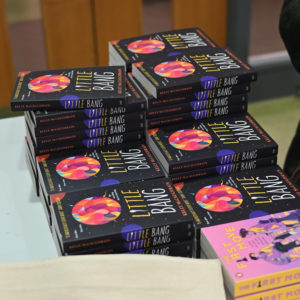


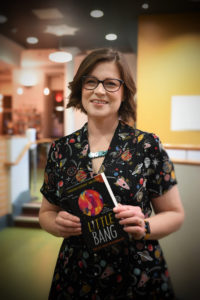








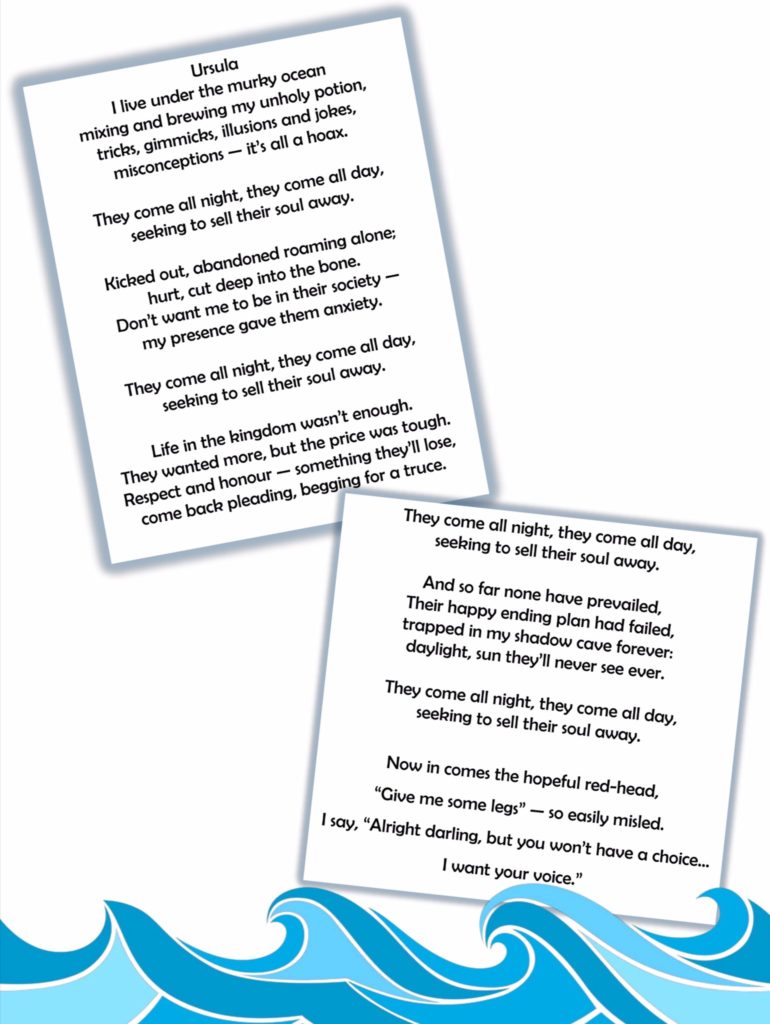
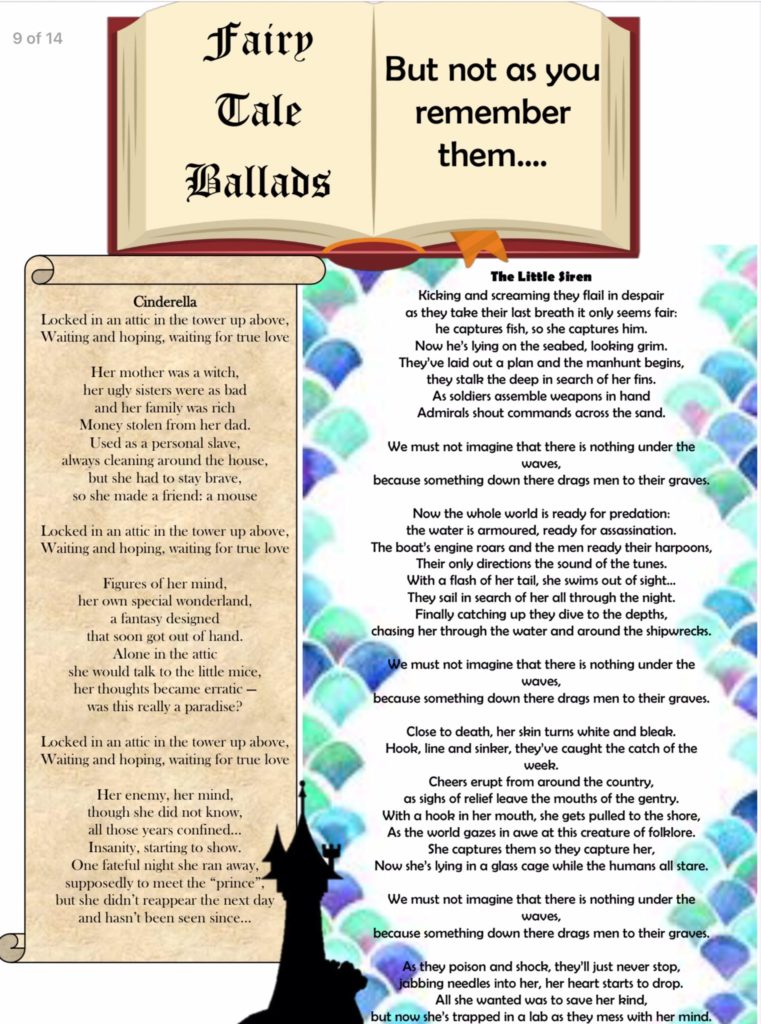
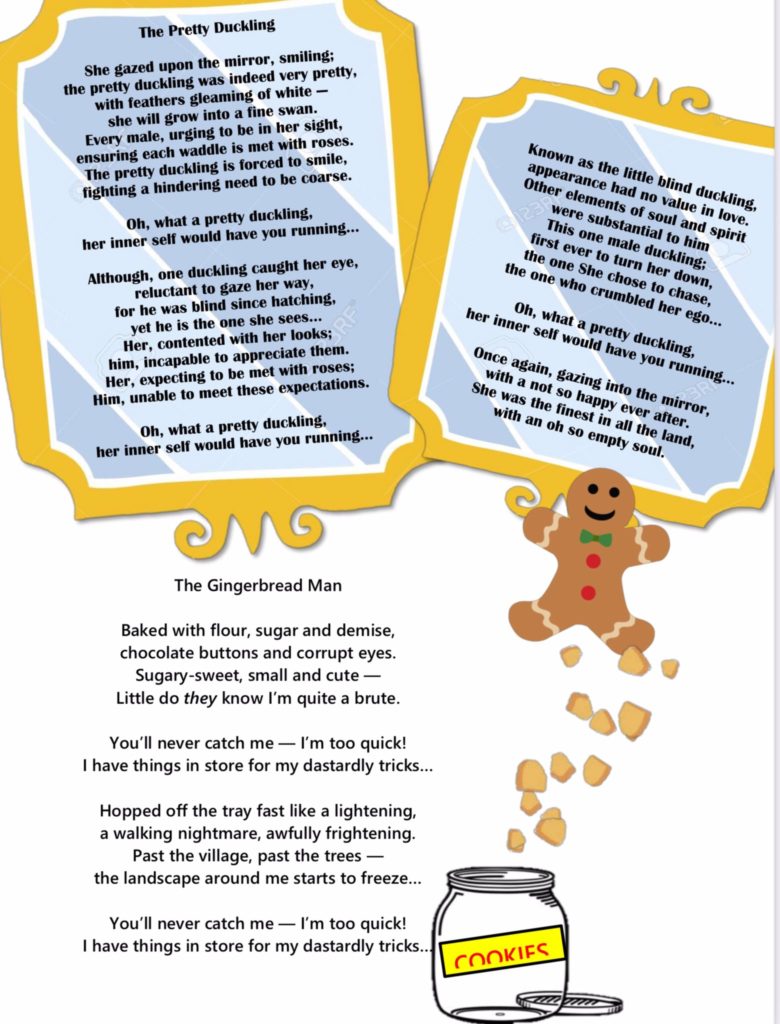
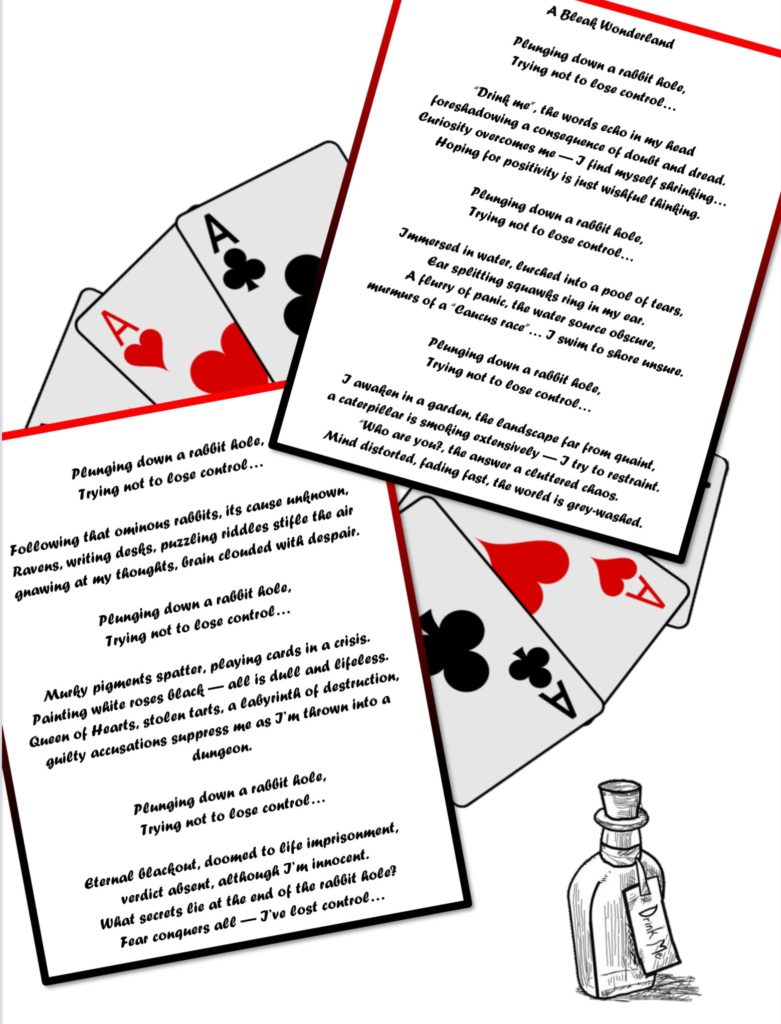


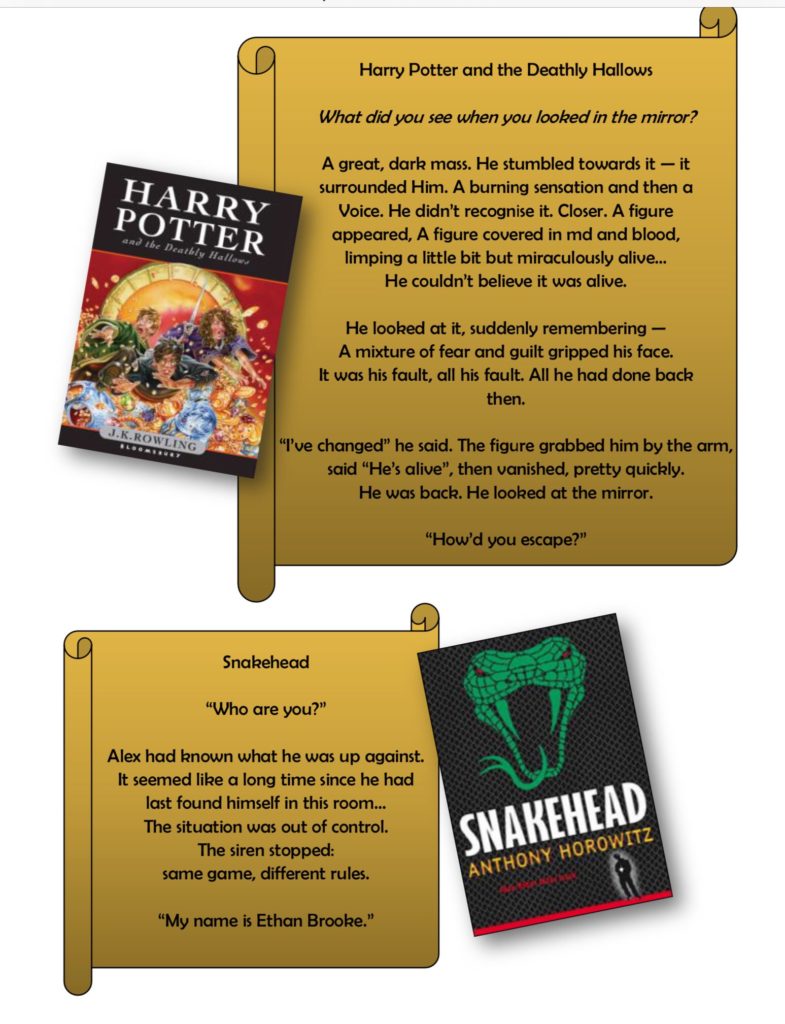
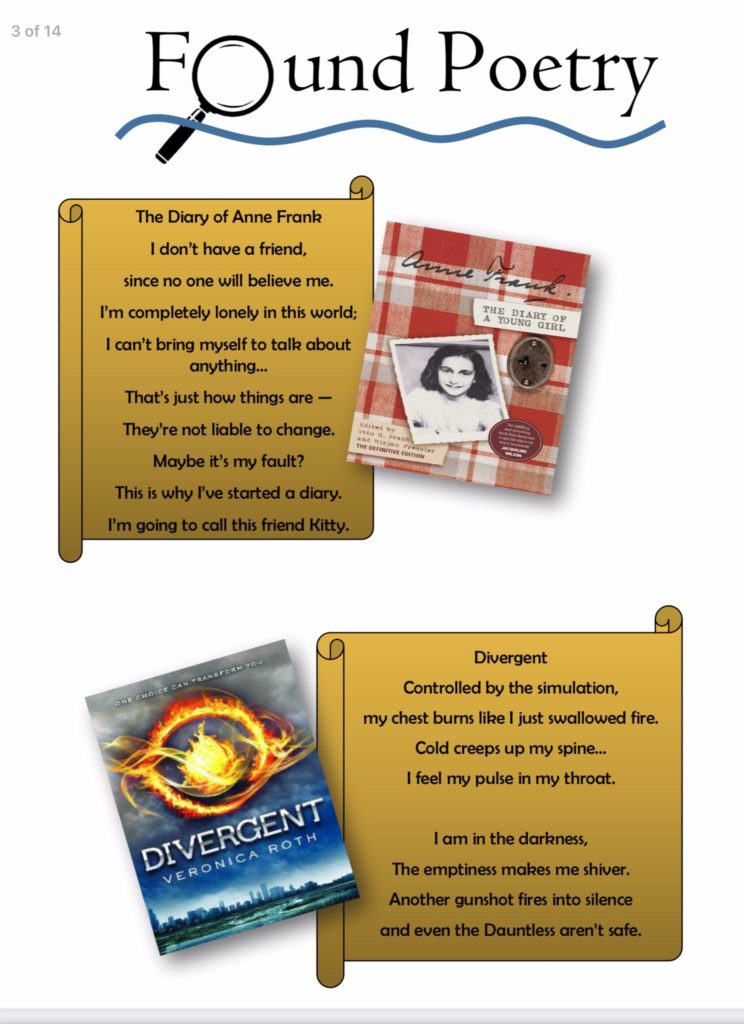
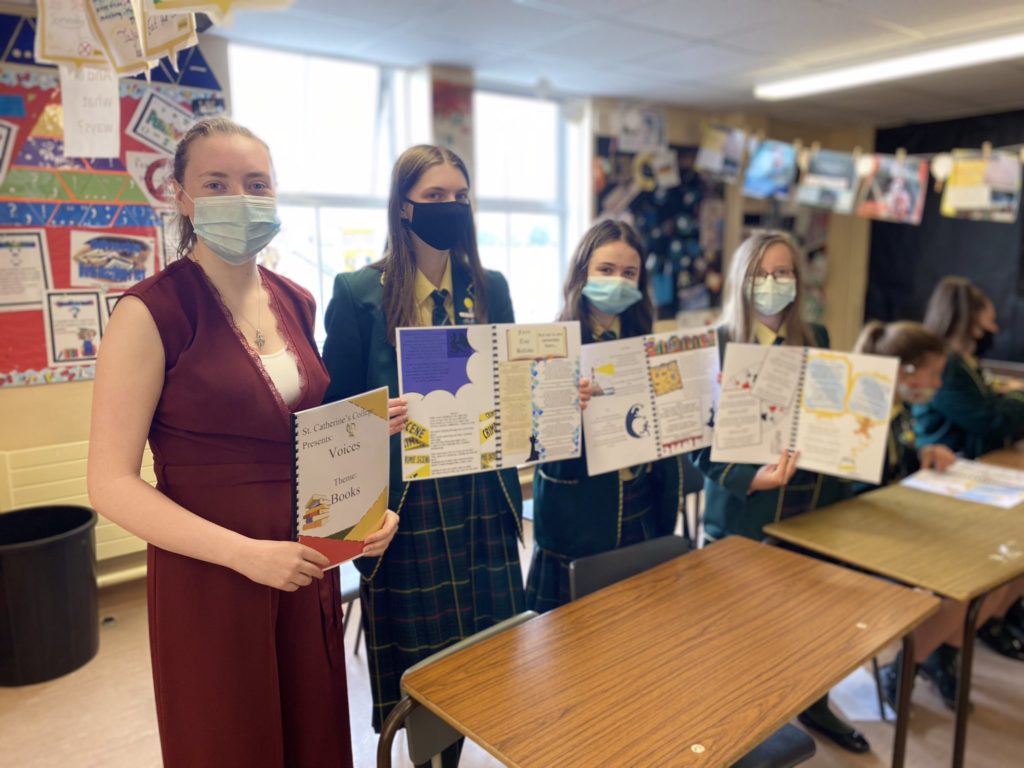




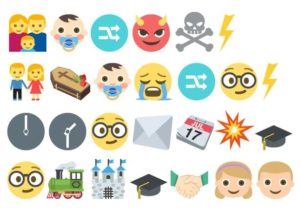






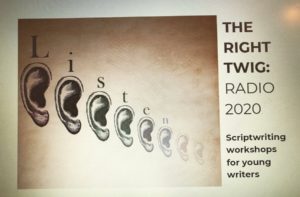
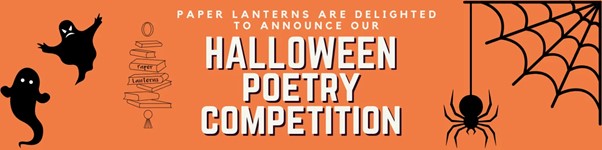
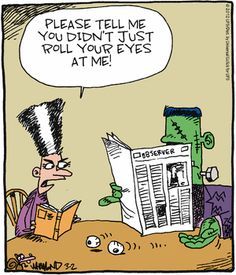



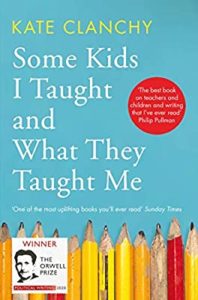
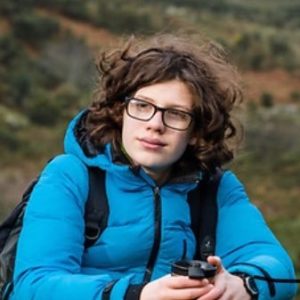







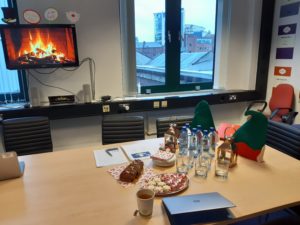


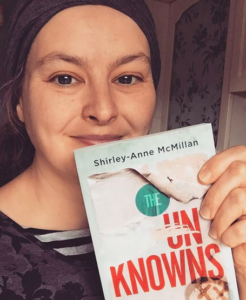

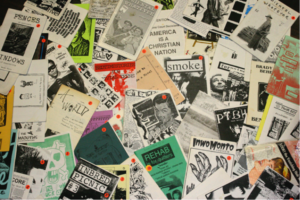
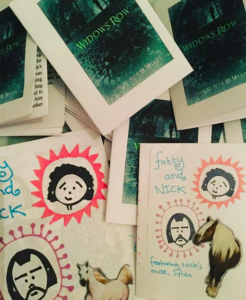

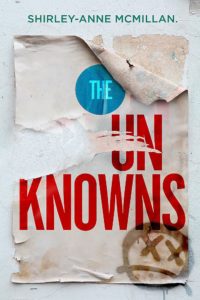


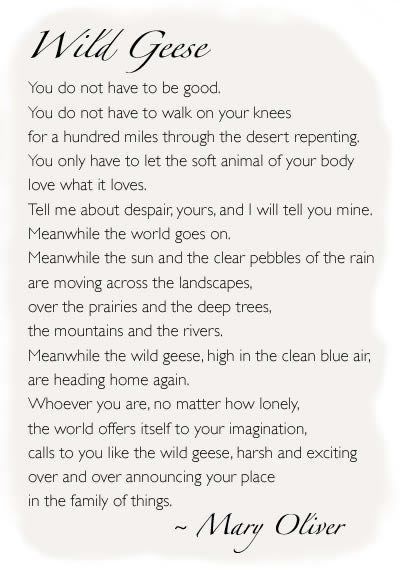




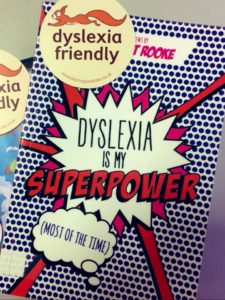
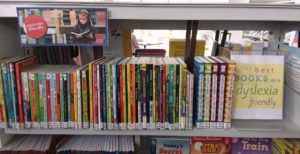








 Enjoy!