The Blank Page

  • He said, she said

    Dialogue is one of those marmite things that you either love writing or hate writing. I’ve noticed that writers who love writing dialogue (e.g. me) tend to write a bit like scriptwriters. I often write the first draft of scenes in pure dialogue, and I can reach the end of the scene without ever deciding if these characters are indoors or outdoors, under the sea or on the moon, wearing wetsuits or PJs.
    I hate writing physical description of places, people or actions and I usually have to go back when I’ve finished the scene and fill all that in. I like spoken words and the stuff going on inside the character’s head, but not so much the external world.

    Whereas I’ve found writers who hate writing dialogue tend to be quite good at world-building and will write whole scenes where you can smell every flower and feel every fold of fabric and see every blade of grass, and stuff does happen but there isn’t a word of dialogue in the whole scene.
    I have never been good at world-building which is why I couldn’t write fantasy. I like the normal world because I can assume readers know what it looks like and how it functions and I don’t have to bother explaining it too much. The reason fantasy books are allowed to be so much longer than non-fantasy books is because they have to create unfamiliar worlds for the reader.
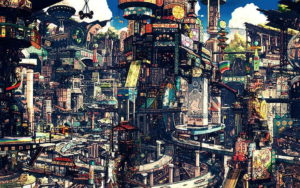
    This makes my head hurt

    There’s a writer in our group who is so brilliant at world building and visualising things that she not only writes fantasy worlds, she also draws them. One day she was showing me some sketches for a planet she’d invented. It was a sort of exploded globe with flat disks in the middle (see what I mean about my powers of description), and I said, ‘Wow, that’s amazing! Do the disks in the middle spin?’

    She shook her head and said, ‘No. They were going to, but then I realised that would interfere with the plumbing.’

    ‘You’ve thought about the plumbing! I can write a whole scene and I don’t know if my characters are indoors or out and you’ve thought about the plumbing?!!!’
    Anyway, this girl is an amazing writer and has the most incredible imagination I’ve ever come across, but she hates writing dialogue and will avoid it if at all possible. But you usually need a bit of both in a story. Pages of unbroken text can be off-putting for a reader and pages of solid dialogue can leave them feeling distanced from the world of the story.

    I found some tips online for writing dialogue to help my young writer, so I’m posting them here for all your dialogue-avoiders too. I like it when things are broken down into bullet points so these are lists of “Tips for Writing Dialogue” that you can print out for your group in case anyone’s struggling with it:

    • Sarah Webb is an Irish children’s writer and powerhouse promoter of children’s lit and she’s posted her 10 Tips for Dialogue here.
    • NY Book Editors 5 Tips for Good Dialogue
    • 5 tips from a screenwriter on writing dialogue
    • This “6 Tips for Dialogue” article also has a section on how to format dialogue, but that’s really aimed at professional writers and I never comment on this with my writers unless they ask. In fact, most of the adult writers I know still don’t know how to format dialogue, but no book ever got turned down by a publisher because the writer put the commas in the wrong place. Leave that to the English classes and let them enjoy the writing.
    And my own advice is just to pay attention to how dialogue is done in books. The thing about good dialogue is it’s invisible. The reason we use ‘she said,’ rather than, ‘she pronounced in a grating monotone’, is that it doesn’t draw attention to itself, allowing the reader to forget that they’re reading something and more fully enter that world. But the result is, we don’t notice how it’s done and then when we come to writing it, we think we don’t know how to do it. So reading a book and paying attention to the dialogue is a great way to learn how to do it. Yay, reading!
     

  • The Frozen Filo of Fiction

    I mentioned in an earlier post that there are probably writing forms that your young writers have never heard of, but which might be the key to unlocking their writing. Conversely, there might be genres of storytelling which your young writers are familiar with that you’ve never heard of or thought of as stories.

    We’re so used to rolling our eyes at ‘screen time’ that I think we tend to pit it in direct opposition to all that’s good and holy, (i.e. page time).

    But TV, movies, comics, video games and D&D are all forms of storytelling. If you actually play any of those fantasy computer games, you quickly realise they have more complicated world buildings and casts than Lord of the Rings. And story structure is surprisingly universal across all these forms of storytelling so you can learn a lot from all of them.

    And someone has to write all those computer games, and it isn’t robots or programmers who’ve never read a book, it’s quite often published fiction writers who create this stuff. (Joanne Harris, who wrote Chocolat, has written for computer games.)

    If your writers are interested in writing for computer games, there’s an article about it here.

    And 4 articles about Game Writing here.

    So when my young writers go off on a rant about the latest computer game or their last D&D game I just try to keep up. Sometimes this involves a lot of smiling and nodding on my part but I’d never suggest to them that the place they get their stories from isn’t as good as the place I get mine.

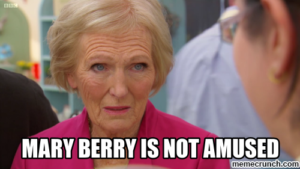
    They can even inspire them to write! Fan fiction (Fan Fic) means using existing characters from novels, TV, movies, games etc and writing stories about them and it’s another thing that gets looked down on, as though it’s not proper creativity. Like they’ve turned up on Bake Off with frozen filo.

    It’s not plagiarism (authors have no problem with Fan Fic of their work, as long as no one’s trying to cash in on it) and it’s not lazy. Much like frozen filo, it’s a way in for the nervous writer. With the characters and world-building taken care of, they can focus on creating beautiful sentences and intricate plots.

    And it’s a sign that they’ve deeply engaged with fictional people and they don’t want the story to end. I think that’s wonderful and it’s what stories at their best do.

    In Stephen King’s famous book on writing, On Writing (clever title there, Steve), he remembers being asked by a teacher when he was a kid why he was wasting his god given talent on ‘junk’. Junk being sci-fi/horror/fantasy. He carried the guilt of that for years, feeling he was wasting his time on horror, playing down his own achievements because they were ‘just’ genre fiction. Stephen King!

    I hope we’re a bit more enlightened now, but are we treating things like Fan Fic, movies, TV and gaming like our grandparents would have treated Sci-Fi in our terror lest books go out of fashion?

    Fan Fic can be as creative as any other writing and there are loads of websites dedicated to it where you can post your stories and other people can follow you and post comments. I have one writer who posts a lot and has thousands of readers, which is a real boost for her confidence.

    And if you’re worried that your students never seem to read books, just ask them if they’re reading any Fan Fic. Many of my young writers spend HOURS every week reading Fan Fic, but we think they’re not reading at all just because it’s just not on our radar. At our group last night someone wrote a poem inspired by a novel they read on a Fan Fic site!

    So if your writers are struggling to get started in their writing, you could suggest they take their favourite characters from a book or TV and put them in a story. And direct them to some Fan Fic sites if they want to post online or read some Fan Fic.

    I went to the experts and asked my young writers to recommend the best Fan Fic sites and this is what they said:

    Archive of our own (AO3) – This was their favourite. You can read and publish Fan Fic or original stuff. It’s free and easy to use.

    Quotev – Much like AO3 but doesn’t have an advanced tagging system.

    Wattpad – This got mixed reviews. It seems to be for younger writers but they felt it didn’t handle warnings for ‘adult content’ as well as other sites.

    Fanfiction.net – They were not impressed with this one.


    I asked them about the risk of ‘trolling’ and negative comments from users but they said that, while it does sometimes happen, it’s rare and the Fan Fic communities tend to be kind and supportive and will jump all over trolls.

    I also asked about adult content. Adults do write for these sites too, so there could be adult content, and there’s no way to set parental controls, but writers tag their stories with ‘ratings’ and ‘warnings’ to guide readers, and my writers felt it wasn’t a problem, you just avoid anything marked ‘adult’. But just be aware of this if you’re introducing them to the sites. (But they don’t need to use the sites to write their own.)

    This article is another helpful guide to the issues and the lingo for parents and educators. 

    So who would you write Fan Fic about? What story did you not want to end?

    In Fan Fic Land they’re still going on and on and on and…


  • The Spanish Inquisition and Other Helpful Writing Tools

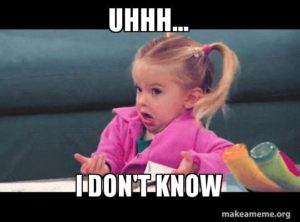
    When your young writers are stuck, or want to know how to improve their story, or why it’s not working or why the plot is unbelievable, or why the dialogue is clunky, and they look at you like

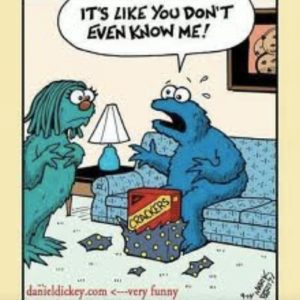
    And you’re like

    Don’t worry. The answer is this:

    Character

    Doesn’t matter what the problem, 99% of the time the answer is character. Character is everything.

    When they think their plot isn’t working, the answer is character. Plot is character. Things only happen in a story because a character wants something or fears something or does something. That’s all plot is. It all stems from character. So if the plot isn’t working or you don’t know what happens next, it’s because you don’t know your character well enough.

    If the dialogue isn’t working, the answer is character. Characters have distinctive voices of their own and if the dialogue isn’t working, it’s because you can’t hear your character well enough.

    If the story feels flat and won’t come to life, the answer is character. Characters live in particular worlds and if you can’t bring vivid detail into the writing, it’s because you can’t see your character’s world well enough.

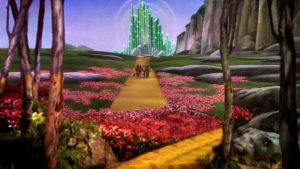
    The reason the Emerald Kingdom looks like this…
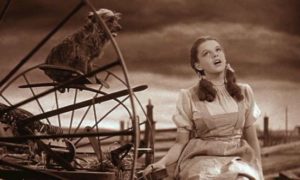
    Is because Dorothy grew up here

    So a really good trick when someone’s stuck with a story, or just wants to brainstorm ideas for a new story, is to use a character questionnaire.

    This is just a list of questions that you ask your character. They may not appear to have anything to do with the story initially but they can end up being integral to the plot. Remember that JK Rowling knew LOADS more about her characters than ever ended up in the books. A writer has to know their characters inside out, and then choose what to put on the page.

    Interrogating your characters can be quite addictive and there are loads of character questionnaires and interviews online that you can use. Some kids love creating characters, I have one girl who keeps whole notebooks about her characters, with drawings and images and notes, and does online personality tests for them. Others will come at the plot from a different angle, but I think if you’re having a problem with your writing, examining your characters is often a good way to tackle it. It’s always the first thing I do when I’m stuck and I find it really good for generating new ideas.

    So here’s a simple Character Questionnaire (click to download) you can print out and give to your writers. And it works for all characters, not just your main character/protagonist. Every character can have a backstory and a personality.

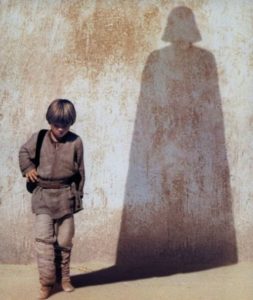
    George Lucas got three movies out of this backstory

    I always keep a stack of copies handy for anyone starting a new piece or stuck on an old one. Not all the questions will apply to their character, depending on genre, but that’s OK. And they shouldn’t spend too long agonising over the answers, it’s just for brainstorming purposes and they can always leave answers out or come back to them.

    Hope it’s helpful!


The Blank Page was created by Kelly McCaughrain, Children’s Writing Fellow for NI (2019-2021), as a support and resource for Librarians and Teachers running Creative Writing Groups in post-primary schools.

To read all the posts from the beginning, click here.

Recent Posts