The Blank Page

  • It’s the Little Things

    This post is about the nitty gritty of running a group and the little details that can make all the difference. You’ll know best what will work for your group, this is just how we run ours:

    Time:

    We have 2 hours, broken up roughly as follows –

    • 20 minutes to chat and get settled
    • 1 hour of quiet writing time
    • 30 minutes to read aloud and give feedback

    Rules:

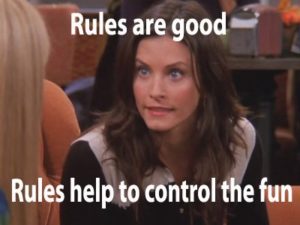
    One of the things we stress is that it’s their club. When we started, we drew up a ‘group contract’, giving the kids the opportunity to say what they wanted from the group, including things like ‘you can sit where you like’ and ‘shoes need not be worn’. (They could also come up with their own group name.) Changes and issues are run past the group and agreed by them.

    Over time the contract has boiled down to one rule, which is ‘It’s up to you what you write and whether you write, but you can’t disturb anyone else’s writing time’. Generally that’s the only rule we’ve needed. If someone doesn’t feel like writing that’s fine, we all have days like that. They can read, draw, do emergency homework. But they can’t disturb anyone else.
    The rules apply to the adults too. We don’t use their meeting time to have a chat because that would distract the kids and I feel it’s also a bit disrespectful. We’re at their club, not in our classroom.

    Seating:

    We have the use of a café after closing. The mentors sit at a large central table and some of the kids sit with us, some spread out and use the sofas. If they want the mentors to look at anything, they can ask for feedback. If things get noisy I’ll sit with them and ask how they’re getting on, and if that doesn’t work I’ll gently remind them of the ‘not disturbing others’ rule. We do get everyone together at the start and end so they feel like a group.

    Music:

    This was an interesting one for me. To begin with, the group always worked in silence. It never occurred to me not to because I personally prefer silence. There was occasional chatter, which was fine because they always managed to produce creative work anyway. But then we got a new member who was incredibly chatty. Lovely kid but it was difficult to keep everyone focused because they never stopped talking.

    And then one day the new kid wrote a story. A romantic story about a romantic date. At the end, the couple come home, settle on the sofa, there’s hot chocolate, there’s candlelight, they’re about to kiss and then…

    …they turn on the TV for some background noise.

    What! Where did that come from? Who wants reality TV in the background of the most romantic date ever!

    And then I got it. This kid just hates silence. Finds it massively uncomfortable. And if there’s a silence, they will talk just to break that silence.

    So I tried an experiment. I put on a very laidback playlist quietly in the background while we worked.

    Problem solved. The chat stopped, the writer settled really easily and produced long, beautifully written stories every week. It was practically miraculous.

    And a definite lesson for me to trust people to write in their own way, even if it’s not the way I’d write.

    So now we always play quiet background music while we write.

    Phones:

    Phones can be a PITA in a classroom environment but they’re here to stay and we need to get on board with that.

    My first time at our club I was dismayed to find that some of the kids spent the whole time on their phones. After 2 hours though, I was stunned to discover they had written whole chapters of stories. ON THEIR PHONES! This was another revelation to me. I will go to great lengths to avoid typing anything on my phone. Not so, your average teenager. They’re quite comfortable writing with their thumbs, which is quite a skill when you think about it. They also use them to listen to music through headphones.

    So I’ve never banned phones. I’m sure there’s a bit of Instagramming too but as someone who checks Facebook every other paragraph when I’m writing, I can’t really complain about that and I don’t think it’s a big deal. It’s up to them if they write anything, after all, and while we try to minimise distractions, if they’re not in the mood, then there’s no point forcing it.

    One of the lovely things about the group is that the kids have become good friends. So good that recently one of them had the bright idea of setting up a Whatsapp group.

    Oh God, says me. Now there are two ways for them to distract each other. Sure enough, the next hour consisted of tapping and explosions of inexplicable giggling. I let them get the novelty out of their system and then said it was lovely they’d set up a group, but maybe we shouldn’t use it during our meetings as we might distract people.

    They were fine with that, but inevitably there was still some messaging going on. I worried that this might become something I’d have to put my foot down over, which I’m reluctant to do.

    But the next week they came and told me that they had, off their own bat, started writing a story via Whatsapp! They’d each created a character and each writer contributed a paragraph then passed it to the next person. I was so glad I hadn’t gone all bossy over the Whatsapp group! I’d been worrying about them writing less, but the outcome is, they’re now writing more. At home, on the bus, watching TV, probably in classes (sorry!). What an amazing result!

    So all I’m saying is, don’t make assumptions about what will inspire or distract them. Phones and the internet are not the death of creativity, they can in fact be new conduits for it and it’s worth letting them explore that.

    Adults:

    The mentors at our group don’t teach, they write. Or read. I think it’s hugely important for kids to meet adults who value writing and reading and make time in their lives for it. When you think about it, the only contact they usually have with adult writers is those shiny books on the shelves at Waterstones, and that’s what they’re comparing their own writing to. It can come as a surprise to them to see an adult writer sit back at the end of the session and say, ‘Well, I wrote 200 words, and then I deleted 150 of them.’ And maybe they never see adults read at home either.

    So maybe, don’t use their writing time to mark homework or answer emails or chat to other members of staff. Write a story. Read a novel. Read a YA novel and they’ll love you forever!
      

  • Healthy Competition

    This is a fun and easy exercise to introduce the idea of having a healthy attitude to writing competitions.

    Some of the young writers I work with love entering competitions. Some are currently working on submissions to the Irish Times, and a couple were included in an anthology put together by Fighting Words Belfast which is launching tonight.

    If I come across a competition I usually do mention it to my young writers in case they’re interested, but I also do this exercise with them, because it’s a bit of fun and it gives a really good insight into how competitions work.

    I don’t make writing competitions a big feature at our writing group because I don’t want anyone to think that the point of writing is to enter competitions, or that it matters what anyone else thinks of your writing. But competitions for young writers are out there and some writers do get a lot out of them.

    My whole writing career started with a competition, in fact. It changed my life and, most importantly, gave me the huge confidence boost I needed at that point. Competitions can be great because:

    • They motivate you to finish, edit and polish your work
    • They provide something to aim for
    • A shortlisting or win can be a real encouragement  

    But since winning is unlikely, they can also be demoralising and discouraging (I’ve been there too). So I’d say do let your young writers know about competitions if you feel they’d enjoy them, but don’t pressure them to enter. Make sure you stress that writing for your own enjoyment, or to share with your friends is as valid as writing to be published.

    And do this exercise with them:

    Exercise

    The BBC Young Writers Award is run every year. Five stories are shortlisted, recorded and broadcast on the radio, then a winner is chosen. After the 2017 competition ended I downloaded the shortlisted stories, printed them out and gave them to my writing group, telling them they had to pretend they were the competition judges. They had to read the five stories and choose their favourites, but they then had to come to a consensus as a group about the overall winner. Only one could win.

    Of course, they found it really difficult to come to an agreement. When they’d finally made their choice, I told them who the actual winner chosen by the BBC had been (and it wasn’t the one they’d chosen).

    The point of this was just to show them that:

    • Competition judging is hugely subjective. On another day, with another judge, a different story would have won
    • It’s really hard to pick your favourite and even harder to agree on one as a group
    • The stories that didn’t win were often favourites with at least one of the judges
    • Sometimes the story that wins is just the story everyone can agree is good rather than the story someone really really loves

    Which is why they should regard competitions as a bit of fun and never take it personally if their story isn’t chosen.

    I found the kids really enjoyed this exercise (especially arguing about it!). It’s also good because they get to read examples of writing by kids their own age, which they always find interesting, and it encouraged them to identify and discuss what they liked about each story, which is bound to feed into their own writing.

    You could do this with the shortlist from any of the BBC competitions by listening to the radio broadcasts with your group (be careful not to reveal the winner in advance!) or you can download this printed version which I took from the BBC site at the time of the 2017 shortlist – BBC Young Writers shortlisters

    Obviously you can do this with any competition that puts their shortlist online.


    I’ve also put together a list of competitions your young writers might be interested in:

    The National Flash Fiction Youth Competition is for 360 word stories by 15-19 year olds

    Chronicles runs regular Sci-Fi and Fantasy Flash Fiction Competitions including the popular ’75 word challenge’ and the new ‘300 word challenge’

    Radio 2’s short story-writing competition for kids up to 13

    The Wicked Young Writer Awards for 5-25 year olds are judged by Cressida Cowell and open until March 2, 2020. They also have a Non-Fiction award encouraging 11-25-year olds to write essays or articles “that recognise the positive impact that people can have on each other, their communities and the world we live in.”

    The Young Walter Scott Prize is for historical fiction writers aged 11-19

    Fighting Words will publish a magazine of new writing with the Irish Times next year and invites submissions from Secondary School Students. Deadline 6th December. PDF download – Call for Submissions_ITSupplement

    The Betjeman Poetry Prize is for poets aged 10-13

    Wild About Writing is for short stories by kids up to 13 years old, inspired by the natural environment

    The Author of Tomorrow is designed to find the adventure writers of the future. Up to age 21

    The Voices Competition is for young people in care and the theme for 2020 is ‘Dreams’

    The School Reading List have put together an even longer list of competitions for kids


    If you know of any others let me know and I’ll add them to the list!

    Thanks to Stéphanie Brown for suggesting these:

    Waterways Story making Festival in Belfast
    https://www.facebook.com/waterwaysstorymakingfestival/

    Foyle Young Poet of the Year
    https://foyleyoungpoets.org/

  • Flash Fiction and The Postcard Box

    I am loathe to tell a young writer what to write, but I do try to introduce them to different forms of writing because one size does not fit all and it may be that any creative paralysis they’re experiencing could simply be because they are poets, not playwrights, or novelists, not short story writers.

    The English curriculum covers novels, poems and plays. Maybe a short story or two. YA publishing doesn’t cover much more than this either. There are very few short story collections for teens, never mind anything more experimental. Which means there are so many forms and genres out there that they haven’t even heard of, and one of them just might be their writing comfort zone.

    For example, there’s Memoir, Prose-Poetry, The Personal Essay, Flash Fiction, Novellas, Micro Fiction, Radio Drama, Spoken Word Poetry, Creative Non-Fiction, TV Scripts, Graphic Novels, Video Game Writing, Blogging, Fan Fiction, Nature Writing…

    There’s even ‘Twitterature’.

    And probably more, not to mention all the variation and genres within these. Some of the more uncommon things produced at our writing club have included:

    • Essays for competitions
    • A non-fiction book about the history of a NI political party (he’s planning a series of these books covering each of the NI parties. He’s 14)
    • Background stories and plot for a murder mystery game (this was the most complicated, intricate and seriously impressive piece of work I’ve ever seen)
    • D&D characters
    • Social media collaborations on a multi-protagonist novel
    • Illustrations for fantasy and manga characters.

    Just because a young writer hates nature poetry doesn’t mean they’re not a writer. It just may be that their genre has never come up on an English exam. (It may not even exist yet.) So I think it pays to let them experiment and explore.

    In future posts I’ll cover some of these forms/genres, starting here with:

    Flash Fiction and The Postcard Box

    The Postcard Box was inspired by a writer friend of mine, Jan Carson. During a period of writer’s block, she set herself the challenge of writing a tiny story on the back of a postcard every day for a year and mailing it to someone. The idea of committing to something like this is mind-blowing to me but she actually did it. I know because she then published a collection of them with Emma Press.

    I have never seen a writer stick two fingers up to writer’s block quite so effectively!

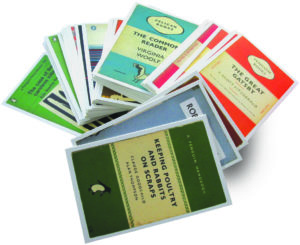
    Anyway, my young writers were very inspired by the book and the story of its creation. So I got a box of postcards for us. And now, if anyone writes something short enough to fit, they can take a postcard and write it on the back and put it in the box.

    I got these Penguin Covers ones but there are loads out there

    This has the wonderful advantage that if someone only manages to write a paragraph or a haiku, they still feel they’ve achieved something. It’s also a nice way to preserve their writing, much of which gets ‘filed’ at the bottom of their school bags otherwise.

    What Jan was writing was essentially Flash Fiction. None of the kids had heard of Flash Fiction but it’s becoming pretty common. There is even a National Flash Fiction Day (6th June). Definitions vary but Flash is usually considered anything under 1000 words, and Flash competitions will often specify fewer than 500 words or 150 words. Anything less than 100 is sometimes called Micro Fiction.

    So it’s really a very short story. But it has to be a proper story. I.e. it has to have a beginning, middle and end. Writing Flash can teach you a lot about story structure, editing and concision because you have to be clever with language to do so much in such a short space. Some writers respond well to having that sort of structure to work within.

    The most famous example is Hemmingway’s six-word story:

    The whole point of this story is that it really doesn’t need the schmaltzy picture but that’s the internet for you

    What this demonstrates is:

    • A whole narrative can be encapsulated in a few words. There is a whole story here: a beginning (baby shoes), middle (never worn) and end (for sale).
    • These don’t have to be presented chronologically.
    • A good story poses more questions than it answers. Those questions will stay with the reader.
    • Everyone will imagine the details differently, and that’s fine. In fact, it’s better, because those details will happen in the mind of the reader rather than on a page they can walk away from.
    • Six words is extreme but it introduces the idea that a story does not have to start with a character’s birth, include reams of backstory, explain every thought in their head or what they had for breakfast. It’s a masterclass in relevance.

    But you don’t have to know anything about Flash Fiction yourself. This short article in The Guardian is a good introduction to writing Flash so I printed it out to give to my young writers.

    And you can find loads of examples of Flash online which you could print to inspire them. These are just a few:

    As always, I’d say just make these available for anyone who’s curious, discuss it with them if they seem interested, but let the rest get on with their own stuff. Flash may not be for them and that’s fine, but once they know what it is, some kids may find they like it, and if they’ve written a short poem or just a tiny, beautiful description, you can encourage them to put it on a postcard for the box and make your own collection!

The Blank Page was created by Kelly McCaughrain, Children’s Writing Fellow for NI (2019-2021), as a support and resource for Librarians and Teachers running Creative Writing Groups in post-primary schools.

To read all the posts from the beginning, click here.

Recent Posts